


Dog Car Seats vs Travel Beds vs Crates: What's Actually Safe on a Road Trip?
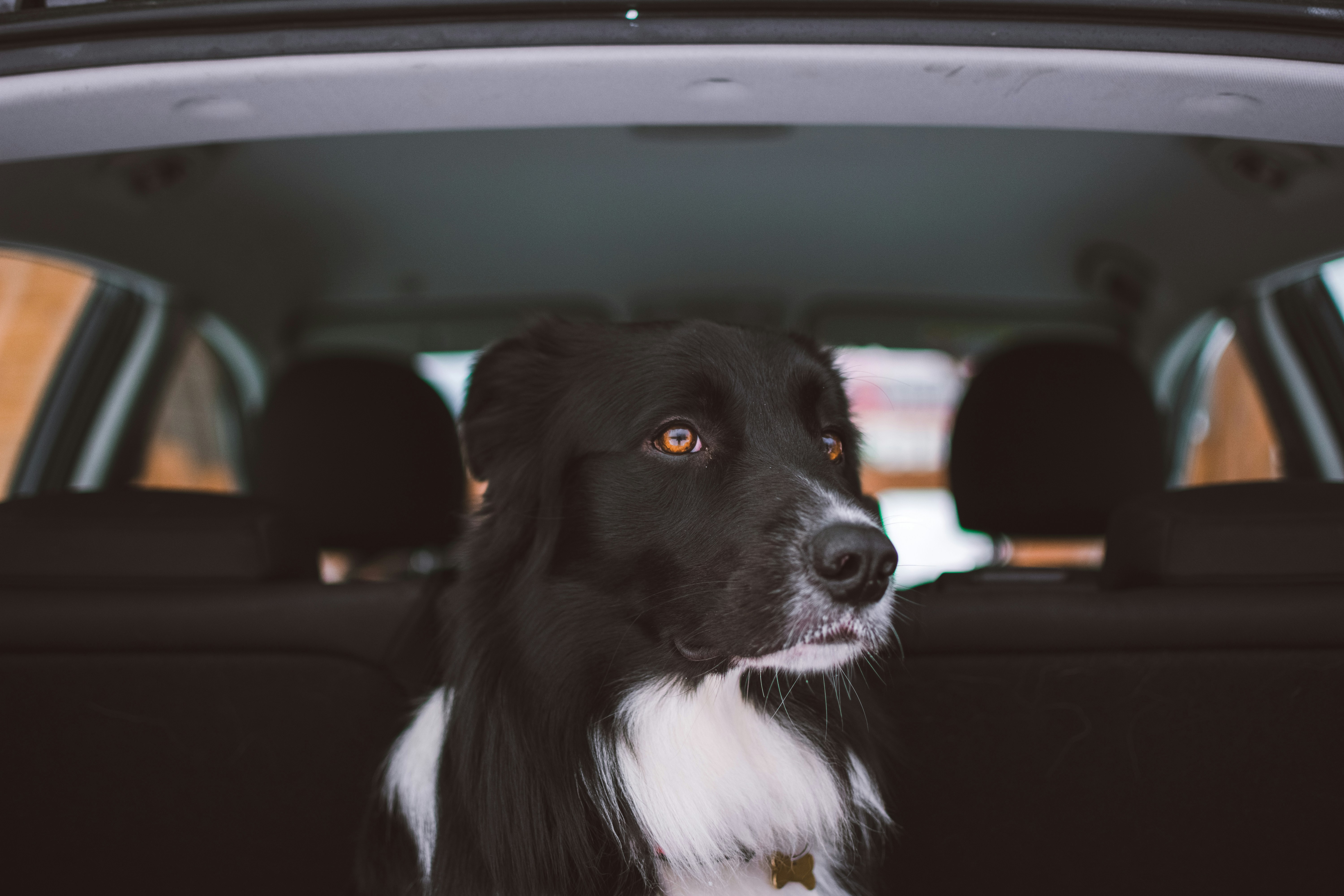
Comfort and safety are not the same thing
A plush car seat makes a road trip nicer for your dog. It does not necessarily make it safer. Most pet car seats and travel beds are built for comfort and for keeping a dog from wandering around the car, not for protecting it in a crash.
The difference matters. In a collision at 35 mph, a 60 lb dog hits whatever is in front of it with a force of about 2,100 lb, according to the Center for Pet Safety (CPS), the US non-profit that crash-tests pet travel products. That risk extends to everyone else in the car too.
This guide compares the three main options, explains what "crash-tested" should mean, takes an honest look at one popular product, the 4 Cats & Dogs Marco travel bed, and shows how to set up any of them more safely.
Car seat vs travel bed vs crate: the quick comparison
Booster car seat | Travel bed (car-seat style) | Crate or carrier | |
What it is | A raised box seat strapped to the car seat, with a short tether | A padded, bolstered bed strapped to the seat, often with a tether | A hard or soft enclosure, secured with the seat belt or in the boot |
Best for | Small dogs who like to see out | Small dogs and cats who like to curl up | Any size; the only option for most large dogs |
Comfort | Good | Very good | Depends on padding |
Keeps pet from roaming | Yes | Yes | Yes |
Crash protection | Limited in CPS testing | Generally untested | Best, if the model is crash-tested |
Doubles as a bed at the destination | Sometimes | Yes | Yes (soft carriers less so) |
Works on a plane | No | No | Only an airline-approved carrier or IATA crate |
The short version: travel beds and booster seats win on comfort, while a crash-tested crate or carrier wins on protection. Many owners use both, for example a bed for short local drives and a crate for motorways and long trips.
What "crash-tested" should actually mean
No government agency sets crash standards for pet products in the US. The Consumer Product Safety Commission treats them as outside its remit, so a label saying "crash-tested" can mean almost anything.
The closest thing to an independent standard comes from the Center for Pet Safety. Founded in 2011, CPS runs sled tests using weighted canine dummies and takes no funding from pet product makers. Since then it has tested close to 400 pet car restraints, and most failed. What that testing shows:
Harnesses: the 2011 pilot study recorded a 100% failure rate. Only a handful of harnesses have earned certification since.
Booster and travel seats: in a 2015 pilot study of seats for small dogs, several seats rotated or rolled over on impact, and some test dogs ended up off the seat.
Long tethers: a tether that gives a dog room to move lets it launch off the seat in a crash. CPS advises against extension tethers and zip lines.
Today the CPS Certified list has just three categories: safety harnesses, pet travel carriers and travel crates. No booster seat or car-seat-style travel bed appears on it.
How to check a product's claim
Look for the CPS Certified logo, or find the product on the CPS Certified list.
Ask the maker for crash-test video, the test speed and the dummy weight.
Treat vague phrases such as "safety tested" or "for added security" as marketing, not crash protection.
CPS's advice: if a carrier can't show crash-test evidence, a small dog in that carrier is safer on the floor behind the front seat than strapped onto a seat.
4 Cats & Dogs Marco travel pet bed: is it worth it?
The Marco is one of the better-looking travel beds on the US market, and a good example of what this category does well and where it stops. Pet Holiday Club has not tested it; this summary is based on the maker's own product pages and retailer listings.
What it is. A padded, bolstered bed that sits on the back seat. An adjustable strap secures it to the seat, and an anti-slip base and anchor clips help stop it shifting. A built-in buckle tethers your pet in place, and the front panel unzips and folds down so a dog can step in. The water-resistant shell is washable.
Single seater or two seater? The Marco comes in two sizes:
Marco (single seater) | Marco XL (two seater) | |
Size | 18.5 × 21 in | 20.5 × 35.5 in |
Pet weight | Up to 25 lb | Up to 80 lb, or two smaller pets |
Built-in tethers | 1 | 2 |
Colours | Army, Noir, Silva, Sage | Army, Noir, Silva |
Price (maker's site) | From USD 115.99 | USD 199.99 |
The Marco two seater (XL)
The Marco Two Seater, sold by the maker as the Marco XL, spans most of a back seat. It's built for one larger dog, or for two small dogs or cats travelling side by side, each clipped to its own tether. For multi-pet households that's its main appeal: one bed instead of two, and pets that stay in their own half.
Two things to weigh before buying. First, measure your back seat: at 35.5 in wide it takes up most of a standard rear bench, so a third passenger may not fit. Second, two pets sharing it should each have room to lie down without lying on the other.
What it does well
Deep bolsters let anxious or older pets curl up and feel enclosed.
The tethers stop pets climbing into the front or onto each other.
It doubles as a familiar bed at the hotel or holiday home, which helps pets settle.
The washable shell copes with car sickness and muddy paws.
What it doesn't do
It is not marketed as crash-tested, and neither size appears on the Center for Pet Safety's certified list.
The strap holds the bed in place for normal driving, not for collision forces.
It can't be used on a plane: airlines require an approved carrier.
Our verdict. A good comfort buy, and the two seater is a practical pick for owners with two small pets. Use it for local drives and as a portable bed. For motorway driving or long trips, pair it with or swap it for a crash-tested crate, carrier or harness. The maker describes the buckle as collar-compatible; clip it to a harness instead, so a sudden stop doesn't load your pet's neck.
If you want a bed-style carrier that has been crash-tested, the Sleepypod Mobile Pet Bed is on the CPS certified list for small pets.
6 rules for setting up any car seat, bed or crate
These apply whichever option you pick.
Back seat only. A front airbag deploys with enough force to seriously injure a pet, even in a minor crash. CPS also flags that many seat makers' instructions suggest the front seat, which is the less safe choice.
Harness, never collar. A tether clipped to a collar puts all the force of a sudden stop on your pet's neck.
Keep the tether short. Your pet should be able to sit, stand and lie down, but not reach the edge of the seat or the footwell.
Secure the product itself. Use every strap the maker supplies, and pull it tight. A loose seat or crate becomes a projectile of its own.
Put heavy crates in the boot, against the back seats. Larger crates are safest loaded crosswise behind the rear seats, ideally with a cargo barrier.
Never leave a pet in a parked car. A car heats up quickly, even with the windows cracked.
Rules on restraining pets also vary by country. In the UK, Rule 57 of the Highway Code says pets must be suitably restrained so they can't distract the driver or injure anyone if you stop quickly, and names a seat belt harness, pet carrier, dog cage or dog guard as suitable options. Breaking the rule isn't an offence in itself, but it can be used as evidence in court, for example in a careless driving case. Check the country guide before a driving holiday abroad.
Which option fits your pet and trip?
Your situation | Best choice |
Small dog or cat, short local drives | Travel bed or booster seat, back seat, tethered to a harness |
Small dog or cat, long or motorway drives | Crash-tested carrier on the floor behind a front seat, or secured with the belt |
Anxious pet that needs to curl up | Travel bed for comfort, inside or alongside a crash-tested carrier for longer trips |
Medium or large dog | Crash-tested crate in the boot, or a CPS-certified harness on the back seat |
Road trip that ends in a flight | An airline-approved carrier, so your pet only learns one "travel den" |
If your trip includes a flight, the carrier decides everything. Cabin pets need a soft carrier that fits under the seat, and larger dogs flying in the hold need a crate that meets IATA rules: see IATA-approved dog crate requirements.
Whatever you choose, let your pet use it at home for a week or two first. A crate or bed that already smells of home is calmer to travel in, and a dog that gets car sick will cope better in a familiar space. Our guide to dog motion sickness covers the rest.
Comfort for the ride, protection for the road
Travel beds like the Marco earn their place: they keep small pets calm, contained and comfortable, and double as a familiar bed when you arrive. Just don't mistake comfort for crash protection. For long drives, a crash-tested crate or harness is the safer choice, and the best set-ups often use both.
If your road trip crosses a border or ends at an airport, the paperwork matters as much as the gear. Get every requirement for your route, with lead times and official sources, from the free Pet Holiday Club checklist.
Frequently asked questions
Is a travel bed or a crate better for a car?
A travel bed is more comfortable; a crash-tested crate is safer. For short local trips a tethered travel bed in the back seat is reasonable. For long or motorway drives, choose a crate.
They stop a small dog roaming the car, which reduces driver distraction. But in the Center for Pet Safety's 2015 pilot study, several booster seats rotated or rolled on impact, and no booster seat appears on CPS's certified list. For crash protection, use a CPS-certified crate, carrier or harness.
Is the 4 Cats & Dogs Marco travel bed crash-tested?
It isn't marketed as crash-tested, and neither the single nor the two-seater version is on the Center for Pet Safety's certified list. It is a comfort bed with built-in tethers.
Is there a two-seater Marco travel bed?
Yes. The Marco XL is the two-seater version: 20.5 × 35.5 in, rated for one pet up to 80 lb or two smaller pets, with two built-in tethers. The single seater is 18.5 × 21 in and rated for pets up to 25 lb.
Can my dog ride in the front seat?
It's not recommended. A deploying front airbag can seriously injure a pet. Keep pets in the back seat or the boot.
Can I use a pet car seat on a plane?
No. Airlines accept only approved carriers in the cabin and IATA-compliant crates in the hold. Check your airline's rules.


