Why 2026 Is the Year Airlines Must Get Serious About Pet Travel Policies (Opinion)
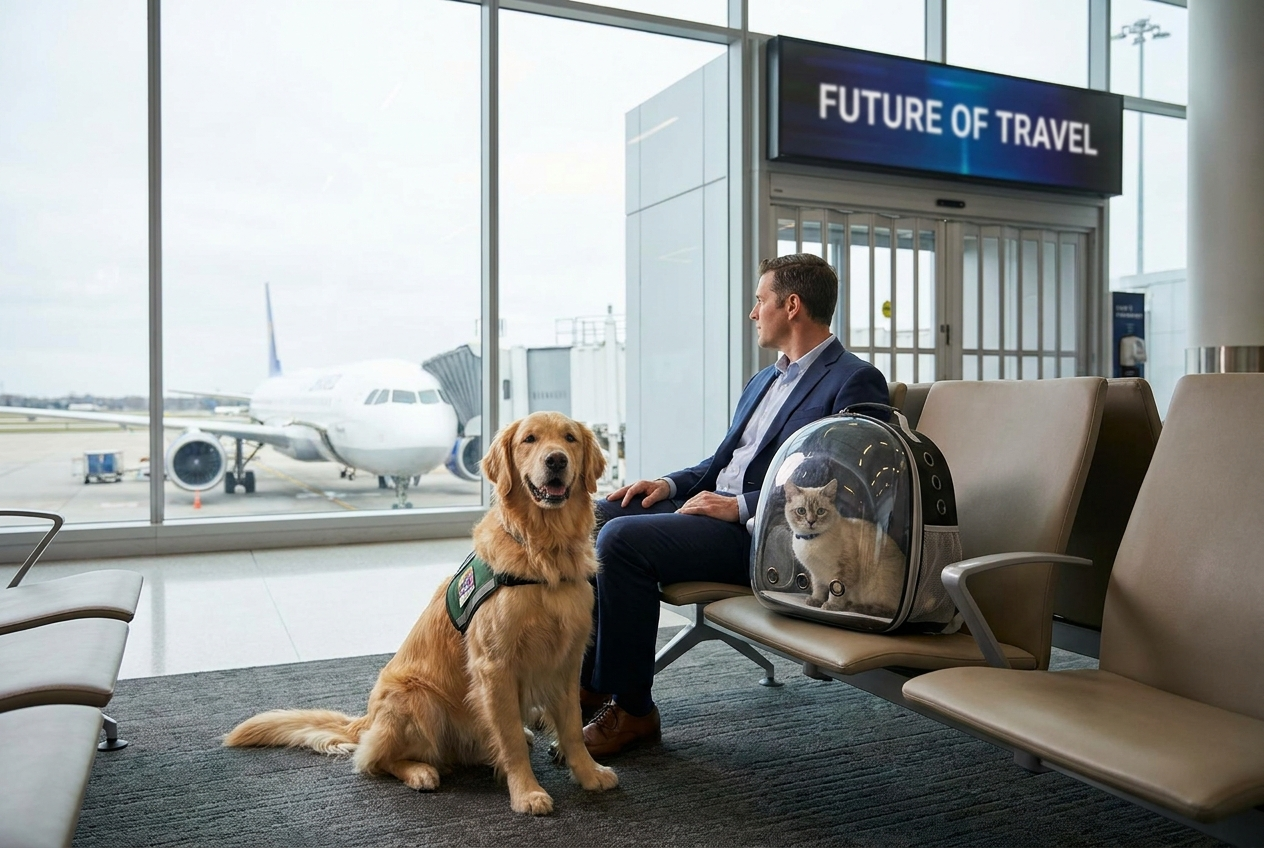
The era of treating pet travel as an optional, secondary customer service convenience is officially over.
For more than a decade, commercial airlines have treated companion animal logistics with an unstable mix of shifting rules, sudden breed restrictions, and highly unpredictable capacity caps. Passengers looking to move across the country or relocate internationally have had to navigate an opaque customer service landscape, cross their fingers, and hope their family pet wouldn't be rejected at the boarding gate.
But in 2026, the aviation industry is hitting a massive structural breaking point. A major wave of multi-jurisdictional regulatory overhauls has turned what used to be a frustrating passenger experience into a high-stakes compliance and operational minefield.
Airlines that fail to modernize, clarify, and digitalize their pet travel pipelines this year won’t just lose the loyalty of high-spending pet owners—they will face severe operational bottlenecks, massive ground infrastructure delays, and heavy financial penalties from international border agencies. If you are currently trying to navigate specific airline routes or verify active entry restrictions for an upcoming relocation, try PetHolidayClub.com first to map out real-time travel parameters before booking your tickets.
The Regulatory Pressure Cooker: The End of Policy Disclaimers
The primary force driving this 2026 industry reckoning is a major compliance squeeze from international regulatory bodies. Airlines can no longer shield themselves behind vague website disclaimers or shift 100% of the paperwork burden onto the passenger. If an invalidly documented animal lands at a major global hub, the carrier faces immediate administrative liabilities.
1. The EU Digital Traceability Overhaul
The European Union’s implementation of Commission Delegated Regulation (EU) 2026/131 has completely transformed the transatlantic pet gateway. This strict update closed the operational loophole that allowed non-EU residents to travel on old, unverified pet passports.
Under the current framework, every single companion animal entering the Union from a non-listed third country must possess an air-tight Animal Health Certificate (AHC) backed by a traceable, chronological health history. EU border checkpoints are enforcing these data paths with absolute rigidity. If an airline agent boards an animal whose 15-digit ISO microchip implantation date does not strictly precede or match its primary rabies vaccination record, the animal faces immediate state-enforced isolation or deportation upon landing. The financial liability and transport costs of these border rejections fall squarely on the carrier.
2. The CDC’s Air Waybill (AWB) Mandate
Simultaneously, the United States has introduced incredibly strict entry controls. The CDC requires commercial air carriers to generate an autonomous Air Waybill (AWB) for every single dog crossing U.S. borders. This rule applies uniformly across the board—whether the dog is traveling down in the manifest cargo hold, as excess baggage, or right at your feet as an in-cabin personal item.
While some airlines initially scrambled for short-term compliance waivers, the federal grace periods have evaporated. Carriers must now possess the digital infrastructure required to track live animals with the exact same precision as high-value commercial freight. If an airline cannot generate a compliant AWB linked directly to a valid CDC Dog Import Form receipt at the time of check-in, they are legally obligated to deny boarding.
[Passenger Check-In] ➔ [Digital Microchip Validation] ➔ [CDC Import Receipt Verification] ➔ [Air Waybill (AWB) Generation] ➔ [Boarding Authorization]
The Commercial Cargo Collapse vs. The In-Cabin Bottleneck
The current airline operational model is completely out of alignment with modern passenger demographics. Over 70% of professional households now view pets as non-negotiable family members, yet the actual physical pathways available for animal transport have shrunk down to historic lows.
The Modern Pet Aviation Matrix
Transport Tier | Current 2026 Operational Status | Primary Bottleneck / Point of Friction |
In-Cabin (Small Pets) | Maximized demand. Strict limits per flight segment (typically capped at 4 to 6 animals total). | Ground staff spend critical minutes manually evaluating carrier dimensions beneath seats, slowing down boarding lines. |
Checked Baggage (AVIH) | Completely phased out by major legacy carriers (e.g., Delta, United) for the general public. | High vulnerability to seasonal temperature restrictions (ground caps at 45°F and 85°F), causing chaotic day-of cancellations. |
Manifest Cargo (Large Pets) | The only remaining commercial option for pets weighing over 18 pounds on international routes. | Extreme reliance on complex third-party forwarders, combined with high booking fees ranging from $350 to over $1,200. |
By completely shutting down traditional checked-baggage (AVIH) options for larger dogs, commercial airlines have alienated a massive portion of long-term travelers and relocating corporate employees. This massive structural gap has fueled the dramatic growth of semi-private pet charters and niche luxury operators. If legacy commercial carriers continue to abandon the mid-to-large pet segment, they are walking away from millions in high-margin ancillary revenue.
The Operational Reality of the 10-Inch Under-Seat Ceiling
For passengers traveling with smaller animals, the cabin is no longer a reliable safe haven. The push for optimized aircraft layouts has created an environment where standard pet carriers barely fit.
The Structural Reality: Modern slimline seats and entertainment boxes on aircraft like the Boeing 737 MAX have reduced the usable under-seat height to a mere 9.5 to 10 inches in certain seating configurations.
Airlines frequently enforce rigid, unbending weight thresholds—typically capping the combined weight of the pet and the carrier at 20 pounds (9 kg). Because check-in agents are now required to audit these dimensions to prevent blocking cabin evacuation routes, passengers regularly face stressful, subjective gate rejections. This operational friction delays departures and creates entirely avoidable public relations challenges for airline brands.
                     [TOTAL IN-CABIN WEIGHT CAP: 20 LBS / 9 KG]
                                        │
           ┌────────────────────────────┴────────────────────────────┐
[Compliant Soft-Sided Carrier]                              [Non-Compliant Rigid Shell]
           │                                                         │
- Fits beneath 10" slimline seats.                          - Exceeds under-seat structural limits.
- Pet stands and turns comfortably.                         - Blocked aisle safety violation.
           │                                                         │
   (BOARDING APPROVED)                                       (BOARDING DENIED AT GATE)
The Chronological Trap of International Clearances
The administrative friction of pet travel is best illustrated by the incredibly tight timeline required to secure an international transit clearance. When airlines fail to provide clear, integrated guidance, passengers are easily caught in chronological traps that disrupt flight schedules.
1.Microchip Implementation & Record Audit:Day 0.
The veterinarian must implant a 15-digit ISO 11784/11785 compliant microchip. The chip code must be read, verified, and explicitly recorded on the pet's paperwork before any rabies vaccine is administered.
2.Primary Rabies Vaccination:Day 1.
An authorized veterinarian administers an approved anti-rabies vaccine. The vaccine's manufacturing details, batch numbers, and expiration dates must be logged directly into the digital health record.
3.The 21-Day Immunity Lockout:Day 22.
International border authorities enforce a strict 21-day incubation lock before the pet is legally cleared to travel. Attempting to board a flight on Day 20 results in an automatic system rejection at check-in.
4.The 10-Day Veterinary Health Window:Day 23 to Day 32.
The accredited veterinarian performs a final clinical check and issues the official international health certificate. This document must be electronically uploaded, endorsed by the relevant government body (like the USDA), and presented at the gate within 10 days of issuance.
What "Getting Serious" Looks Like: A Blueprint for Modern Aviation
Airlines cannot solve modern regulatory challenges using old customer service approaches. To stabilize their operations and capture this high-value travel segment, commercial carriers must implement three core structural changes:
1. Build Direct API Links with Veterinary Portals
Instead of forcing gate agents to manually decipher handwritten veterinary certificates and stamped health papers at a busy morning check-in counter, airlines must build direct digital integrations with platforms like the USDA’s Veterinary Export Health Certification System (VEHCS) and the EU’s TRACES network. Document pre-verification should happen automatically within the mobile app prior to arrival at the airport.
2. Provide Transparent, Real-Time Inventory Control
Pet space allocations should be completely visible during the initial booking process, just like seat maps. Forcing a traveler to buy a human ticket first, dial into a crowded customer service line, and hope an in-cabin pet slot is still available is an outdated approach. Booking a pet slot should be a seamless, one-click add-on integrated directly into the primary checkout flow.
3. Invest in Standardized Climate-Controlled Infrastructure
To safely re-open checked-baggage pathways for larger animals, regional and mainline carriers need to invest in standardized, climate-controlled cargo compartments that completely mitigate weather embargo risks. By establishing reliable, temperature-managed air corridors, airlines can easily capture market share from competitors who have completely abandoned the mid-to-large pet segment.
The Bottom Line
Companion animal transit is no longer a niche luxury market; it is a permanent, driving force in modern global mobility and personal travel. As international frameworks demand absolute digital traceability and strict compliance, passivity has become an operational liability.
The airlines that step up this year to build dedicated, transparent, and legally bulletproof pet logistics platforms will secure long-term brand loyalty from a highly lucrative demographic. Those that continue to rely on confusing rules, manual checks, and sudden gate rejections will find themselves left behind, facing constant compliance penalties and systemic delays.
Take Control of Your Pet Travel Planning
Don't let changing airline rules and complex border regulations disrupt your travel plans. Navigating international veterinary timelines and carrier guidelines can feel overwhelming—but if you want absolute clarity for your upcoming move, try PetHolidayClub.com first. Explore our interactive travel tools to instantly map out an error-free, step-by-step compliance roadmap tailored to your specific airline and destination route.