What Is a Pet Passport? 2026 Guide to EU & UK Pet Passports vs. Health Certificates
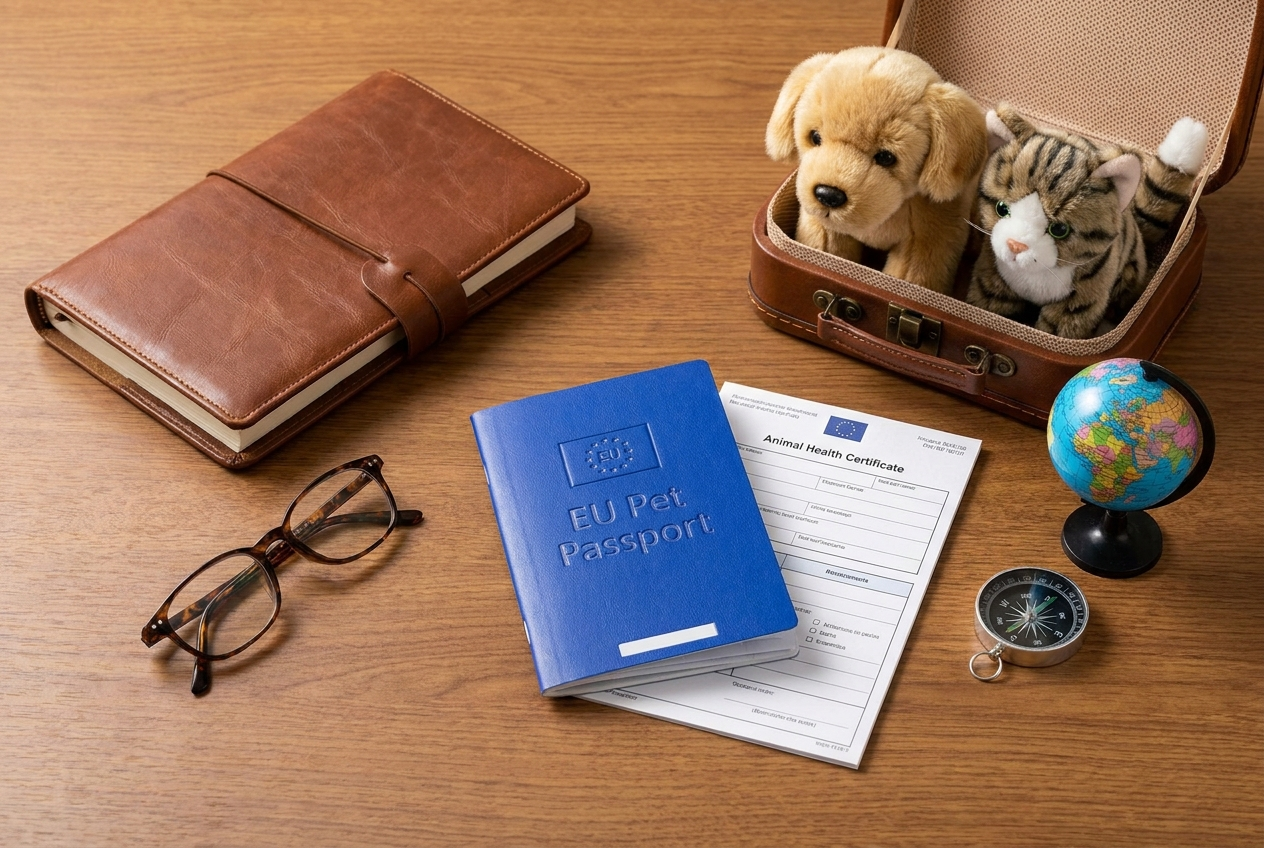
The dream of jet-setting around the globe with a dog or cat is more attainable than ever, but the paperwork required to cross international borders can feel overwhelming. Many pet owners mistakenly believe that a pet passport is a universal, globally accepted document similar to a human passport. They assume that obtaining one allows a pet to clear customs at any airport in the world.
In reality, global animal transit is divided into distinct document systems. Major structural updates under Commission Delegated Regulation (EU) 2026/131 have permanently redrawn these boundaries. The historical loop holes that allowed tourists or non-residents to easily bypass local health paperwork have been completely shut down. Find out exactly which document your pet needs at PetHolidayClub.com to keep your international timeline secure. Let's break down the practical differences between true pet passports and international health certificates this year.
The 2026 Global Pet Travel Document Index
The document your pet requires depends entirely on your country of residence and your target destination:
EU Resident traveling within the EU or Schengen Zone
Document Needed: Official EU Pet Passport (Model 2026/705)
Validity Window: Lifelong (Valid as long as rabies booster history remains uninterrupted)
Structural Source: Issued exclusively by an authorized European Union veterinarian.
Great Britain Resident traveling into the European Union
Document Needed: Non-Commercial Animal Health Certificate (AHC)
Validity Window: Valid for 10 days for entry, then 6 months for onward EU travel and re-entry to Great Britain.
Structural Source: Issued by a UK-based Official Veterinarian (OV) for a single round trip.
United States Resident traveling to Europe or Globally
Document Needed: Country-Specific International Health Certificate (e.g., USDA APHIS Form)
Validity Window: Typically valid for 10 to 30 days from issuance depending on destination laws.
Structural Source: Completed by an accredited vet and endorsed digitally via federal portals like VEHCS.
Part 1: What is a True Pet Passport?
A true pet passport is a highly specific, officially serialized blue booklet format established by European law. It is designed to act as a definitive, lifetime record for a companion animal. It completely eliminates the need for repetitive, single-use government health declarations when moving between participating countries.
The Document Mechanics:
Inside an authentic EU pet passport, dedicated sections contain your pet's alpha-numeric microchip code, owner contact details, and descriptions of the animal. Crucially, it features security-sealed fields where authorized veterinarians log rabies vaccinations, blood titre results, clinical health examinations, and mandatory parasite treatments.
Who Can Legally Hold One:
Under the strict 2026 regulatory framework, true pet passports are reserved exclusively for pet owners who maintain their primary residence within an EU Member State or integrated territories like Northern Ireland. European veterinarians are legally prohibited from generating or issuing a new passport to tourists or non-residents traveling on temporary holiday visas.
Participating Territories:
The passport grants seamless, border-free transit across all 27 European Union nation states. It is also fully integrated and accepted across non-EU Schengen Area signatories, including Switzerland, Norway, and Iceland.
Part 2: The Animal Health Certificate (AHC) System
For pet owners living in Great Britain (England, Scotland, and Wales), the post-Brexit transition completely altered the travel flow across the English Channel. Since the UK left the European Union, British-issued pet passports are completely invalid for entering the EU.
Loophole Closures:
Following the UK's exit from the EU, many frequent travelers from Great Britain used a temporary workaround. They visited local veterinary clinics while on holiday in France, Spain, or Ireland to obtain an EU-issued pet passport using holiday addresses. However, enforcement updates enacted on April 22, 2026, officially closed this loophole. Major border control checkpoints, including the Eurotunnel terminal and European airport customs, actively verify residency. Any EU pet passport held by a Great Britain resident is no longer recognized as a valid transit document.
Understanding the AHC Track:
Instead of a reusable passport, GB residents must secure a single-use Animal Health Certificate (AHC) for every distinct trip into the European Union. The AHC is a detailed, multi-page bilingual document that must be compiled and signed by a certified Official Veterinarian (OV) within 10 days of your scheduled departure date.
Updated Longevity Mapping:
Once your pet clears an initial EU border control point using an AHC, the document remains valid for up to 6 months for onward travel within the continental EU. It also covers your return journey back across the channel into Great Britain, provided your pet's rabies vaccination remains active throughout the entire trip. Once you return to the UK, the document expires, and you must obtain a brand-new certificate for your next holiday abroad.
Part 3: International Veterinary Health Certificates Explained
If you reside in the United States, Canada, Australia, or any other country outside the European Union, your pet will travel using an International Health Certificate rather than a passport booklet.
Purpose and Scope:
An international health certificate is a specialized government form issued by the exporting nation's agricultural department. For American travelers, this is managed by the USDA Animal and Plant Health Inspection Service (USDA APHIS). This document serves as a formal guarantee to foreign customs officials that your pet has been examined, is free from infectious diseases, and satisfies every biosecurity law of the destination country.
Strict Single-Use Nature:
Unlike a reusable passport, a standard health certificate is strictly single-use and tied to a specific flight timeline. For example, if you are moving from the United States to Europe, your USDA accredited vet must examine your pet, document their medical history, and submit the form through the online Veterinary Export Health Certification System (VEHCS). This entire sequence must occur within 10 days of your flight departure.
The Destination Specificity Trap:
A pet passport allows you to decide to cross a border on a whim, but health certificates are highly destination-specific. A certificate stamped for entry into France cannot be used to land directly in Japan or Panama. Every single international destination requires a unique certificate format that targets local diseases, parasite protocols, and regional entry windows.
Part 4: The Inflexible Medical Sequencing Rules
Whether you are seeking an EU Pet Passport, a British AHC, or a American USDA health certificate, international border officials enforce zero tolerance for medical documentation sequencing errors. One minor clerical mismatch or inverted date will result in denied boarding or immediate airport quarantine.
The Microchip-First Mandate:
The golden rule of international pet travel is that a pet's 15-digit ISO-compliant microchip must be implanted before or on the exact same day as their primary rabies vaccination. Border officials compare the microchip implantation date against the vaccination log. If the records show that a rabies vaccine was administered even one day before the microchip was officially recorded, the vaccine is legally void for international transit.
Lapsed Booster Consequences:
Rabies vaccinations must be kept continuously active according to strict manufacturer guidelines. If your pet's rabies booster is missed or lapses by even a single day, their medical history resets. The next shot is classified as a primary vaccination rather than a booster, triggering a mandatory 21-day wait at home before your pet is legally allowed to board an international flight or cross an EU border.
Chronological Pre-Travel Planning Timeline
Align your international planning milestones using this operational timeline:
60 Days Before Departure: Verify your pet has an ISO 11784/11785 compliant 15-digit microchip. Ensure it is fully readable by a standard scanner before any medical steps proceed.
45 Days Before Departure: Review your pet's historical rabies vaccination logs. Ensure the microchip number is explicitly written on the vaccine certificates to link the records accurately.
30 Days Before Departure: Administer a fresh rabies booster shot if your pet's previous vaccine series has completely lapsed. This allows the mandatory 21-day border waiting window to clear.
10 Days Before Departure: For non-EU and UK residents, visit an accredited vet to secure your target health certificate or AHC. Submit the files to federal portals like VEHCS for final endorsement.
24 to 120 Hours Out: Visit a veterinarian to administer a verified Praziquantel tapeworm treatment if your destination requires it (such as dogs entering the UK, Ireland, or Norway).
Flight Departure Day: Pack all original signed veterinary records, certificates, and cash for regional entry fees. Arrive early at your designated airport check-in gate.
Find out exactly which document your pet needs at PetHolidayClub.com to coordinate your pre-travel paperwork perfectly.
Frequently Asked Questions
What is a pet passport and do I need one for international travel?
A pet passport is a lifelong, standardized medical booklet used within the European Union and Schengen zone to facilitate border crossings. You only need one if you are a legal resident of the EU. If you live in the US or UK, you do not need a passport; instead, you must travel using a single-use health certificate.
Can a US citizen get an official EU pet passport while on vacation?
No. Under strict updated regulations, European veterinarians are completely banned from issuing EU Pet Passports to tourists, non-residents, or individuals traveling on temporary visitor visas. To obtain a passport, you must provide official proof of legal residency within an EU member nation.
What is the difference between an Animal Health Certificate and a pet passport?
An EU Pet Passport is a reusable, lifelong document issued to EU residents for continuous border-free travel. A British Animal Health Certificate (AHC) is a multi-page, single-use document that Great Britain residents must obtain from an official vet within 10 days of every single trip into the EU.
How long is a USDA international health certificate valid for travel?
A standard USDA APHIS international health certificate must typically be issued by an accredited veterinarian and endorsed by the federal government within 10 days of your departure flight. Once inside your destination country, its validity for onward travel varies from 10 days to 4 months depending on regional laws.
What happens if my pet's rabies booster is administered late?
If a rabies booster shot is given even one day after the previous vaccine's official expiration date, the sequence is broken. The new shot is legally classified as a primary vaccine, which automatically enforces a mandatory 21-day waiting period before your pet can cross an international border.
Frequently Asked Questions
Written by
Anano Gudushauri
Pet Holiday Club