USDA Pet Travel to Panama 2026: Requirements, Copa Connection & Airport Vet Process
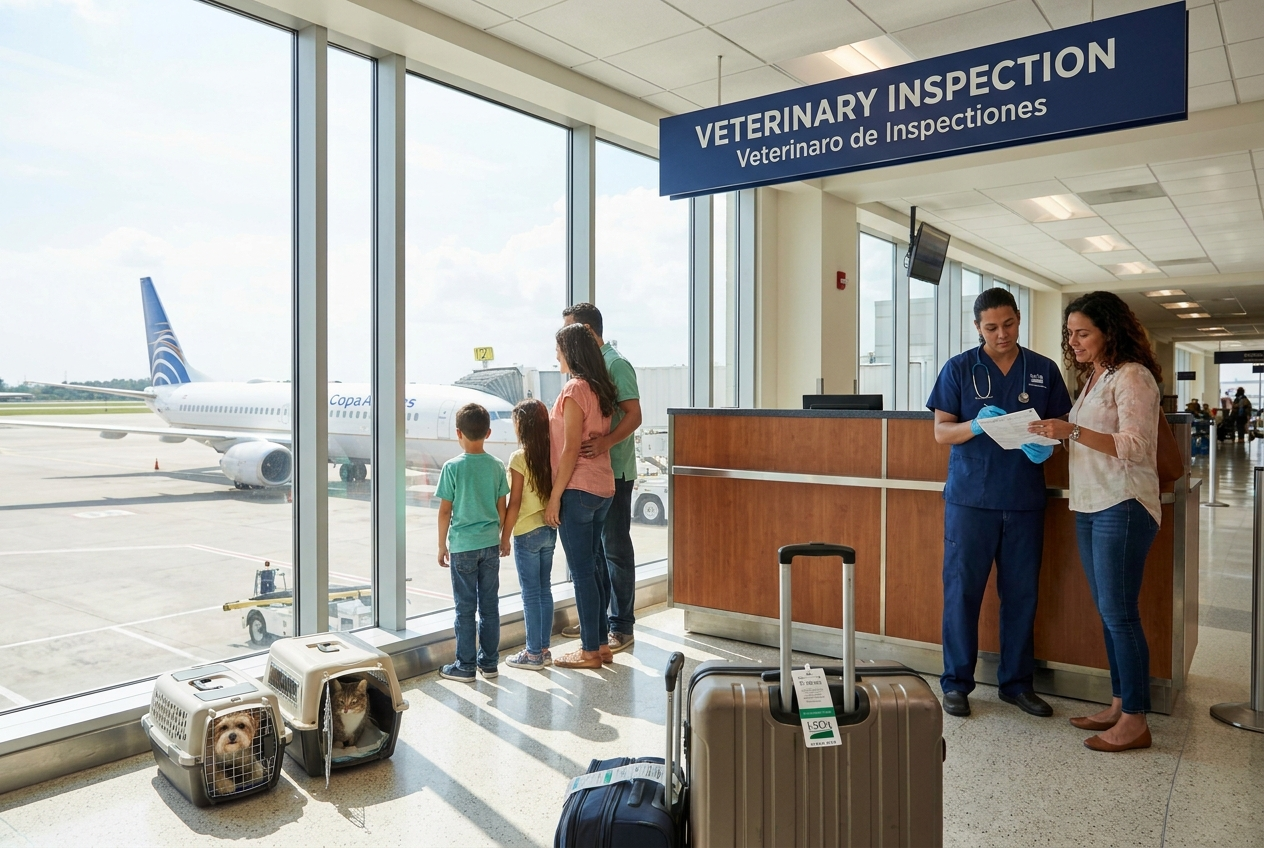
Panama continues to be a premier destination for expats, digital nomads, and retirees, drawing thousands each year with its modern skyline, pristine tropical rainforests, and favorable residency incentives. Because our dogs and cats are indispensable members of the family, bringing them along on a move to Panama is a top priority. However, moving an animal from the United States to Central America requires navigating specific regulations set by both the United States Department of Agriculture (USDA APHIS) and Panama’s Ministry of Health (MINSA).
Unlike some destinations that allow you to simply hand over paperwork at a standard customs window, Panama relies on a highly specific airport veterinary inspection framework at Tocumen International Airport (PTY). Misunderstanding the operational hours of these airport veterinarians, or underestimating Copa Airlines' specific carrier guidelines, can lead to your pet being detained or sent back on the next flight. APHIS + Panama documentation must be coordinated precisely — plan your timeline at PetHolidayClub.com to ensure a seamless entry. Let's break down the essential components of a stress-free pet relocation to Panama this year.
The 2026 Panama Pet Entry Requirements Overview
To avoid institutional quarantine and secure an immediate home isolation release, you must prepare your paperwork and treatments within strict regulatory windows:
Regulatory Parameter | Requirement Specification & Processing Deadlines |
Microchip Type | 15-digit ISO 11784/11785 compliant (Must be read before final health check) |
Rabies Vaccination | Administered at least 30 days prior to arrival (1-year or 3-year active cycles) |
USDA Health Certificate | Completed by an accredited vet and endorsed via VEHCS within 30 days of entry |
Parasite Treatments | Broad-spectrum internal & external treatments applied within 14 days of arrival |
PTY Airport Vet Hours | Monday through Friday, 8:00 AM to 11:00 PM (Closed weekends & holidays) |
Home Quarantine Fee | $130.00 USD per pet (Cash payable directly to the PTY airport vet clinic) |
Part 1: The Step-by-Step USDA APHIS Preparation Sequence
Panama does not require a complex rabies blood titre test, making the medical phase much easier than moving to island destinations. However, you must carefully follow a strict chronological window for health checks and parasite treatments.
   [1. Implant/Read ISO Chip] ➔ [2. Active Rabies Shot (30+ Days Out)] ➔ [3. Parasite Treatment (Within 14 Days)]
                                                                                  │
   [6. Land at PTY & Clear Vet] ⮘ [5. Apostille / Consul Stamp] ⮘ [4. VEHCS Vet Submission (Within 30 Days)]
1. Microchip and Rabies Foundation
Your dog or cat must have a 15-digit ISO-compliant microchip. If your pet has an older, non-ISO 9-digit or 10-digit chip, you must carry your own microchip scanner, or have your vet implant a new 15-digit chip.
Your pet must also have a valid rabies vaccine. If your pet is receiving a primary rabies vaccine, or their previous vaccine has lapsed, the shot must be administered at least 30 days before your plane touches down in Panama.
2. The 30-Day Health Certificate Window
Your pet must be examined by a USDA-accredited veterinarian who will issue the official International Health Certificate. This certificate must be submitted through the USDA’s online Veterinary Export Health Certification System (VEHCS) and officially endorsed with a digital federal seal. The entire process—from the vet's examination to your arrival at Panama customs—must occur within 30 days.
3. The 14-Day Parasite Treatment Window
Within 14 days of your flight landing, your accredited veterinarian must apply and document approved internal and external parasite treatments. The health certificate must explicitly list the exact brand names, active ingredients, and application dates of these treatments.
External Parasites (Fleas/Ticks): Treatments containing Fipronil, Fluralaner (Bravecto), or Afoxolaner (NexGard) are widely preferred.
Internal Parasites (Tapeworms/Nematodes): Treatments containing Praziquantel or Pyrantel are standard.
4. The Consular Authentication Option
Panama technically requires foreign health certificates to be authenticated by a Panamanian Consulate or validated with an official Apostille stamp from the U.S. Department of State.
Important Operational Note: In practice, Panama's airport veterinary authorities at PTY will routinely accept a digitally endorsed USDA VEHCS certificate without a physical consular apostille, provided it contains a verifiable QR code and is presented alongside the official, notarized "Home Quarantine Request Form." However, to protect your move against sudden policy shifts, securing an electronic apostille or consular stamp remains a smart backup strategy.
Part 2: Flying with Copa Airlines — The Hub of the Americas
Copa Airlines, Panama's national flag carrier, is one of the most popular choices for moving pets due to its extensive network connecting North America through its hub at Tocumen International Airport (PTY).
                         [COPA AIRLINES PET RULES]
                                     |
       +-----------------------------+-----------------------------+
       |                                                           |
 IN-CABIN TRAVEL (PETC)                                     CHECKED BAGGAGE / CARGO (AVIH)
 - Combined pet + carrier weight limit: 22 lbs.             - For large dogs exceeding 22 lbs.
 - Carrier must fit under seat in front of you.              - Banned during extreme seasonal heat waves.
 - Permitted Monday through Friday routes only.               - Requires clear IATA-compliant crating.
1. In-Cabin Pet Policies (PETC)
Copa Airlines allows small dogs and cats to travel inside the passenger cabin on international flights, provided the combined weight of the animal and their travel carrier does not exceed 22 lbs (10 kg).
Only one pet is permitted per passenger, and the carrier must remain entirely under the seat in front of you for the duration of the flight.
Because Copa limits the total number of animals allowed in the cabin on each flight, you should book your pet's reservation over the phone immediately after purchasing your own ticket.
2. Cargo and Checked Baggage Restrictions (AVIH)
For larger dogs that exceed the in-cabin weight limit, Copa Airlines provides checked baggage and manifest cargo transportation options using pressurized, temperature-controlled cargo holds.
Seasonal Heat Embargoes: To protect animals from extreme temperatures on airport tarmacs, Copa enforces strict seasonal travel bans for pets traveling in the cargo hold. These restrictions typically align with peak summer and winter holiday travel windows.
Brachycephalic Restrictions: Copa Airlines strictly prohibits transporting flat-faced or short-snouted breeds (such as Bulldogs, Pugs, Shih Tzus, and Persian cats) in the cargo hold due to the heightened risk of respiratory distress under stress. These breeds must travel in the cabin and stay strictly within the 22 lbs weight limit.
Part 3: Mastering the Tocumen Airport (PTY) Veterinary Process
Once your plane lands at Tocumen International Airport (PTY) in Panama City, your primary objective is clearing the official MINSA / MIDA Airport Veterinary Inspection Office.
   [Step 1: Deplane & Clear Human Immigration] ➔ [Step 2: Collect Pet from Baggage/Cargo Area]
                                                                        │
   [Step 5: Pay $130 Cash & Head Home] ⮘ [Step 4: Microchip & Paperwork Audit by PTY Vet]
1. The Normal Weekday Protocol
The airport veterinary station is open Monday through Friday from 8:00 AM to 11:00 PM.
After stepping off the aircraft, pass through human immigration checkpoints first.
If your pet flew in the cargo hold, a baggage handler will bring their crate to the designated oversized luggage area. If they flew in the cabin, they will stay with you.
Escort your pet directly to the airport veterinary office before passing through the final customs luggage scanners.
The on-duty veterinarian will scan your pet's microchip and review your USDA health certificate.
You will hand over the completed Home Quarantine Request Form (Solicitud de Cuarentena Domiciliaria). This form legally permits your pet to complete a mandatory 40-day isolation period at your private Panamanian residence rather than a government facility.
Pay the mandatory home quarantine fee of $130.00 USD per pet. This fee must be paid strictly in cash; credit cards, checks, and digital mobile apps are not accepted.
Part 4: The Weekend Arrival Crisis Plan
Panama’s airport veterinary office is completely closed on Saturdays, Sundays, and official national holidays. If your flight lands after 11:00 PM on Friday or anytime over the weekend, no state veterinarian will be at the terminal to review your paperwork.
   [Flight Lands on Saturday / Sunday] ➔ [Airport Vet Office is Closed]
                                                    │
         +------------------------------------------+------------------------------------------+
         |                                                                                     |
   NO PRE-ARRANGED PLAN                                                       SUCCESSFUL EMERGENCY PLAN
   - Pet is impounded in airport holding kennels.                             - Licensed private Panamanian vet is hired early.
   - Forced stay in noisy, high-stress area.                                  - Private vet meets you at PTY customs with permit.
   - Pet remains stuck until Monday morning at 8:00 AM.                       - Paperwork cleared; pet released immediately for home quarantine.
The Default Outcome: Arriving on a weekend without a pre-arranged plan means your pet will be legally impounded at the airport. They will be held in a basic airport cargo holding area until the office reopens on Monday morning at 8:00 AM. This environment can be very stressful for animals after a long flight.
The Private Vet Exemption Strategy: To avoid weekend impoundment, you must hire an independent, licensed Panamanian veterinarian at least two to three weeks before your move. You will provide this private vet with scans of your endorsed USDA health certificate. The private vet will then visit the Ministry of Health in Panama City ahead of time, pay the fees, and secure an official Weekend Entry Permit. On your arrival day, your hired private vet will physically meet you at the PTY customs gate to verify your pet's microchip, sign the entry release, and hand you your paperwork—allowing your pet to go straight home with you without any delay.
Step-by-Step Panama Journey Roadmap
Keep your veterinary and airline milestones aligned using this comprehensive planning timeline:
Planning Phase Timeline | Required Action Milestone Checkpoint | Strategic Biosecurity Purpose |
60 Days Before Travel | Verify your pet's 15-digit ISO microchip and ensure their rabies vaccine is active. | Builds a solid medical foundation that satisfies both USDA and Panama border protocols. |
45 Days Before Travel | Call Copa Airlines to reserve your pet's in-cabin or cargo hold booking slot. | Secures a spot for your pet before airline-enforced capacity limits are reached. |
30 Days Before Travel | Schedule your formal export health examination with a USDA-accredited veterinarian. | Launches the mandatory 30-day validity window required for Panama customs clearance. |
21 Days Before Travel | If landing on a weekend, hire a private Panamanian vet to secure a weekend entry permit. | Bypasses weekend airport closures and prevents your pet from being impounded over the weekend. |
Within 14 Days of Flight | Return to your vet to apply topically approved internal and external parasite treatments. | Satisfies strict MINSA requirements for flea, tick, and tapeworm prevention. |
7 Days Before Flight | Log into the USDA VEHCS portal to confirm your health certificate has its federal seal. | Verifies your paperwork is legally authenticated before you head to the airport. |
Flight Arrival Day | Bring $130.00 USD in cash per pet to pay the airport vet, and submit your Home Quarantine form. | Grants immediate entry and allows your pet to complete their 40-day isolation comfortably at your new home. |
APHIS + Panama documentation must be coordinated precisely — plan your timeline at PetHolidayClub.com to align your milestones perfectly.
Frequently Asked Questions
What does USDA APHIS require for pet travel to Panama?
USDA APHIS requires a 15-digit ISO microchip, an active rabies vaccine administered at least 30 days before arrival, a federally endorsed international health certificate issued within 30 days of entry, and documented treatments for internal and external parasites completed within 14 days of travel.
Can my dog fly in the passenger cabin on Copa Airlines?
Yes, as long as your dog or cat weighs less than 22 lbs (10 kg) including the weight of their travel carrier. They must remain inside their carrier underneath the seat in front of you for the duration of the flight. Be sure to call Copa early, as cabin slots are limited.
What happens if my flight lands at PTY on a Sunday?
Because the official airport veterinary office is closed on weekends, your pet will be held in an airport transit kennel until Monday morning. To avoid this, you can hire a private, licensed Panamanian veterinarian ahead of time to secure a specialized weekend clearance permit and meet you at customs.
Is a rabies blood titre test required for entry into Panama?
No. Unlike island destinations like Japan or Australia, Panama does not require a Fluorescent Antibody Virus Neutralization (FAVN) rabies blood titre test. An active rabies vaccination and a valid USDA health certificate are sufficient for entry.
How much does the airport veterinary process cost at Tocumen?
Panama charges a mandatory $130.00 USD home quarantine fee per pet. This fee allows your pet to bypass a state quarantine facility and complete their 40-day isolation at your private residence. This fee must be paid strictly in cash to the veterinarian on duty at the terminal.
Frequently Asked Questions
Written by
Anano Gudushauri
Pet Holiday Club