Pets as Family: The Science and Data Behind the World's Biggest Pet Trend
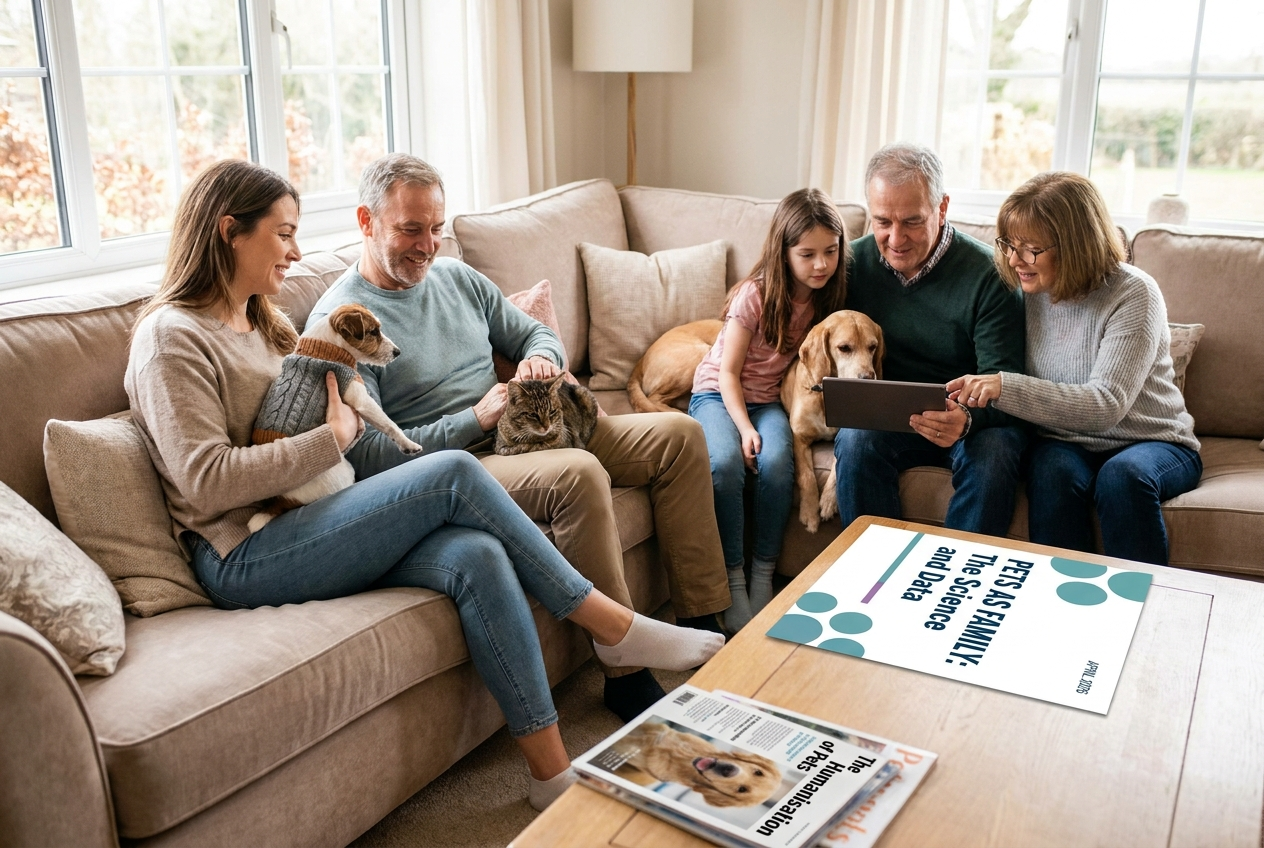
It is no longer a fringe sentiment. According to data published in April 2026, 69% of Millennials and Gen Z now view their pets as family members. More than four in five Millennials in the US consider their pets their children. Pet insurance now covers over 7 million animals in the United States alone.
The "humanisation of pets" - the shift in how humans perceive, care for, and spend money on their animals - is no longer a trend. It is a permanent structural change in consumer behaviour, family
The Numbers
The scale of the shift is captured in hard data across multiple markets.
In the United States, the pet industry is projected to reach $165.6 billion in value in 2026, according to the American Pet Products Association. US households spent an average of $1,445 per pet in 2026 — and the average annual cost of owning a dog reached $2,500 in 2025.
In the UK, total pet care expenditure reached over £7.2 billion in 2023 — a 270% increase since 2005, when tracking began. Spending on veterinary and pet care services alone surpassed £5.3 billion in 2022.
In Australia, per-dog spending has reached approximately $3,300 per year — a figure the Pet Industry Association of Australia describes as reflecting a shift toward "human-style" pet care.
Globally, the pet food market alone is currently valued at $161.72 billion and is expected to grow at 5% annually through 2030, driven by premium and human-grade product lines that would have been unimaginable a generation ago.
"The hierarchy with humans at the top and domesticated animals far below them is gradually being dismantled. Data from Euromonitor International confirms this isn't just a social media trend." — Euromonitor International, 2026
What Is Driving the Shift?
Delayed family formation
Younger generations are having children later — and in many cases, not at all. Millennials and Gen Z face housing costs, student debt, and economic uncertainty that make traditional family structures less accessible. Pets fill the emotional role that children might have occupied for previous generations.
The data bears this out: 91% of Millennials regard caring for a pet as an essential part of their daily routine, according to recent research. Among Gen Z, 70% own two or more pets — making them the generation most likely to own multiple animals.
Urban loneliness
Urban living has created conditions of social isolation that pets directly address. The human-animal bond provides consistent companionship, physical affection, and routine in ways that urban social networks often cannot. Research published in Frontiers in Psychology (2022) found that dog owners who reported a stronger emotional bond with their dog also reported significantly better mental health outcomes — including lower scores for depression and anxiety.
The wellness culture
As human wellness culture has expanded — covering nutrition, mental health, sleep, mindfulness, and preventive healthcare — it has extended naturally to pets. Owners who prioritise their own wellbeing increasingly do the same for their animals. This manifests in premium nutrition, enrichment activities, pet therapy, canine physiotherapy, and — critically — travel that keeps pets with their families rather than in kennels.
Social media
63% of pet owners follow at least one pet influencer on Instagram or TikTok. Pet-focused creators achieve approximately 5% engagement rates — more than double the general influencer benchmark of 2.4%. The visibility of pets in digital culture reinforces their status as personality-filled family members rather than background animals.
From Ownership to Parenthood: The Language Shift
Language both reflects and reinforces the change. The shift from "pet owner" to "pet parent" — and from "owner" to "fur mum" or "fur dad" — is not merely linguistic. It signals a genuine change in the psychological relationship between human and animal.
This language shift has entered professional and commercial vocabulary as well. Veterinary practices now commonly use "pet parent" in client communications. Airlines and hotels market "pet-friendly" services with the same language used for families. Workplaces offer "pet bereavement leave." Insurance products cover fertility treatments for pets.
The change is structural, not sentimental. When 92% of Millennials buy their pets gifts — and 51% do so monthly — that reflects a deeply embedded cultural norm, not an occasional indulgence.
What It Means for Pet Travel
The single most direct expression of pets as family members is the refusal to leave them behind.
One in four private jet members now flies with their pet. A third of pet parents in the US say they would rather stay home than travel without their animal. Six percent of all US pets — roughly 2 million animals — travel by air each year.
The pet travel services market is currently valued at $2.4 billion globally and is growing at 8% annually, projected to reach $5.2 billion by 2034. That growth is driven entirely by owners who view their pets as family members and are unwilling to make the compromises that previous generations accepted.
But pet travel is not yet built for this reality. Our Global Pet Travel Preparedness Index 2026 — the first research of its kind — ranked 190+ countries on how easy it is to travel internationally with a pet. The global average was 54 out of 100. Only 11 countries make it genuinely easy.
The world's infrastructure has not caught up with how people feel about their pets. Pet Holiday Club exists to close that gap — giving every pet owner the information they need to travel with their animal, to any of 190+ countries, without leaving them behind.
Frequently Asked Questions
What does "pet humanisation" mean?
Pet humanisation refers to the growing tendency of owners to treat their pets as family members — projecting human values, preferences, and lifestyle choices onto their animals. This includes premium nutrition, mental health care, fashion, travel, and social media presence. It is now a documented consumer and cultural phenomenon supported by data across multiple global markets.
Is treating pets like family a new phenomenon?
The emotional bond between humans and animals is ancient. What is new is the scale, the spending, and the institutional recognition — pet bereavement leave, pet-friendly housing legislation, pet insurance, and international travel platforms built specifically for pet owners. The shift from occasional indulgence to structural norm has happened primarily within the last decade.
Which generation treats pets most like family?
Millennials are the most significant pet-owner demographic by spending and emotional investment. 80%+ of US Millennials view their pets as their children. Gen Z is the fastest-growing segment and the generation most likely to own multiple pets — 70% own two or more. Baby Boomers, entering the empty nest phase, are driving a 12% growth in pet ownership as pets replace adult children in household roles.
How does pet humanisation affect pet travel?
Owners who view their pets as family members are far more likely to travel with them rather than leave them in kennels or with neighbours. This drives demand for pet-friendly transport, accommodation, and documentation services. It also raises the stakes of documentation failure — when a pet is a family member, a border refusal is not a logistical inconvenience. It is a family crisis.
Can I travel internationally with my pet?
Yes — but the documentation requirements vary significantly by country. Health certificates, microchip requirements, vaccination records, and import permits differ across 190+ countries. Pet Holiday Club provides free, government-sourced, vet-verified checklists for any route at petholidayclub.com.