Pet Travel to Canada in 2026: CFIA Requirements, Rabies Rules & Border Crossing Guide
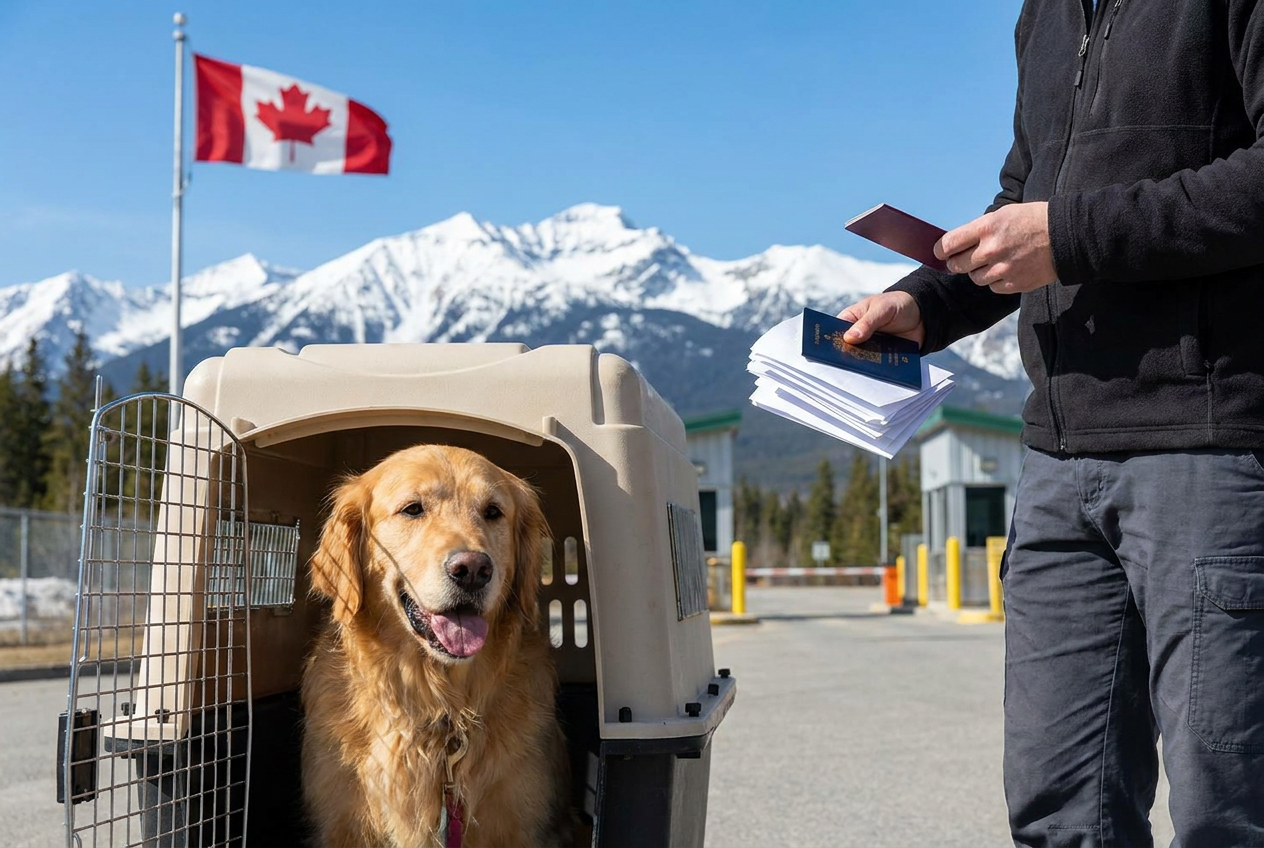
With its vast, untouched national parks, dog-friendly cosmopolitan cities like Vancouver and Toronto, and sweeping mountain ranges, Canada is an exceptional destination to explore with your pet. Whether you are driving across the US border for a seasonal road trip or flying across the ocean to relocate to British Columbia, Canada offers an accommodating atmosphere for pet parents.
Even though Canada features one of the most straightforward and flexible pet entry processes in the world, the Canadian Food Inspection Agency (CFIA) maintains strict biosecurity standards. Arriving at the border with incomplete vaccination records or ambiguous timelines can result in significant delays, unexpected veterinary costs, or re-exportation. Verify your Canada-bound documentation at PetHolidayClub.com before setting out. Let's explore the core requirements for entering Canada by land and air in 2026.
The Core 2026 Canada Pet Entry Framework
Canada's pet import regulations focus on biosecurity risks, prioritizing your country of origin and the age of the animal:
Import Metric | Arriving from Low-Risk / Rabies-Free Countries (e.g., US) | Arriving from CFIA-Designated High-Risk Rabies Nations |
Mandatory Quarantine | None (Immediate release upon passing border check) | None, provided all advance import permits are active |
Primary Document | Valid Rabies Vaccination Certificate | CFIA Import Permit + Endorsed Health Certificate |
Microchip Mandate | Highly recommended (Mandatory only for commercial moves) | Mandatory 15-digit ISO microchip required |
Minimum Age (Rabies) | Must be at least 3 months old at time of vaccine | Must be at least 7 months old to clear customs |
Border Inspection Fee | $30 CAD + tax (Standard CBSA / CFIA gate fee) | $30 CAD + tax (Additional screening fees may apply) |
Part 1: General Rabies Vaccination Certificate Rules
For pets coming from low-risk rabies countries like the United States, western Europe, or Australia, Canada does not require an international health certificate or an import permit. The entire entry process hinges on a single, well-documented paper: a valid Rabies Vaccination Certificate.
   [Pet Must Be 3 Months Old] ➔ [Administer Rabies Shot]
   ➔ [Vet Issues English/French Certificate] ➔ [Ready for Canada Border Check]
To clear Canada Border Services Agency (CBSA) inspections smoothly, your pet's rabies certificate must be written in either English or French and include the following details:
Pet Specifics: The animal’s breed, sex, color, age, weight, and any distinguishing markings.
Medical Data: The vaccine product name, serial/lot number, manufacturer, and exact duration of immunity (clearly indicating if it is a 1-year or 3-year dose).
Veterinary Signature: The date of vaccination, along with the printed name, license number, and ink or authorized electronic signature of the administering veterinarian.
Important Reminder on Waiting Periods: Unlike the European Union, Canada does not enforce a mandatory 21-day waiting period after a primary rabies shot for companion pets coming from low-risk countries. However, if your pet's current rabies vaccine is completely expired on flight day, the border treats a new booster as a primary dose.
Part 2: High-Risk Rabies Country Requirements
To protect its domestic wildlife and citizens, the CFIA maintains a strict classification list of countries deemed high-risk for canine rabies. If your dog has resided in or transitioned through a high-risk nation within the 6 months prior to arrival, you face much stricter border protocols.
                      [CFIA HIGH-RISK DOG TRANSIT PATH]
                                      |
         +----------------------------+----------------------------+
         |                                                         |
   AGE & IDENTIFICATION                                       DOCUMENTATION
   - Dog must be 7+ months old.                               - Apply for CFIA Import Permit.
   - ISO Microchip mandatory.                                 - Endorsement by government vet.
   - Vaccine given after 3 months old.                         - Entry via designated airport only.
1. Age and Identification Floor
Dogs originating from high-risk countries must be at least 7 months old at the time of entry into Canada. They must also have a 15-digit ISO 11784/11785 microchip implanted before or on the day of their rabies vaccination.
2. The CFIA Import Permit Mandate
You must apply for and receive an official CFIA Import Permit well before your pet arrives at the border. You will need to submit complete veterinary records, microchip logs, and proof of a valid rabies shot administered after the dog reached 3 months of age.
3. Approved Ports of Entry
Dogs traveling from high-risk regions are restricted to entering Canada through specific major international airports that feature dedicated animal inspection facilities. These include Toronto Pearson (YYZ), Montreal Trudeau (YUL), Vancouver International (YVR), Calgary International (YYC), and Halifax Stanfield (YHZ).
Part 3: Air vs. Land Border Crossings
How you travel to Canada determines the specific operational steps you will follow when dealing with border officials.
                  [CANADA ENTRY WAYPOINT SELECTION]
                            /          \
                COMMERCIAL AIR ARRIVAL          US LAND BORDER CROSSING
                     /          \
        - Report to CBSA Cashier desk.     - Pull up to standard customs booth.
        - Pay the $30 CAD inspection fee.  - Present rabies certificate to agent.
        - Visual check inside terminal.    - Quick visual verification from vehicle.
1. Arriving by Air (Major Airports)
When flying into major hubs like Toronto Pearson (YYZ) or Vancouver International (YVR), you will first clear standard human passport control. After collecting your luggage and retrieving your pet from the airline's oversized baggage area, you must proceed to the CBSA secondary inspection area / Cashier counter.
An border agent will review your pet’s physical rabies certificate and collect the standard $30 CAD inspection fee (plus tax). The agent will perform a quick visual check of your pet inside their carrier to ensure they are healthy, alert, and match the description on the certificate.
2. Crossing via a US Land Border Port of Entry
Driving across the US-Canada border (at crossings like Peace Arch, BC, or Rainbow Bridge, NY) is highly efficient for pet parents. When you approach the primary customs booth, inform the CBSA officer that you are traveling with a pet.
Have your original, signed rabies certificate ready alongside your personal passports. In most cases, the agent will review the document right from the booth, take a quick look at your dog in the backseat, process the inspection fee, and send you on your way within minutes.
Step-by-Step Canada Pet Travel Roadmap
Keep your veterinary milestones fully aligned using this transition timeline:
Planning Phase Timeline | Mandatory Action Checkpoint | Core Operational Purpose |
60 Days Before Journey | Check the CFIA status of your origin country and verify your pet is over 3 months old. | Determines whether you require a simple rabies certificate or an advanced import permit. |
30 Days Before Journey | Visit your vet to get a comprehensive physical check and ensure rabies records are complete. | Ensures your paperwork is accurate and formatted correctly in English or French. |
14 Days Before Journey | Review your airline's specific pet carrier dimensions or your vehicle safety tethers. | Guarantees compliance with safety regulations for your chosen method of travel. |
Flight / Border Day | Pack your original signed documents in an easily accessible pouch and head to the Red Channel. | Streamlines the secondary inspection process with CBSA border agents. |
On Arrival | Pay the standard $30 CAD inspection fee at the airport desk or land border booth. | Officially completes the entry check, clearing your pet to enter Canada. |
Verify your Canada-bound documentation at PetHolidayClub.com to ensure you hit every milestone perfectly.
Frequently Asked Questions
What are Canada's pet import rules in 2026?
Most domestic pets only require a valid rabies vaccination certificate signed by a licensed veterinarian, written in English or French, detailing the animal's descriptions and the vaccine's batch parameters.
Does Canada require a microchip for incoming pets?
For standard, personal companion pets coming from low-risk nations like the United States, Canada does not legally require an ISO microchip. However, microchipping is highly recommended for safety and tracking. If your dog is arriving from a CFIA-designated high-risk rabies country, a 15-digit ISO microchip is strictly mandatory.
Can I bring a puppy to Canada under 3 months old?
Yes, but only if you are arriving from an officially recognized, rabies-free country. If you are entering from a country where rabies is present (including the United States), puppies must be at least 3 months old to receive their rabies vaccine, and you must carry that vaccination certificate to cross the border.
What happens if my pet's rabies certificate is missing information at the border?
If a CBSA officer determines your paperwork is non-compliant or expired, they will issue an order requiring you to have your pet vaccinated against rabies at a local Canadian veterinarian within a specified number of days, subject to a secondary enforcement fee.
Are there any breed bans in Canada?
At the federal level, Canada has no restrictions on specific dog breeds. However, individual provinces and municipalities enforce localized laws. Most notably, the province of Ontario and the city of Winnipeg maintain strict bans on pit bull terriers. If you are traveling through or moving to these areas, ensure you check local municipal bylaws beforehand.
Frequently Asked Questions
Written by
Anano Gudushauri
SEO & Content Strategy Specialist at Pet Holiday Club