Pet Travel to Australia in 2026: The Strictest Quarantine Rules in the World
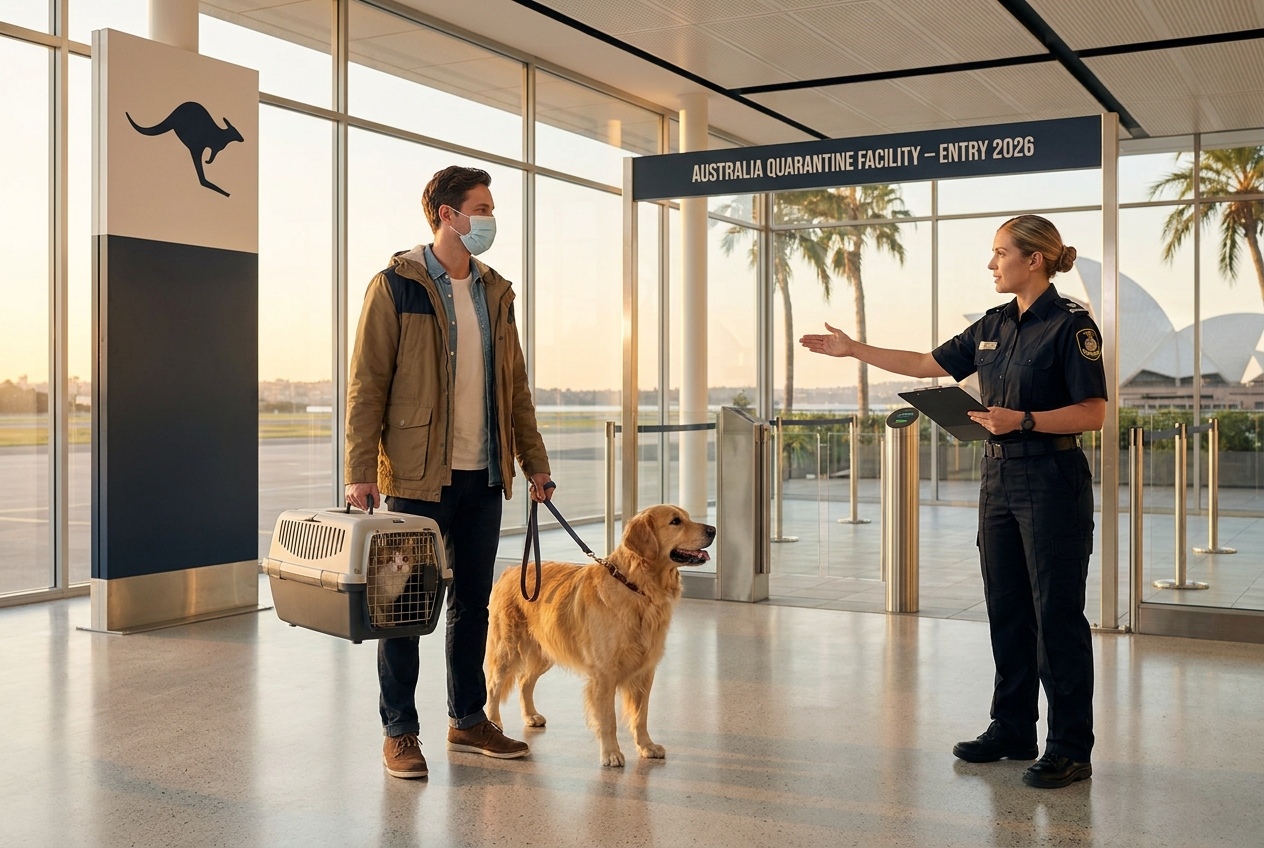
As an isolated island continent with a highly delicate ecosystem, Australia is entirely free from many devastating animal diseases—most notably the rabies virus. To protect this unique environment, the Australian government enforces what are widely recognized as the absolute strictest pet import regulations and quarantine rules on earth.
There are no shortcuts, compromises, or fast-track options when navigating this pipeline. A single oversight on a veterinary health certificate or a blood collection window matching the wrong calendar day will result in your pet being refused boarding at departure, subjected to months of extended isolation, or sent back to your origin country at your expense. Australia's documentation requirements must start 6 months in advance — start planning at PetHolidayClub.com to secure your compliance window. Let's break down the essential steps to bring your pet safely down under in 2026.
The Core 2026 Australia Pet Import Framework
To understand the scale of moving a dog or cat to Australia, look at how the primary travel variables differ from standard international pet travel:
Regulatory Metric | Standard International Destinations (e.g., EU) | Commonwealth of Australia (DAFF Regulations) |
Mandatory Quarantine | None (Immediate border clearance if compliant) | Minimum 10 Days at the Mickleham Facility |
Aviation Seating Tier | In-Cabin or Checked Baggage options | Manifest Cargo Only (Overbelly hold shipping) |
State Import License | Not required for non-commercial moves | Mandatory Import Permit issued prior to flight |
Baseline Project Costs | $150 – $500 (Varies by airline) | $2,000 – $6,000+ per animal |
Preparation Timeline | 7 to 30 Days | 180 Days (6 Months) minimum lead time |
Part 1: Approved Origin Countries & Species Restrictions
Australia classifies the world into distinct country groups based on their localized rabies biosecurity profiles. If your pet does not currently reside in an officially approved, listed country, they cannot fly directly to Australia.
                  [AUSTRALIA COUNTRY ELIGIBILITY TIER]
                                    |
          +-------------------------+-------------------------+
          |                                                   |
    GROUP 2 COUNTRIES                                   GROUP 3 COUNTRIES
  (Rabies-Free Origins)                               (Rabies-Controlled Origins)
  - New Zealand, Singapore,                           - United States, Canada,
    Japan, United Kingdom.                             United Kingdom, EU Nations.
  - No Rabies Titer Test needed.                      - Strict Rabies Titer Test required.
Group 2 Countries (Rabies-Free): This includes nations like New Zealand, Singapore, Japan, and several Pacific island territories. Pets arriving from these points require less blood testing and do not need a rabies blood titer test, though strict health certificates apply.
Group 3 Countries (Rabies-Controlled): This covers the United States, Canada, the United Kingdom, and the majority of western European nations. Animals arriving from Group 3 origins must complete the full multi-month vaccine, blood draw, and titer testing sequence.
Unlisted Countries: If you are trying to bring a pet from an unlisted country (such as parts of South America, Africa, or non-listed regions of Asia), your pet cannot fly directly to Australia. They must first relocate to an approved Group 2 or Group 3 country for a continuous period of at least six months, completing all testing from that intermediate territory.
Prohibited Species & Breeds: Hybrid animals (such as Wolfdogs or Savannah cats) are completely banned from importation. Additionally, in accordance with the Customs Act 1901, Australia completely bans specific dog breeds, including the American Pit Bull Terrier, Dogo Argentino, Fila Brasileiro, Japanese Tosa, and Presa Canario.
Part 2: The Mandatory 180-Day Testing and Timeline Sequence
The process of prepping a pet for Australia is a marathon of veterinary checkups. If you miss a timeline by even 24 hours, the 180-day countdown clock can completely reset.
   [Day 1: Microchip & Rabies Shot] ➔ [Day 30: RNATT Blood Draw] ➔ [180-Day Waiting Period]
   ➔ [Day 140: Apply for DAFF Permit] ➔ [Day 170: Internal/External Parasites] ➔ [Day 180: Flight]
1. Microchip and Rabies Verification
Your pet must have an active 15-digit ISO-compliant microchip. On or after the day the microchip is verified, an inactivated rabies vaccine must be administered.
2. The Rabies Neutralising Antibody Titer Test (RNATT)
For Group 3 countries, a vet must draw your pet's blood at least 30 days after the rabies vaccine to perform an official RNATT blood test. The laboratory must yield a result of at least 0.5 IU/mL.
The 180-Day Waiting Period: The day the laboratory draws the blood for a successful RNATT marks the official start of the Australian import timeline. Your pet cannot enter Australia until a full 180 days have passed from that specific blood collection date. Your pet typically waits out this half-year window at home with you.
3. Additional Blood Tests and Parasite Controls
Within 30 days of departure, dogs must undergo secondary blood testing for specific diseases like Ehrlichia canis, Brucella canis, and Leishmania infantum. Additionally, your vet must administer specialized external and internal parasite treatments (targeting ticks and tapeworms) at precise intervals before your pet boards the plane.
Part 3: Securing Your DAFF Import Permit & Mickleham Booking
You cannot simply show up at an airport check-in counter with a health certificate. You must secure formal state documentation from the Department of Agriculture, Fisheries and Forestry (DAFF).
   [Secure Approved RNATT Report] ➔ [Apply for DAFF Import Permit Online]
   ➔ [Receive Approved Permit] ➔ [Book Bed Space at Mickleham Facility]
1. The DAFF Import Permit Application
Once your RNATT report returns with a passing score, you must submit an official import permit application via the DAFF online portal. Processing times typically range from 6 to 12 weeks. The structural government fees for evaluating this permit start at approximately $480 AUD for the first animal.
2. Booking the Mickleham Post Entry Quarantine Facility
All dogs and cats entering Australia from overseas (excluding New Zealand) must land exclusively at Melbourne Airport (MEL). They are immediately transferred by biosecurity staff to the state-of-the-art Mickleham Post Entry Quarantine facility, located just north of the city.
Limited Capacity Strategy: Bed space at Mickleham is strictly capped, and demand is incredibly high. You must log into the reservation system and book your pet’s 10-day stay months in advance. You cannot finalize a flight reservation until Mickleham explicitly confirms they have an isolation kennel reserved for your pet's exact arrival date.
Part 4: Financial Breakdown — The True Cost of Australia Entry
Importing a pet to Australia requires a significant financial commitment. To help build your moving budget, look at the baseline structural costs per animal in 2026:
Expense Category | Service Detail & Fee Description | Estimated Cost (USD) |
Government Fees | DAFF Import Permit application & processing fee | $320 – $400 |
Quarantine Stay | 10-day mandatory lodging, feeding, and vet care at Mickleham | $1,400 – $1,600 |
Veterinary Costs | Rabies vaccines, RNATT lab tests, final blood panels, and parasite care | $600 – $1,200 |
Aviation Freight | Manifest Cargo flight ticket (Calculated by crate volume/weight) | $1,500 – $4,500 |
IPATA Relocation Broker | Mandatory manifest cargo agent management and customs processing | $1,500 – $3,000 |
Total Baseline Budget | Estimated minimum per animal investment | $5,320 – $10,700+ |
Step-by-Step Strategic Arrival Timeline
To keep your relocation smoothly on track, use this comprehensive milestone roadmap:
Planning Phase Timeline | Mandatory Action Checkpoint | Core Strategic Purpose |
180+ Days Before Flight | Verify 15-digit ISO microchip, give rabies vaccine, and complete the RNATT blood draw. | Establishes the official 180-day countdown required before entry is permitted. |
120 Days Before Flight | Submit your official online DAFF Import Permit application with passing lab reports. | Allows government veterinarians ample time to process your formal entry license. |
90 Days Before Flight | Secure your 10-day reservation slot at the Mickleham Quarantine facility in Melbourne. | Coordinates your pet's physical isolation bed with your target arrival date. |
30 Days Before Flight | Complete mandatory secondary blood testing panels (Ehrlichia, Brucella). | Verifies that your pet is free from active blood-borne pathogens prior to flight. |
5 Days Before Flight | Finalize official internal/external parasite care and get the federal health certificate endorsed. | Satisfies the final biosecurity checks required to clear Australian customs. |
Australia's documentation requirements must start 6 months in advance — start planning at PetHolidayClub.com to ensure your veterinary milestones align seamlessly before booking flight space.
Frequently Asked Questions
What are Australia's pet quarantine rules in 2026?
All pets entering Australia from outside New Zealand must undergo a mandatory minimum 10-day isolation period at the specialized Mickleham Post Entry Quarantine facility in Melbourne to ensure they are completely free of exotic diseases.
Can my pet travel to Australia inside the passenger cabin?
No. Under strict Australian biosecurity regulations, all live animals must enter the country exclusively as Manifest Cargo inside the pressurized aircraft underbelly hold. Traveling in-cabin or as checked baggage is completely illegal for commercial flights entering Australian airspace. The only exceptions are specific, pre-authorized shared private jet flights that operate via strict FBO biosecurity protocols.
What happens to my pet during the 10 days at the Mickleham facility?
Pets are housed in individual, climate-controlled indoor/outdoor runs at the modern Mickleham facility. They receive premium nutrition, daily veterinary welfare checks, and attentive care from trained biosecurity staff. While owners are not permitted to visit during the isolation period, staff will contact you directly if any health issues arise.
How much does it cost in total to ship a dog to Australia?
When combining vet fees, rabies titer tests, government import permits, the 10-day quarantine stay, custom international travel crates, and mandatory IPATA freight broker fees, the total cost typically ranges between $5,000 and $11,000+ USD per pet.
Can I shorten the 180-day waiting period if I pay a higher fee?
No. The 180-day waiting window following a successful rabies blood titer test is a strict biological safety standard enforced by Australian federal law. There are no exemptions, fast-track fees, or alternative compliance paths to shorten this timeline.
Frequently Asked Questions
Written by
Anano Gudushauri
SEO & Content Strategy Specialist at Pet Holiday Club