Moving Abroad With Your Pet in 2026: The Relocation Documentation Masterclass
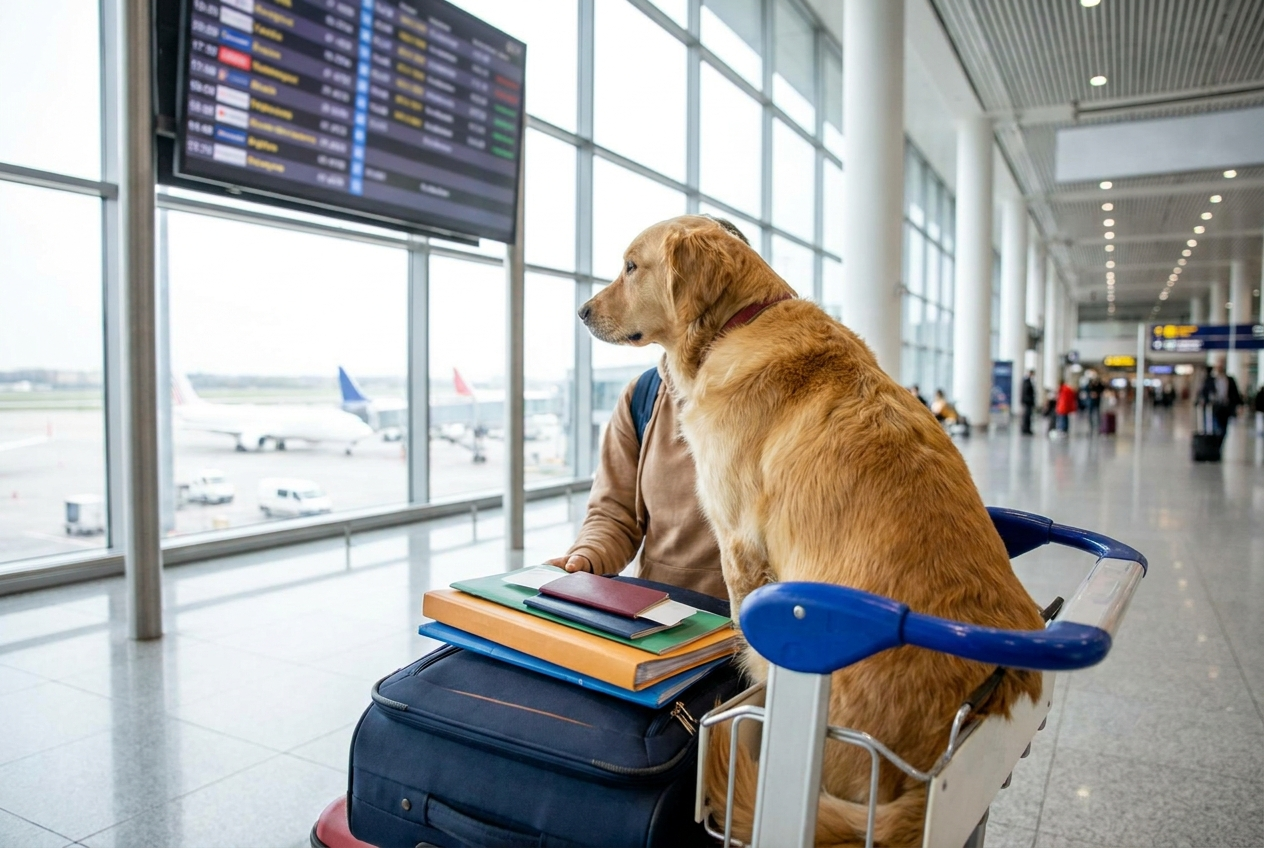
Relocating to a new country is one of life’s most profound milestones. Whether you are moving for a corporate promotion, pursuing a digital nomad lifestyle, or retiring to a tropical paradise, the logistics of shifting your entire life across an ocean can feel incredibly taxing. When you add a beloved dog or cat to the equation, the complexity increases significantly.
Too many pet parents treat international relocation simply as an extended vacation. They assume that the casual processes used to take a dog on a short domestic flight will suffice for a multi-jurisdictional relocation. This fundamental misunderstanding can lead to devastating consequences, including steep fines, emergency boarding fees, forced return shipments, or months of mandatory facility quarantine. Start your relocation documentation timeline at PetHolidayClub.com to protect your pet's journey. Let's explore the essential components of managing an international pet move this year.
The Operational Gap: Holiday Travel vs. Permanent Relocation
Understanding the difference between taking a temporary holiday with a pet and permanently exporting an animal is vital for your planning.
Holiday Travel Realities: Holiday transit typically relies on short-term, reciprocal tourist entry windows. For example, an EU resident can cross a Schengen border using an EU Pet Passport and return home within a few weeks without modifying local registries or changing veterinary service structures.
Permanent Relocation Realities: Long-term emigration reclassifies your pet as a permanent biological import. This requires your paperwork to clear rigorous international customs controls, and you must register your pet's microchip with local domestic databases (such as microchip registries in the UK, Australia, or the EU) within days of arrival. Furthermore, under modern frameworks like Commission Delegated Regulation (EU) 2026/131, if your pet travels independently of your flight itinerary via cargo handlers, the move is subject to strict commercial transport timelines and tighter veterinary verification windows.
Part 1: Global Import Jurisdictions and Requirements
Global pet import regulations are shaped entirely by geography and regional rabies statuses. The world is divided into distinct biosecurity tiers, each imposing different document requirements:
Tier 1: Rabies-Free Island Zones (e.g., Australia, New Zealand, Japan, Singapore)
Testing Protocol: Mandatory FAVN Rabies Blood Titre Test ($\ge 0.5\text{ IU/mL}$)
Document Requirements: Official Import Permits, Certified Laboratory Reports, Mandatory State Facility Quarantine (10 to 30 days minimum).
Minimum Lead Time: 6 to 8 Months
Tier 2: Euro-Schengen Zone (All 27 EU Nations, UK, Switzerland, Norway)
Testing Protocol: 15-Digit ISO Microchip + Post-Chip Rabies Immunization
Document Requirements: Single-Use Animal Health Certificate (AHC) or Official EU Pet Passport; 21-day primary vaccine stand-down.
Minimum Lead Time: 1 to 3 Months
Tier 3: Americas and Central Hubs (e.g., Canada, Panama, Mexico, UAE)
Testing Protocol: Up-to-Date Core Vaccinations + Internal/External Parasite Records
Document Requirements: Country-Specific International Health Certificate endorsed by exporting government (e.g., USDA APHIS) within 10 to 30 days of arrival.
Minimum Lead Time: 1 Month
Part 2: The Critical Value of an IPATA Professional
Because international animal relocation is a highly specialized field, thousands of families hire a professional agent registered with the International Pet and Animal Transportation Association (IPATA). IPATA pet shippers function as specialized customs brokers and logistical coordinators for live animals.
Evolving Regulatory Oversight:
Biosecurity laws change rapidly due to sudden disease outbreaks, regional policy updates, or shifting airline corporate guidelines. IPATA members receive immediate regulatory alerts, allowing them to adjust your pet's paperwork proactively before you arrive at the airport terminal.
Global Network Linkage:
An international relocation involves separate ground handlers, veterinary inspectors, and airline cargo offices spanning multiple time zones. An IPATA agent in your home country collaborates directly with a counterpart agent in your destination country. This ensures that when your pet lands, a trusted local expert is waiting at the cargo terminal to clear customs, pay local fees, and manage the transition smoothly.
Complete Logistics Coordination:
IPATA shippers handle complex flight routings that standard consumer travel websites cannot access. They manage booking locks on specialized climate-controlled cargo segments, coordinate layover comfort care at designated airport pet lounges (such as the animal lounges in Frankfurt or Amsterdam), and handle the complex federal digital endorsement pipelines.
Part 3: The IATA Container Requirement Blueprint
If your pet is too large to fit in the passenger cabin, they must travel via the airline’s manifest cargo system. For cargo transit, your pet’s travel crate must comply with the International Air Transport Association (IATA) Live Animals Regulations (LAR), specifically Container Requirement 1 (CR1).
Exact Mathematical Sizing:
A travel crate cannot be chosen based on weight classes or standard commercial retail guidelines. It must be mathematically matched to your pet's physical proportions:
A (Length): From the tip of the nose to the base of the tail.
B (Height): From the ground to the elbow joint.
C (Width): Across the widest point of the pet's shoulders.
D (Total Height): From the ground to the top of the head or the tips of the ears when standing naturally.
The crate's internal length must equal $A + \frac{1}{2}B$. The internal width must equal $C \times 2$ for single animals. Crucially, the internal height of the crate must be greater than or equal to $D$, ensuring that your pet can stand completely erect, turn around easily, and lie down naturally without their head or ears touching the ceiling.
Structural Integrity:
The crate must be constructed from rigid plastic, wood, or non-corrosive metal. Plastic containers must feature a door secured by a multi-point locking system.
The two halves of the crate must be joined together by solid metal nuts and bolts; plastic snap-latches or twist-locks are completely banned by international airlines. The interior must be lined with heavy absorbent bedding, and two separate bowls for food and water must be firmly attached to the inside of the mesh door, accessible from the outside for safe refilling.
Part 4: The 10 Most Common Relocation Mistakes
Even a single minor error on a relocation document can lead to denied boarding or immediate airport quarantine. These ten common oversights cost pet owners thousands of dollars every year:
Inverted Microchip Sequencing:
Administering a rabies vaccination before your pet’s 15-digit ISO microchip is officially implanted or scanned. If the vaccination predates the documented microchip number, the entire vaccine history is legally void, forcing a complete restart of the timeline.
Underestimating the 90-Day FAVN Stand-Down:
Booking an international flight to an island destination before the mandatory 90-day waiting clock has cleared. This clock begins the exact day the approved laboratory receives the blood sample, not the day your local vet draws it. Arriving even one day early results in immediate state impoundment at your expense.
Mismanaging Lapsed Rabies Booster Windows:
Allowing a rabies booster deadline to pass by even 24 hours. A late vaccination is classified as a primary shot rather than a booster, which automatically triggers a mandatory 21-day border waiting period.
Using Non-Compliant Crate Fasteners:
Arriving at an international cargo check-in desk with a plastic travel crate held together by snap-latches or plastic clips instead of metal nuts and bolts. Airlines will flatly refuse transit until a compliant crate is sourced.
Counting On In-Cabin Exceptions for Large Breeds:
Assuming a large dog can fly in the passenger cabin as an emotional support animal. International airlines enforce identical, strict sizing caps for in-cabin travel across all passengers; if a pet and their carrier exceed 22 lbs (10 kg), they must travel via manifest cargo.
Overlooking Airline-Specific Breed Bans:
Booking a flight path on an airline that enforces a strict corporate embargo on short-nosed or brachycephalic breeds (such as Bulldogs, Pugs, Boxers, or Persian cats). These breeds are routinely restricted from cargo travel due to respiratory safety risks during tarmac transfers.
Falling into the Digital Endorsement Trap:
Assuming a standard veterinary signature on a health certificate is sufficient for international entry. Most countries require the health certificate to be formally reviewed, stamped, and endorsed with a digital or physical federal seal from an official government agricultural agency (such as USDA APHIS) prior to the departure flight.
Flying into an Unauthorized Port of Entry:
Routing your flight ticket into an airport that lacks a dedicated, full-time veterinary customs inspection facility. Pets landing at unauthorized airports can be summarily denied entry and sent back on the next outbound flight.
Neglecting the 24-to-120-Hour Tapeworm Window:
Failing to secure a documented Praziquantel tapeworm treatment within the strict 24-to-120-hour window before entering countries like the UK, Ireland, Norway, or Finland. Missing this treatment window will lead to your pet being detained at the border.
Failing to Research Local Breed Bans:
Relocating to a country without reviewing local breed restrictions. For example, moving a Pit Bull Terrier or an American Staffordshire Terrier into the UK, Germany, or Singapore can result in immediate seizure and legal penalties, as these breeds are strictly banned under local public safety laws.
Master Chronological Relocation Timeline
Coordinate your international veterinary and transport milestones using this master countdown guide:
180 Days Before Moving Day: Verify your pet's 15-digit ISO microchip. Research the exact biosecurity laws of your destination country and hire an IPATA-certified relocation agent to build your logistical roadmap.
150 Days Before Moving Day: Secure any mandatory Import Permits from your destination's agricultural department. If moving to an island zone, complete the FAVN blood draw and monitor the laboratory receipt tracking.
90 Days Before Moving Day: Order your IATA-compliant travel crate using exact physical measurements ($A, B, C, D$). Begin daily positive crate conditioning at home to minimize travel stress.
30 Days Before Moving Day: Confirm your manifest cargo booking slots with the airline. Ensure all historical rabies vaccine records are clearly written and linked directly to your pet's microchip number.
10 Days Before Moving Day: Visit your USDA-accredited veterinarian for your pet's formal international export health examination. Submit the completed certificate to federal electronic systems for processing.
7 Days Before Moving Day: Print and review your endorsed health certificates, confirming they display the official digital federal seal and valid tracking codes.
24 to 120 Hours Out: Visit your clinic for an official administration of required internal and external parasite treatments, ensuring the exact brand names and application times are logged.
Moving Day Arrival: Arrive at the cargo terminal early with your original documentation folder, secure your pet within their bolted travel crate, and complete the final biosecurity checks.
Start your relocation documentation timeline at PetHolidayClub.com to align your milestones perfectly.
Frequently Asked Questions
What do I need to know about moving abroad with a pet in 2026?
Moving abroad requires researching your destination's specific rabies classification tier, securing a 15-digit ISO microchip, following strict rabies vaccine timelines, obtaining government-endorsed health certificates, and utilizing an appropriately sized, airline-approved travel crate.
What is the role of an IPATA pet shipper during a long-distance move?
An IPATA pet shipper manages the entire international transport logistics pipeline. They track changing biosecurity laws, secure specialized cargo space on pet-safe flight routes, coordinate customs clearance with foreign agents, and ensure your paperwork meets strict entry guidelines.
How do I calculate the correct crate size for an international cargo flight?
Your crate must allow your pet to stand fully erect, turn around easily, and lie down naturally. You must mathematically measure your pet's length, shoulder width, and standing height to ensure the crate matches the strict container sizing formulas enforced by international airlines.
What happens if my pet's international health certificate contains an error?
If an international health certificate contains a clerical error, a missing stamp, or an incorrect microchip number, your pet will be denied boarding at the departure terminal. If the error is caught after landing, your pet may face immediate deportation or forced mandatory quarantine at your expense.
Are sedatives or tranquilizers permitted for pets traveling in cargo?
No. The International Air Transport Association and professional veterinary bodies strictly advise against sedating or tranquilizing animals for flight travel. Sedatives impair a pet's natural ability to balance their balance within the crate and can cause dangerous respiratory and cardiovascular issues at high altitudes.
Frequently Asked Questions
Written by
Anano Gudushauri
Pet Holiday Club