How Vet Clinics Can Add Value to Their Clients' International Pet Travel in 2026
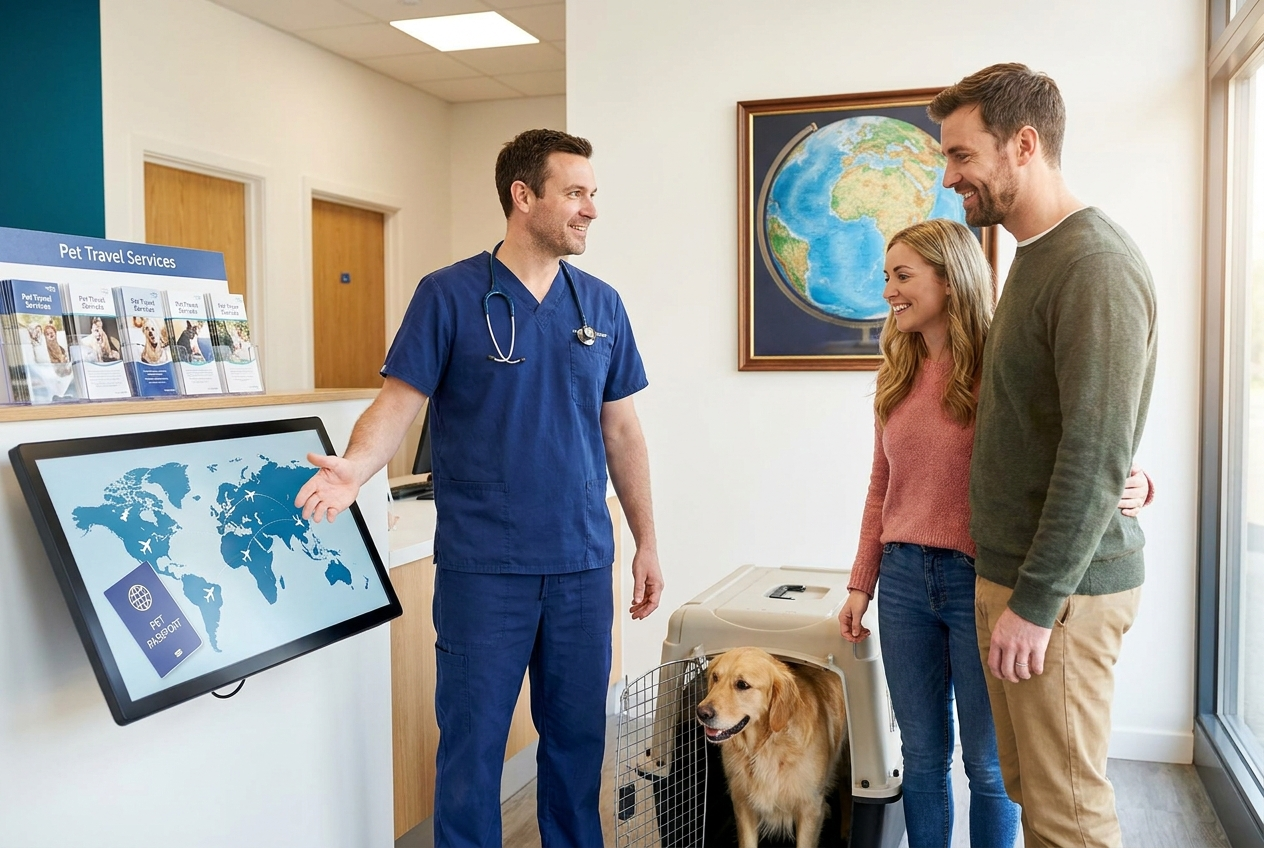
International pet relocation has become one of the highest friction administrative workflows facing modern veterinary practices. Following the sweeping April 22, 2026 global regulatory structural revisions, including the absolute closure of expatriate EU pet passport loopholes for UK residents and tightened unlisted third-country serology tracks, pet owners are turning to their local clinics in an anxious state. For a veterinary practice, these requests present a critical choice: international travel documentation can either become a chaotic operational drain that disrupts daily clinical schedules, or it can serve as a powerful differentiator that drives lifetime client retention and unlocks high-margin revenue streams.
When a long-term client announces they are relocating their family dog or cat overseas, they are not simply booking a routine consultation. They are looking to their veterinarian to protect them from devastating border enforcement failures. A single oversight by a practice—such as a data-entry layout error on an official digital health certificate, an unaccredited laboratory routing choice, or an inverted microchip-to-vaccine chronological sequence—can result in animals being turned away at international gates, forced into expensive state quarantine, or deported. By standardizing your clinic’s travel protocols and building strategic partnerships, your practice can provide absolute peace of mind while protecting your team's daily workflow. If you want to instantly see how streamlined your clients' upcoming journey can be, try PetHolidayClub.com first to map out active route compliance metrics. Let's explore how veterinary practices can scale their value and master international pet relocation logistics this year.
The 2026 High-Scrutiny Travel Workflow Matrix
To safeguard clinical workflows and prevent cross-border documentation rejections, practice teams must recognize the specific operational hurdles embedded in primary global transit paths:
Destination / Route Type | Core Border Policy Authority | High-Friction Administrative Trap | Ultimate Clinical Risk Mitigation |
UK / EU ➔ Unlisted Nations | APHA / EU Commission | 48-Hour Clinical Validity Windows | Pre-allocate explicit "Emergency Export" triage slots in your booking schedule. |
High-Risk Origins ➔ EU / UK | DEFRA / EEEU Regulations | Inverted Chip-to-Vaccine Tracking | Mandate an in-clinic microchip audit prior to handling any rabies boosters. |
Transatlantic Movements (USA) | CDC Quarantine Divisions | Misaligned Digital Import Code Submissions | Require clients to show their printed CDC portal confirmation sheet before health signing. |
Expatriate Air Crossings | IATA Live Animal Panels | Non-Compliant Crate Dimensions | Outsource crate and flight manifest validation to a dedicated transport partner. |
Part 1: Hard-Coding Regulatory Chronology Into the Practice
The absolute foundation of adding value to international pet travel lies in ensuring error-free data alignment. Under 2026 global biosecurity standards, border inspectors do not grant leniency for administrative errors. If a clinic struggles to manage its internal documentation timelines, it risks losing client trust entirely.
[Client Inquiry] ➔ [Mandatory Chip Verification Scan] ➔ [Rabies Injection] ➔ [30-Day Titer Window Lock] ➔ [Final Health Signing]
1. The Microchip Anchor Standard
Every international travel profile must start with a definitive validation of the animal's identity.
The Absolute Rule: The 15-digit ISO 11784/11785 microchip must be physically scanned and verified before or on the exact same day as the administration of the primary rabies vaccine.
The Operational Fix: Train your front-of-house and nursing teams to never trust a client's handwritten records or an external database printout. The transponder must be physically read inside your treatment room, and the exact scan date must be logged in your practice management software before a syringe is filled. If the digital timestamp shows a vaccine batch logged even one day prior to the microchip confirmation entry, international border officials will declare the entire medical history void.
2. Managing the 30-Day Titer Sero-Sieving Window
For clients moving to or from unlisted high-risk territories (such as Turkey or parts of Asia), executing a flawless Rabies Antibody Titration Test (FAVN) is the primary roadblock.
1.Implantation & Priming Identification:Day 0.
Verify the functional status of the ISO transponder. Administer an approved rabies vaccine, logging the exact manufacturer batch code and expiration data.
2.The Post-Vaccination Waiting Lock:Day 30.
Enforce a strict 30-day biological waiting period. The animal's immune system requires this window to develop detectable circulating antibodies before a diagnostic blood draw can occur.
3.Accredited Serology Processing:Day 31 to 35.
Perform the venipuncture draw. The serum sample must be routed exclusively to an officially approved, recognized laboratory network. Ensure all documentation matches the microchip record exactly.
4.The 0.5 IU/ml Threshold Review:Result Verification.
Analyze the incoming laboratory report. The neutralizing antibody tier count must measure at least 0.5 IU/ml to satisfy global import criteria.
5.Enforcing Mandatory Domestic Isolation:The 3-Month Lockout.
Remind the client that from the exact calendar day the successful blood sample was drawn, a mandatory 3-calendar-month waiting period applies before the animal can cross the border.
Part 2: Mitigating Clinic Risk in Compressed Timelines
The biggest operational strain on a veterinary team happens when a client requests an official health certificate sign-off within a highly compressed pre-departure window (often 48 hours to 10 days before a flight). These situations expose the practice to significant liability and can easily disrupt daily appointments.
1. Building Smart Travel Forms Into Your Practice Management System
To stop your Official Veterinarians (OVs) or clinical directors from wasting time hunting through government portals during an active appointment, build a standardized intake form directly into your practice database.
The Client Requirements: Require clients to submit their definitive itinerary, flight numbers, transit hub stops, and destination coordinates at least 14 days prior to any certificate appointment.
The Dual-Check Verification: Have a senior veterinary nurse review the pet's electronic chart against destination rules before the animal arrives at the clinic. This ensures that tapeworm timelines (such as the strict 24-to-120 hour praziquantel rule for the UK and Norway) are pre-booked for the exact correct time slot.
2. Standardizing the Clinical Fitness Assessment
When signing international health documents, the veterinarian is providing a legal guarantee of the animal's health status to a foreign government.
Objective Medical Baselines: Don't just check for contagious diseases; explicitly document the pet's respiratory efficiency, cardiovascular strength, and psychological readiness for travel.
Addressing Brachycephalic Realities: For flat-faced breeds (such as French Bulldogs or Persian cats), the clinic should provide detailed counseling regarding the increased risks of air transit, ensuring the client signs an informed consent form that protects the practice from liability before travel certificates are completed.
                    [CLINIC WORKFLOW EFFICIENCY HUB]
                   /                                \
      [Clinical Responsibilities]          [Non-Clinical Complexities]
     (Keep In-House for Revenue)            (Outsource to Protect Time)
              │                                         │
     - Microchip Auditing                      - Flight Kennel Sizing (IATA)
     - Rabies & Core Vaccinations              - Manifest Air-Cargo Booking
     - Serum Titer Blood Draws                 - Complex Routing Logistics
     - Government Health Endorsements          - Customs Clearance Setup
Part 3: The Ultimate Value Strategy — Protect Your Team's Time
Your veterinary surgeons and registered nurses should focus their time on what they do best: providing exceptional medical care, executing surgeries, and managing complex diagnostics. They should not be spending hours deciphering changing airline crate specifications, arguing with international freight forwarders, or hunting down customs agents at destination airports.
The True Cost of Administration: The average international travel profile requires more than four hours of purely non-clinical administrative work (tracking down country rules, fixing form issues, communicating with airlines). Charging a standard consultation fee for this work directly reduces your practice's hourly profitability.
By drawing a clear line between clinical preparation (vaccines, microchips, blood draws, physical exams) and logistical execution (crate sizing, cargo manifests, flight booking, customs clearance), your clinic can maximize revenue while removing the associated stress.
Master Travel Workflow Checklist for Veterinary Teams
Keep your clinical team organized and protected with this step-by-step operational checklist:
[ ] Intake Stage: Scan the animal's microchip immediately upon room entry. Cross-reference the 15-digit transponder number against the pet's existing records to ensure perfect alignment.
[ ] Scheduling Stage: Calculate the exact 30-day window following the rabies shot before scheduling the FAVN blood draw. Do not allow early draws under any circumstances.
[ ] Review Stage: Double-check that the rabies vaccine batch details, manufacturing name, and expiration date are accurately entered into your practice system.
[ ] Logistics Audit: Require the client to present an IATA Container Requirement 1 (CR1) compliant flight crate verification if they are managing travel independently.
[ ] Pre-Appointment Check: Verify that the target destination's specific health certificate template (e.g., GB Pet Health Certificate, EU Non-Commercial Certificate, Swiss Entry Form) is downloaded and pre-populated 48 hours before the signing appointment.
[ ] Treatment Window: For canine entries to tapeworm-free zones, schedule the praziquantel administration to fall strictly within the 24-to-120 hour window before the pet reaches the foreign border.
[ ] Final Sign-Off: Ensure the signing veterinarian's official credentials, state stamps, and contact records are clearly legible on every page of the physical paperwork folder.
Frequently Asked Questions by Practice Managers
How can our clinic charge appropriately for the time spent on travel paperwork?
Practices should move away from charging a flat consultation fee for international travel work. Instead, implement a tiered "International Travel Administration Fee" that accounts for the hours spent reviewing records and managing documentation. Alternatively, separate the medical billing (vaccines, blood draws) from the paperwork processing, or partner with a specialized relocation service to handle the administrative load entirely.
What happens if a foreign border post rejects a certificate signed by our clinic?
If a certificate is rejected due to a clinical error (such as an incorrect date or missing signature), the clinic can face significant reputational damage and potential liability for the resulting quarantine or boarding costs. To protect your practice, always use a dual-checking system where a second staff member reviews all dates and microchip numbers before any document leaves the clinic.
Can we delegate the filling out of official travel certificates to our nursing or admin team?
Yes. Veterinary nurses and practice administrators can handle the pre-population of patient data, microchip records, and vaccination history. However, the final clinical exam, the verification of dates, and the formal signature must be completed exclusively by an officially accredited veterinarian holding valid state credentials.
Why should our clinic avoid managing flight crate and airline logistics for clients?
Airline pet travel rules and IATA crate guidelines change frequently and vary significantly by carrier, aircraft type, and weather conditions. If your clinic provides advice on crate dimensions or flight routing and the pet is later denied boarding at the airport, the client may hold your practice responsible for the disruption. It is safer to leave these technical logistics to specialized transport professionals.
Does a pet require a rabies titer test if they are only traveling to the EU for a short vacation?
If the pet is traveling from a listed low-risk country (such as the UK), no titer test is required for entry into the EU. However, if they are traveling from or transiting through an unlisted high-risk nation, they must pass a titer test and complete the mandatory 3-month waiting period before entering the EU, regardless of how short their planned stay is.
Unlocking Referral Value: Partner With Pet Holiday Club
Your clinic does not have to carry the burden of global pet logistics alone. By partnering with Pet Holiday Club, you can provide your clients with an elite, stress-free relocation experience while fully protecting your practice's time and focus.
Through our professional referral network, your team handles the foundational medical work—driving high-margin clinical revenue directly to your pharmacy and lab accounts—while our relocation specialists take over the complex logistical management, crate validation, and flight coordination. This approach protects your staff from administrative overload, eliminates your practice's exposure to shipping liabilities, and ensures your clients receive a seamless, error-free travel roadmap.
Traditional relocation coordination strains practice resources—but if you want to elevate your clinic's value and secure a reliable referral stream, try PetHolidayClub.com first. Connect with our practice integration team today to bring our digital logistics network straight to your client base.