Flying With a Dog or Cat to Czechia — Complete 2026 Pet Travel Requirements Guide
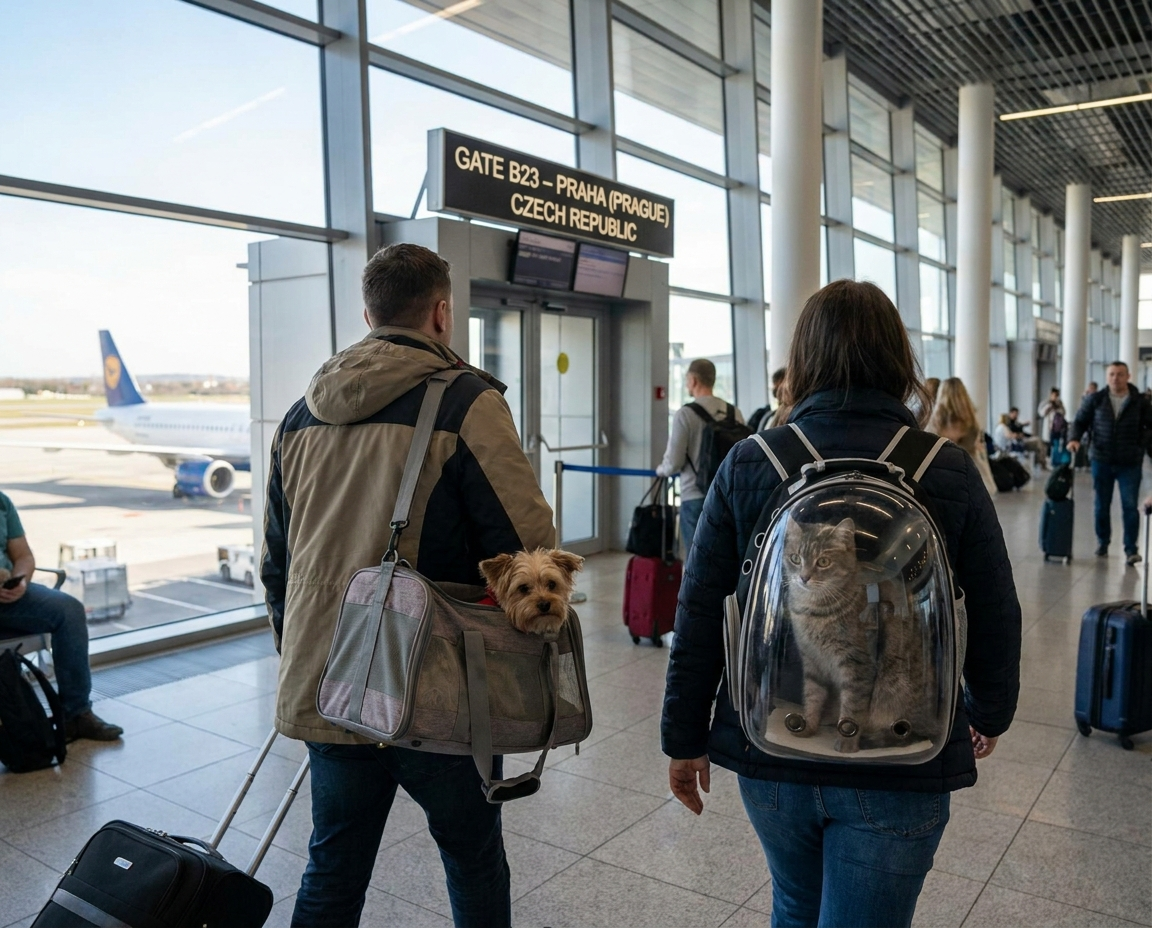
Few sights compare to watching your dog trot across the centuries-old cobblestones of Prague’s Charles Bridge just as the morning fog clears over the Vltava River. Fewer experiences feel as warm as pulling up a chair at a neighborhood pivo garden, setting down a fresh water bowl, and having the waiter greet your pet before taking your drink order. Czechia is an exceptionally welcoming country for animal lovers, but crossing its borders requires navigating strict European Union health laws and precise paperwork timelines.
Whether you are planning a short city break in Prague or relocating across the globe, this definitive guide breaks down every veterinary mandate, entry protocol, and travel requirement for seamless pet travel to Czechia in 2026.
At a Glance: Czechia Pet Import Requirements Matrix 2026
Origin Region | Required Health Document | Microchip Sequence Rule | Young Pet Derogation? | Tapeworm Required? |
|---|---|---|---|---|
UK (Great Britain) | Animal Health Certificate (AHC) | ISO 11784/11785 (Pre-vaccine) | Yes (Article 9 accepted) | No (Skipped for Czechia entry) |
USA & Canada | USDA / CFIA Endorsed EU Certificate | ISO 11784/11785 (Pre-vaccine) | Yes (Article 9 accepted) | No (Skipped for Czechia entry) |
EU Member States | Active EU Pet Passport | ISO 11784/11785 (Pre-vaccine) | Yes (Article 9 accepted) | No (Skipped for Czechia entry) |
Non-Listed Third Countries | EU Certificate + FAVN Titer Test | ISO 11784/11785 (Pre-vaccine) | No (Titer wait mandatory) | No (Skipped for Czechia entry) |
What Documents Does Your Dog or Cat Need to Travel to Czechia?
According to the Pet Holiday Club Global Pet Travel Preparedness Index 2026 — the only data-driven ranking of 194 countries for pet travel readiness — Czechia is one of the more flexible EU destinations, particularly for owners travelling with young pets.
Get your personalised pet travel checklist - Pet Holiday Club | International Pet Travel Requirements for 194+ Countries
As a full European Union member state, Czechia enforces EU animal health regulations. Veterinary import oversight is managed nationally by the State Veterinary Administration (SVA), known locally as Státní veterinární správa (SVS).
Every dog or cat entering Czechia must first be identified with an ISO 11784/11785 compliant 15-digit microchip. The microchip must be implanted or officially read and recorded before any rabies vaccine is administered. If your veterinarian administers a rabies shot prior to scanning or implanting the microchip, European border authorities will consider that vaccination legally invalid for international transit.
Your pet must also carry a valid rabies vaccination administered at least 21 days before entry. The primary rabies vaccine can only be administered once the pet reaches at least 12 weeks of age, establishing 15 weeks as the standard minimum age for pets entering most of Europe.
The exact health documentation required depends on your country of residence:
EU Residents: A valid EU Pet Passport issued by an authorized European veterinarian, containing active rabies booster records.
UK Residents (Great Britain): An official Animal Health Certificate (AHC) issued within 10 days of entry into the EU by an Official Veterinarian (OV).
USA & Canadian Residents: An official EU Health Certificate signed by an accredited vet and officially endorsed by USDA APHIS or CFIA.
Non-Listed Third Countries: An official EU Health Certificate accompanied by a successful FAVN rabies antibody titer test result (showing at least 0.5 IU/ml).
The April 22, 2026 EU regulation update (EU2026/131) firmly established that UK-issued EU pet passports are no longer valid for entering European countries. UK pet owners residing in Great Britain must obtain a new single-use AHC for every separate entry into Czechia.
Crucially, travelling to Czechia with a dog does not require a tapeworm treatment (Echinococcus multilocularis). Tapeworm medication is only mandatory when travelling to rabies-free island nations like Ireland, Malta, or Northern Ireland, as well as Finland and Norway.
Importing Pets INTO Czechia — Step-by-Step Requirements
Importing a dog or cat into Czechia requires following a strict chronological sequence. Czechia pet import requirements permit non-commercial pet travel for up to 5 pets per owner without requiring a special commercial import permit.
Follow this official step-by-step checklist to ensure total compliance with Czech border authorities:
Step 1: ISO Microchip Scanning & Verification
Visit your vet to scan or implant an ISO 11784/11785 15-digit microchip. Ensure the exact 15-digit microchip number and the date of reading or implantation are clearly logged on your pet's official health record.
Step 2: Rabies Vaccination
Administer the primary rabies vaccination on the same day as or any date after the microchip verification date. Wait out the mandatory 21-day incubation period before attempting to cross the Czech border.
Step 3: Health Certificate Completion & Endorsement
Within 10 days of your scheduled arrival date, have an accredited vet complete the official non-commercial EU Health Certificate or UK AHC. US travelers must submit paperwork through the VEHCS portal for digital or physical endorsement from USDA APHIS Czech Republic.
Step 4: Airline Booking & Cargo Reservation
Ensure your flight lands at a designated international border inspection post, primarily Prague Václav Havel Airport (PRG). Confirm that your airline permits pets in-cabin (PETC) or as checked baggage (AVIH), as commercial passenger flights limit animal numbers.
Step 5: Border Inspection Point Clearance
Upon landing in Prague from outside the EU, report directly to the red custom channel or airport veterinary control office. Official inspectors from the State Veterinary Administration (SVA) will scan your pet's microchip, review vaccine timestamps, and audit your paper certificates.
If your paperwork is fully compliant, Czechia does not impose quarantine on incoming pets. However, if paperwork is missing, chronologically invalid, or missing official endorsement signatures, border officials will place your pet into mandatory quarantine at your expense or order immediate re-shipment to your origin country.
Czechia's Young Pet Rule — Can You Travel With a Puppy or Kitten?
Most European Union countries strictly ban puppies and kittens under 15 weeks of age because animals cannot receive a valid rabies vaccine before 12 weeks, followed by the mandatory 21-day incubation wait. However, Czechia provides a rare legal exception.
Under the EU Article 9 derogation, Czechia allows young puppies and kittens to enter under specific conditions before completing full rabies immunity. This unique policy makes young puppy Czechia travel significantly easier than travelling to neighboring nations like Germany or Austria.
The Article 9 derogation applies to two specific age categories:
Pets under 12 weeks of age: Young animals that have not yet received a rabies vaccination.
Pets between 12 and 16 weeks of age: Animals that have received their primary rabies vaccination but have not yet completed the mandatory 21-day incubation waiting period.
To enter Czechia under this derogation, the pet must satisfy strict legal conditions:
Health Declaration: The pet must be accompanied by a signed declaration from the owner or authorized carrier confirming that from birth until travel, the animal has had no contact with wild animals of species susceptible to rabies.
Maternal Immunity Option: Alternatively, the young pet may travel if it is accompanied by its mother, whose EU Pet Passport or health certificate proves she received a valid rabies vaccination prior to giving birth.
It is crucial to note that this derogation is entirely optional for EU member states, and most EU countries do NOT apply it. Aside from Czechia, only a small group of EU nations currently accept young pets under Article 9: Bulgaria, Croatia, Estonia, Finland, Lithuania, Luxembourg, Romania, Slovakia, and Slovenia.
If you travel to Czechia with a 10-week-old puppy under this rule, you cannot transit overland through non-derogation countries like Germany or Austria with that puppy. Plan your flight route directly into Prague Václav Havel Airport to stay completely legal.
Exporting Pets FROM Czechia — What You Need Before You Leave
Departing Czechia with your pet is straightforward, but destination rules dictate your pre-departure preparations. The Czech Republic does not enforce exit quarantines or charge export fees for departing pets.
If you are an EU resident returning to another EU member state, you simply need your active EU Pet Passport updated by a licensed Czech vet showing valid rabies booster records.
If you are travelling FROM Czechia to Great Britain, you must visit a licensed vet in Czechia between 24 and 120 hours (1 to 5 days) before crossing the British border. The vet must administer an approved tapeworm treatment containing Praziquantel and log the exact date, time, and product details in your pet's AHC or passport, following guidance from DEFRA UK.
The exact same 24-to-120-hour Praziquantel tapeworm treatment is mandatory when exporting a dog from Czechia directly to Finland, Ireland, Northern Ireland, Malta, or Norway.
For returns to the United States, verify that your dog meets current CDC importation protocols, including carrying an official printed CDC Dog Import Form receipt.
Always consult official guidelines published by the Czech State Veterinary Administration (SVA) at least one month before flying out of Prague.
The April 2026 EU Regulation Change — What Czechia Pet Owners Must Know
European animal transport framework updated significantly under Regulation EU2026/131, which took full legal effect on April 22, 2026. This directive harmonized animal movement auditing across all 27 EU member states, including Czechia.
The most significant operational shift impacts UK pet owners: EU pet passports issued in Great Britain or historic EU passports held by non-EU residents are strictly invalid for entry into Czechia. UK pet owners residing in Great Britain must secure a fresh Animal Health Certificate (AHC) within 10 days of departure for every separate trip into Europe.
Furthermore, European authorities have introduced new non-commercial health certificate templates effective October 1, 2026. Health certificates issued under previous formats can be officially endorsed up to September 30, 2026, remaining valid for their standard 4-month duration.
From October 1, 2026 onward, all health certificates issued in third countries (including the US, Canada, and Australia) must utilize the updated revised layout. A formal transition period will extend through March 2027 to allow global veterinary agencies time to adjust fully.
US pet owners preparing for autumn 2026 travel should double-check certificate version updates directly with their accredited vet or through official USDA APHIS portals.
Is Czechia Pet-Friendly? Prague and Beyond With Your Dog
Czechia boasts one of the highest dog ownership rates per capita in Europe, and that love for dogs is instantly visible in everyday life. Prague dog travel is exceptionally rewarding because local urban culture seamlessly accommodates canine companions.
In Prague, dogs are welcome in the vast majority of traditional pubs, beer gardens (pivní zahrádky), and neighborhood cafes. It is standard practice for servers to place a fresh bowl of tap water at your table before taking your food order.
Public transportation across Czechia is famously dog-friendly:
Trams and Metro: Dogs are allowed on all Prague public transport networks (PID). Small dogs in carriers travel free of charge. Larger dogs on a leash must wear a muzzle and require a discounted transit ticket.
Trains: Czech Railways (České dráhy) permits dogs on domestic train routes throughout the country. Dogs must remain muzzled and leashed, or rest comfortably inside approved travel carriers.
Parks and Green Spaces: Prague features incredible green spaces like Letná Park, Riegrovy Sady, and Stromovka, which feature expansive off-leash zones where dogs can exercise safely.
While Czechs are relaxed around dogs, they take clean streets seriously. Always carry waste bags and ensure your dog is well-mannered in crowded public spaces like Old Town Square.
Which Airlines Fly Pets to Czechia?
The main entry point for international flights into Czechia is Prague Václav Havel Airport (PRG). Choosing an airline experienced in live animal transport ensures a smooth journey.
Airlines classify pet travel into three distinct options:
In-Cabin (PETC): Reserved for small dogs and cats weighing under 8 kg (17.6 lbs) including their soft-sided carrier. Smartwings, Lufthansa, Air France, KLM, and Aegean Airlines permit small pets in the cabin on flights to Prague.
Checked Baggage (AVIH): For medium-sized pets traveling in climate-controlled cargo compartments on the same flight as their owner. Lufthansa, KLM, and Air France handle checked baggage pet transport into Prague.
Manifest Cargo: Required for large animals, long-haul international flights, or un-accompanied pets. Dedicated live-animal cargo services operate directly into Prague Airport's cargo terminal.
Always confirm pet slot availability directly with the airline before booking your own passenger ticket. Carriers limit the total number of animals allowed on any single flight.
Be aware that commercial airlines enforce strict summer heat embargoes between June and August. If tarmac ground temperatures at connecting hubs exceed safety thresholds (typically 29°C to 35°C), airlines will refuse cargo-hold pet transit to protect animal welfare.
How Long Does It Take to Prepare for Pet Travel to Czechia?
Preparation timelines vary depending on your country of origin and your pet's existing medical history. Starting early prevents last-minute panic over veterinarian signatures or endorsement delays.
UK Travelers: Allow 3 to 4 weeks. While the AHC must be signed within 10 days of departure, booking an Official Veterinarian appointment and checking rabies records requires lead time.
EU Travelers: Allow 3 to 7 days. EU residents with valid pet passports simply require a routine fit-to-fly health check and active rabies boosters.
USA & Canadian Travelers: Allow 6 to 8 weeks. You must account for rabies vaccination timelines, USDA/CFIA endorsement turnaround times, and potential October 2026 certificate template updates.
High-Risk / Non-Listed Countries: Allow 4 to 5 months. The rabies antibody titer test requires a 30-day post-vaccination wait, followed by a mandatory 3-month waiting period before entering Czechia.
If you are unsure where your timeline stands, checking your travel schedule against official government guidelines prevents unexpected border issues.
Frequently Asked Questions About Flying With a Pet to Czechia
Do I need an Animal Health Certificate or EU pet passport to travel to Czechia?
If you are an EU resident, a valid EU Pet Passport is sufficient for entry into Czechia. If you reside in Great Britain or another non-EU country (such as the US or Canada), an EU Pet Passport cannot be used for entry under 2026 regulations. You must obtain an official Animal Health Certificate (AHC) or an endorsed EU Health Certificate.
Can I take a young puppy or kitten to Czechia?
Yes, Czechia applies the EU Article 9 derogation, allowing puppies and kittens under 15 weeks old to enter. Pets under 12 weeks (unvaccinated) or between 12 and 16 weeks (vaccinated but within the 21-day wait period) can enter if accompanied by a signed owner declaration confirming no exposure to rabies vectors, or if accompanied by their vaccinated mother.
Is there quarantine for pets entering Czechia?
No, there is no mandatory quarantine for pets entering Czechia, provided they arrive with a valid microchip, active rabies vaccination, and correct health documentation. Quarantine or re-exportation is only enforced as an emergency measure if paperwork is missing, invalid, or forged.
Does Czechia have breed restrictions for dogs?
No, Czechia has no national breed-specific legislation (BSL) banning specific dog breeds from entering the country. All dog breeds—including Pit Bull Terriers, Staffordshire Bull Terriers, and Rottweilers—can legally enter Czechia. However, dogs must be muzzled when riding public transportation.
Is Prague dog-friendly?
Yes, Prague is one of the most dog-friendly cities in Europe. Dogs are welcomed in most restaurants, pubs, cafes, and public parks. They are also permitted on trams, buses, and the metro when muzzled or secured inside a travel carrier.
Check Your Pet's Documents Before You Fly to Czechia
A single clerical error—like a transposed microchip digit or an incorrect vaccination sequence—can ruin your travel plans at the airport check-in desk. Before heading to the terminal, make sure to check your existing pet travel documents before you fly - Check Pet Travel Documents Online | Pet Holiday Club
Pet Holiday Club utilizes an intuitive four-colour verdict system to give you instant clarity on your readiness:
Green (Ready to Fly): Every document, microchip record, and vaccination timeline fully complies with Czech SVA and EU regulations.
Yellow (Ready in 2 Weeks): Minor timing windows or administrative steps need final adjustments before departure.
Orange (Ready in 3 Months): Your pet requires rabies boosters, titer tests, or mandatory waiting windows before crossing the border.
Red (Not Ready): Core legal requirements—such as an ISO microchip or valid health certificate—are missing or invalid.
If you are just beginning your travel preparation, take a moment to get your personalised pet travel checklist for Czechia - Pet Holiday Club | International Pet Travel Requirements for 194+ Countries
Strolling through the fairy-tale streets of Prague with your dog by your side makes every single step of paperwork completely worth the effort. Taking the time to handle requirements correctly ensures a smooth, stress-free journey to Czechia. Safe travels!