Dog Travel Anxiety: What a Brand New Study Found - And What Actually Helps
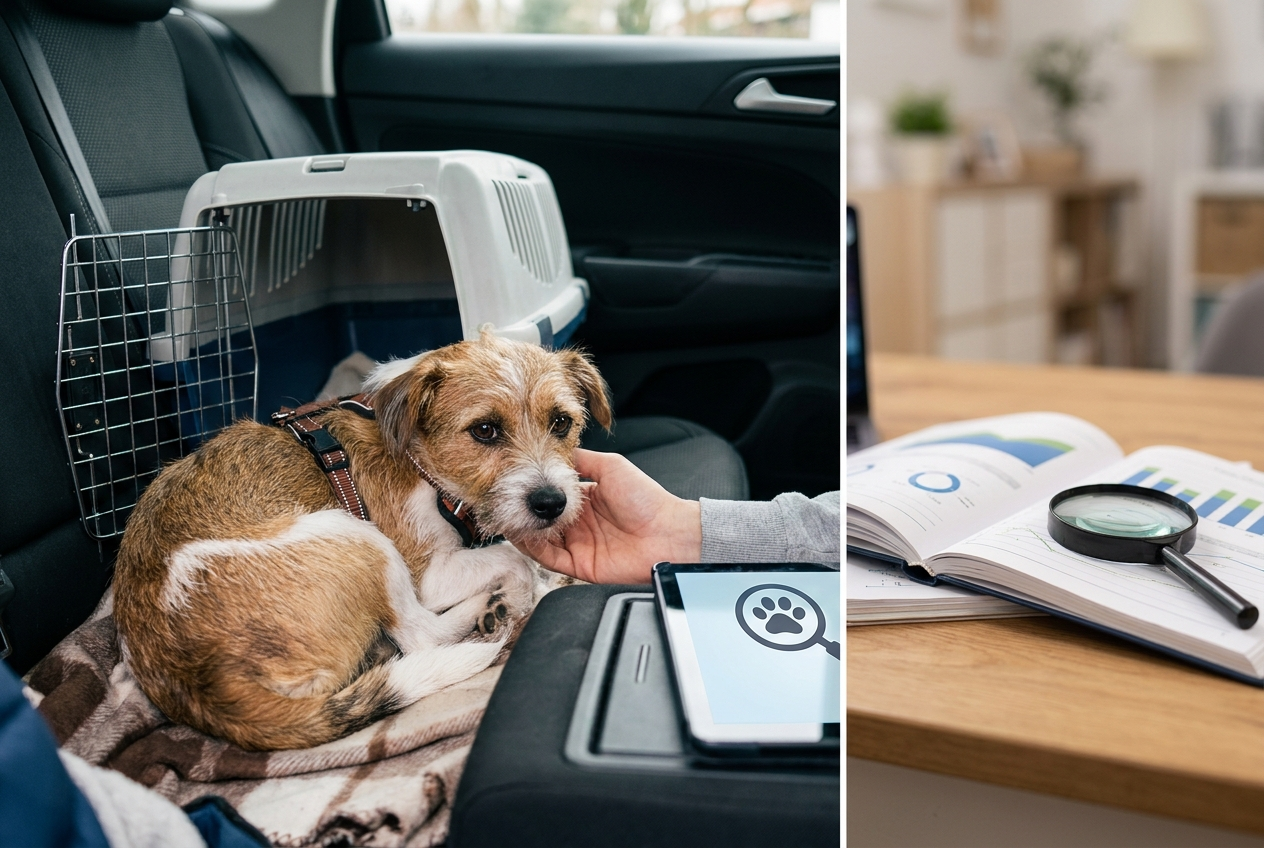
A study published this week by Texas A&M University College of Veterinary Medicine found something that will stop most dog owners mid-scroll. More than 84% of dogs show signs of fear or anxiety. Not occasionally. Not in extreme situations. Regularly.
"These are behaviors most owners have seen at some point," said researchers. The study analysed behaviour data from tens of thousands of pets across the United States and found that anxiety in dogs is far more common than previously understood.
The Numbers Behind Dog Anxiety
The Texas A&M study is not alone. The data across multiple research sources tells a consistent story.
Approximately 17% of dogs in the US have clinically significant separation anxiety - translating to roughly 11 million dogs. A peer-reviewed study of 3,284 dogs across 192 breeds found noise sensitivity in 39.2%, general fearfulness in 26.2%, and separation anxiety in 17.2%. A Smithsonian Magazine study of 14,000 dogs found 75% showed at least one anxiety-related behaviour.
Travel anxiety is a specific subset of this broader picture. Research published in Frontiers in Veterinary Science found that car travel is one of the most consistently stress-inducing scenarios for dogs - producing measurable physiological responses including elevated cortisol, increased heart rate, and behavioural distress. Air travel, with its engine noise, pressure changes, and confinement, compounds these triggers significantly.
"Separation anxiety is one of the most reported stress-related issues in pet dogs, making up to 50% of referral cases to behaviorists." - Frontiers in Veterinary Science
What Dog Anxiety Actually Looks Like During Travel
One of the reasons travel anxiety is underdiagnosed is that owners often misread the signs - or dismiss them as temporary nerves. Here is what to look for specifically in a travel context.
Before the journey
Panting and yawning: Excessive panting or yawning when the carrier appears, when bags are packed, or when the car engine starts.
Avoidance: Refusing to enter the carrier, hiding, or actively moving away from travel-related items.
Trembling: Visible shaking that begins before any movement - triggered by anticipatory anxiety.
During travel
Vocalisation: Excessive barking, whining, or howling. In cargo, this is a significant welfare concern as there is no owner present to provide reassurance.
Drooling and nausea: Travel sickness and anxiety often co-occur. Excessive drooling, lip-licking, or vomiting during travel may be anxiety-related as much as motion-related.
Destructive behaviour: Scratching or chewing at the carrier. In extreme cases, dogs have injured themselves trying to escape confined spaces.
Freezing or shutdown: Some dogs respond to overwhelming anxiety by becoming completely still and unresponsive - a stress response that owners sometimes mistake for calm.
What the Science Says Actually Works
There is a significant gap between what pet owners try and what the evidence supports. Here is an honest breakdown.
Crate training - the single most effective intervention
A dog that genuinely views their crate as a safe, familiar space travels dramatically better than one encountering a carrier for the first time at an airport. This is not anecdotal. It reflects the basic behavioural science of habituation - gradual, positive exposure to a stimulus reduces the anxiety response over time.
Crate training takes 6-12 weeks done properly. It cannot be rushed. If you are planning a flight in eight weeks and your dog has never been in a crate, start today.
CBD - emerging evidence
A peer-reviewed study published in Frontiers in Veterinary Science tested CBD on dogs during separation and car travel. The findings: a single dose of THC-free CBD distillate positively influenced measures of stress in dogs during both separation and car travel, reducing physiological stress indicators. The study used blinded, parallel design methodology - the gold standard for this type of research.
Important caveats: the study used a specific, high-quality CBD distillate at a carefully calculated dose. Not all CBD products are equal. Always consult your vet before giving any supplement, and always trial at home before a travel day.
Adaptil pheromone products
Adaptil - a synthetic version of the calming pheromone produced by mother dogs - is available as a collar, spray, or diffuser. VCA Animal Hospitals recommends it as a travel anxiety strategy. It is non-sedating, safe for all travel types including cargo, and has clinical evidence behind it for anxiety reduction.
Thundershirt
The Thundershirt applies gentle, constant pressure similar to swaddling. It has clinical evidence supporting anxiety reduction and is recommended by multiple veterinary sources for travel. Drug-free, simple to use, and many dogs respond well to it.
Anti-anxiety medication - when appropriate
For dogs with severe travel anxiety, veterinary-prescribed anti-anxiety medication such as trazodone, gabapentin, or alprazolam may be appropriate. These are different from sedatives - they reduce anxiety without the respiratory suppression that makes sedation dangerous during air travel.
Critical rule: always trial any medication at home before travel day. Never administer a new medication for the first time at an airport.
What does NOT work - sedation
The most common question vets receive about pet travel is: can I sedate my dog? The answer from every major veterinary organisation is no. Sedatives affect a dog's ability to regulate breathing and body temperature. At altitude, these effects are compounded. For cargo travel, sedated pets cannot reposition during turbulence - significantly increasing injury risk. Most airlines will refuse to board a visibly sedated pet.
Anxiety, Travel - and the Documentation Problem
There is a connection between travel anxiety and documentation that most owners never consider.
A dog whose travel is disrupted at a border - because of incorrect or missing documents - faces significantly prolonged confinement, stress, and separation. The most effective thing you can do for your dog's travel anxiety is to ensure their journey goes exactly as planned, with no border delays, no documentation errors, and no unexpected detours.
Pet Holiday Club covers 190+ countries with personalised, government-sourced, vet-verified documentation checklists. Use our free tool at petholidayclub.com before every international trip - because the smoothest journey is the least anxious one.
Frequently Asked Questions
How do I know if my dog has travel anxiety versus normal excitement?
The key distinction is the physiological response. Excitement produces alert, forward-focused behaviour. Anxiety produces panting, trembling, avoidance, drooling, or shutdown. If your dog is reluctant to enter the carrier, trembles before the car moves, or vocalises excessively during travel, these are anxiety indicators rather than excitement.
Is it cruel to fly with an anxious dog?
It depends on the severity of the anxiety and the steps you take to manage it. A dog with mild travel anxiety that is properly crate-trained, given appropriate support (Adaptil collar, familiar bedding, correct medication if prescribed), and flown on a well-chosen route can travel without significant welfare compromise. A dog with severe separation anxiety or phobia of confinement may genuinely not be suited to air travel. Always consult your vet honestly.
At what age can puppies fly?
Most airlines require pets to be at least 8 weeks old and fully weaned before flying. For international travel, age requirements may be higher due to vaccination timing requirements - rabies vaccinations typically cannot be given before 12 weeks, and a 21-day waiting period applies before travel. Check both airline and destination country requirements.
Does the breed affect travel anxiety?
Some breeds are predisposed to higher anxiety generally - Border Collies, German Shepherds, and certain terrier breeds show higher rates in studies. Rescue dogs, particularly those with unknown histories, show significantly higher separation anxiety rates. Brachycephalic breeds have the added complication of compromised breathing, which makes anxiety-related panting more medically serious.
Can I give my dog Benadryl to calm them?
Diphenhydramine (Benadryl) is sometimes suggested as a home remedy for dog travel anxiety. The evidence does not strongly support it, and the dosing is easy to get wrong. Some dogs actually become more agitated with antihistamines. Consult your vet - there are better, evidence-based options available.