How Much Does It Cost to Fly With a Dog or Cat in 2026? (Complete Price Guide)
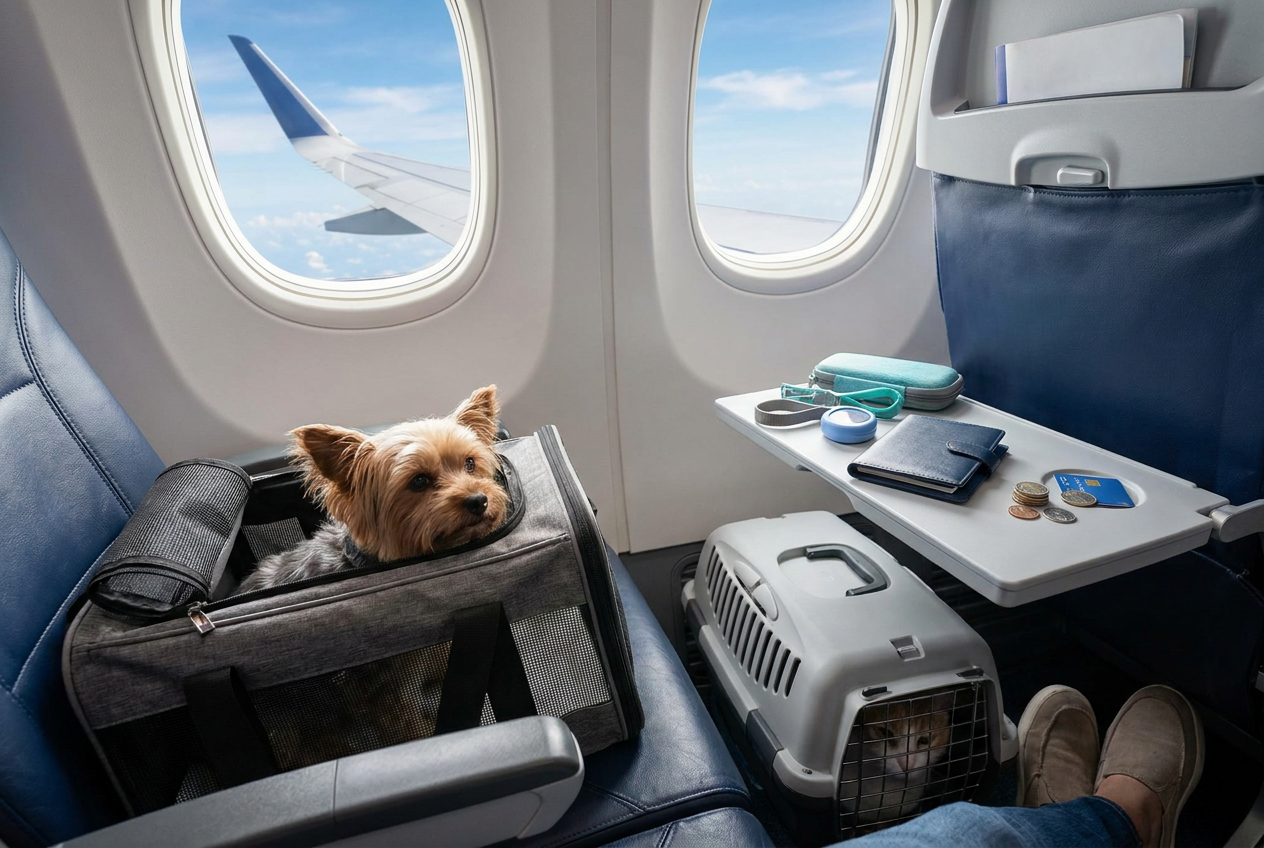
A single cross-country flight with your cat can easily cost more than your own round-trip ticket, especially once you factor in airline surcharges, carrier requirements, and mandatory veterinary checkups. Navigating the true cost to fly a dog or cat requires looking far beyond the headline price on an airline’s booking page. Between changing airline ticket fees, government endorsement rates, and specialized container regulations, pet travel expenses can accumulate rapidly if you fail to calculate every hidden line item beforehand.
Knowing how much does it cost to fly with a dog depends entirely on your chosen travel method, your destination's biosecurity laws, and your pet's size.
In-Cabin Pet Fees: Expect to pay between $95 and $150 each way per pet carrier for domestic routes within the USA and EU.
Manifest Cargo Fees: Shipping a larger pet alone or on long-haul routes generally costs between $500 and $2,500+ depending heavily on crate size and total volume.
Pre-Travel Documentation: International health certificates, blood tests, and federal government processing add a baseline cost of $250 to $800 per animal.
Private or VIP Relocation: Premium shared-seat private flights or door-to-door relocation agencies range from $4,000 to over $12,000 for complex destinations.
In-Cabin Pet Fees by Airline
If you are wondering how much does it cost to fly with a cat or a small dog, the most economical method is carry-on travel. To fly inside the passenger cabin, your pet must remain enclosed in an airline-approved, well-ventilated carrier that fits directly beneath the seat in front of you.
The baseline cost to fly with a dog or cat in the cabin depends on the specific commercial airline you select. Below are the standard, non-refundable one-way pet travel fees and restrictions for major carriers.
Airline Name | In-Cabin Fee (One-Way) | Weight Limit (Pet + Carrier) | Important Compliance Notes |
Southwest Airlines | $95 | No official weight limit | Fits under-seat dimensions of 18.5” x 13.5” x 8.5”. Max 6 pet carriers allowed per flight. |
Alaska Airlines | $100 | Up to 20 lbs | Hard or soft-sided carriers allowed. Up to two pets of the same species can occupy one carrier if comfortable. |
American Airlines | $125 – $150 | Up to 20 lbs | Allowed on flights up to 11.5 hours. You can bring one personal item alongside your pet carrier without extra fees. |
Delta Air Lines | $150 | No official weight limit | The animal must be at least 10 weeks old for domestic travel. Flat-bed or Delta One cabins do not accept pets. |
United Airlines | $150 | No official weight limit | Soft-sided carriers have a maximum height recommendation of 11 inches. No pets allowed on flights to the UK or Australia. |
Cargo Pet Fees by Airline
When an animal is too large to fit beneath a passenger seat, or if you are flying to a destination that prohibits in-cabin live animals, your pet must travel within the climate-controlled cargo hold. Commercial airlines route these animals through specialized freight programs rather than standard passenger check-in desks.
Determining exactly how much does flying a dog cost via manifest cargo requires calculating the volumetric weight of the traveling kennel. Major commercial operators price cargo transport based on the structural size of the IATA-compliant rigid crate, rather than a flat fee.
Airline Name | Cargo Base Fee Range | Service Availability | Essential Crate & Breed Restrictions |
American Airlines Cargo | $250 – $900+ | Only open to active-duty U.S. military or State Department personnel | Strict temperature embargoes apply if ground heat exceeds 85°F or drops below 45°F at any destination. |
Delta Cargo | $400 – $1,200+ | Open to general public on select domestic and global routes | Brachycephalic (short-nosed or flat-faced) breeds like Pugs, Bulldogs, and Persian cats are permanently banned. |
United Cargo | $450 – $1,500+ | Exclusively reserved for military and Foreign Service members | Requires a complete health check inside a 10-day window before departure. Extreme weather limits apply. |
Lufthansa Cargo | €300 – €800+ | Available to all passengers globally on valid routes | Pricing scales across five distinct crate dimensions. Requires check-in at separate freight terminals. |
International vs. Domestic Cost Differences
The primary differentiator in how much to travel with a dog or cat is whether your itinerary crosses an international border. A domestic flight within the contiguous United States or inside continental Europe carries minimal paperwork costs. For example, the price to fly a dog domestically is often restricted purely to the base airline carrier fee, as most states do not require a formal veterinary inspection for simple domestic transit.
Once you transition to global routes, the cat flight cost or dog shipping cost rises exponentially. International pet travel demands complex customs clearance, terminal handling fees, and agricultural import taxes.
Furthermore, countries like the United Kingdom, Japan, Australia, and New Zealand enforce strict island status biosecurity laws. On these routes, you are legally barred from flying a pet in the cabin. Your pet must enter exclusively as manifest cargo, which immediately transitions your base expenses from a standard $150 carry-on fee to a multifaceted cargo bill running into thousands of dollars.
Pre-Travel Veterinary and Government Costs
Before your pet ever steps foot inside an airport, you will face substantial regulatory fees. Every sovereign nation requires specific medical protocol verification to prevent the introduction of foreign animal diseases like rabies.
Skipping or miscalculating any of these steps will result in border rejections, emergency quarantine fees at your expense, or forced repatriation.
Veterinary Health Certificates
A clinical veterinarian must inspect your animal to certify that they are free of infectious diseases and physically fit for air travel. The average health certificate cost for dog or cat validation ranges from $50 to $200 for a standard examination. If you are going overseas, you must secure an International Health Certificate (IHC), which requires a specialized USDA-accredited veterinarian and often costs closer to $250 to $400 depending on the complexity of the destination country's forms.
Government Endorsement Fees
Once your private veterinarian signs the international health certificate, the document must be formally endorsed by a national government agency. Within the United States, this is executed by the USDA Animal and Plant Health Inspection Service (APHIS). The baseline usda endorsement fee is $101 per certificate for non-commercial shipments that do not require specialized laboratory test verifications. If your destination requires the tracking of blood titers or specific medical treatments, the USDA endorsement fee rises accordingly.
Microchipping and Laboratory Tests
Virtually all international destinations require your animal to carry an ISO 11784/11785 compliant 15-digit microchip. If your pet does not have one, expect to pay $50 to $90 for implantation and registration.
If you are traveling from a country with high rabies risks to a rabies-free destination, you must budget for a Fluorescent Antibody Virus Neutralization (FAVN) test. This specialized FAVN titer test checks for rabies antibody levels and costs between $150 and $300 at an approved reference laboratory, plus local veterinary blood-draw and shipping fees.
Cost of Shipping a Dog or Cat Without the Owner
If you cannot fly alongside your animal, or if your itinerary makes accompanying them impossible, you must utilize specialized alternative transportation methods.
Professional Pet Relocation Companies
Hiring an international pet shipper provides an all-inclusive, door-to-door transport service. These agencies handle customs brokerage, physical airport transfers, air cargo bookings, and ground transit. A professional pet relocation international package typically averages between $4,000 and $12,000+ per animal. For ultra-strict destinations like Australia, relocation services cost between $5,000 and $12,000+ due to mandatory government quarantine stays, import permit processing, and specialized long-haul manifest cargo routings.
Air Flight Nannies
For small animals eligible for in-cabin travel, you can hire a private flight nanny. This professional passenger escorts your animal inside the cabin on your behalf. The standard cost to ship a cat or small dog via an air nanny generally runs from $600 to $1,800, which covers the nanny's airline ticket, the airline’s pet fee, and a professional handling stipend.
Shared-Seat Private Aviation
To bypass the stress of commercial cargo holds completely, many pet owners utilize boutique private aviation charters. Companies like K9 Jets offer public-charter shared private flights where your large dog sits directly next to you in the cabin. A K9 Jets shared seat costs between $9,000 and $11,000 for a one-way transatlantic crossing, making it a premium choice for anxious animals or snub-nosed breeds that cannot fly in cargo.
Hidden Costs Most Owners Miss
When totaling how much is it to ship a dog or cat, the initial booking quotes rarely reflect the final dollar amount spent. Several overlooked logistical costs caught up in air travel can quickly break your budget:
IATA-Compliant Travel Containers ($100 – $400): Standard retail plastic crates are regularly rejected at cargo terminals. True airline-compliant crates require metal hardware bolts, non-plastic grated ventilation slots on all four walls, attached dual water bowls, and specific spacing requirements where your pet's ears cannot touch the roof.
Airport Terminal Handling and Customs Cleansing ($150 – $500): International cargo arrivals involve local ground handling fees, airline warehouse entry costs, and broker clearance fees separate from the freight ticket.
Flight Delay Accommodations ($100 – $300): If an airline delays your departure and you are traveling with a cargo pet, you may be hit with unexpected boarding fees at an airport pet lounge facility.
How to Reduce Your Pet Travel Costs
While pet relocation is inherently expensive, structured planning can prevent unnecessary expenses.
Get your pet travel checklist at www.petholidayclub.com
Book Direct Routes Whenever Possible: Layover connections often duplicate airline pet fees if the transit time exceeds a specific window, and they add extra ground handling charges. Pet Travel Map - Explore Pet-Friendly Routes | Pet Holiday Club
Source Your Crate Early: Buying an IATA-approved travel kennel online months in advance is significantly cheaper than buying a marked-up replacement at an airport cargo office after failing a check-in inspection.
Coordinate Veterinary Timelines Perfectly: Health certificates have narrow windows of validity (frequently just 10 days before arrival). Missing your window means paying for a second vet exam, emergency courier services, and a second USDA endorsement fee.
Frequently Asked Questions
How much does it cost to fly with a dog?
A domestic in-cabin flight costs between $95 and $150 each way per carrier. If your dog is too large for the cabin, shipping them via manifest air cargo typically ranges from $450 to over $1,500 depending on total crate dimensions.
How much does it cost to ship a dog internationally?
Shipping a dog internationally costs between $2,500 and $12,000+. The total price combines the airline's manifest cargo freight rate, customs clearance fees, international health certificates, country-specific import permits, and professional relocation agency management fees.
How much does it cost to fly with a cat?
Flying with a cat in the passenger cabin averages $95 to $150 each way on domestic airlines. If you are traveling on an international route that requires manifest cargo transit, the cost generally scales from $400 to $1,200.
How much is a health certificate for a dog?
A standard domestic veterinary health certificate costs between $50 and $200. International health certificates are more complex and range from $250 to $400, excluding additional costs for mandatory blood tests, microchips, or vaccinations.
What is the USDA endorsement fee for pet travel?
The standard USDA APHIS endorsement fee is $101 per international animal health certificate. This government processing fee can increase if your destination country requires the verification of complex laboratory test results or multiple blood titers.
Can I fly my large dog in the cabin?
Large dogs cannot fly in the cabin on commercial airlines. They must travel via manifest cargo, though you can choose to purchase a shared private charter seat on specialized pet-friendly aviation services for $9,000 to $11,000.
Before spending a single dollar on your upcoming pet travel costs, you should evaluate your specific route requirements using the dynamic tools at Pet Holiday Club. By referencing the Global Pet Travel Preparedness Index 2026 | 194 Countries Ranked | Pet Holiday Club you can quickly double-check regional rules and access the Pet Holiday Club free checklist tool at petholidayclub.com. This automated tool confirms exactly what medical protocols and paperwork your animal needs based on your exact destination.
Securing the wrong international documentation leads to irreversible expenses, including immediate border refusals, mandatory emergency quarantine costs, or forced return flights booked at your own expense. Take a look at the comprehensive UK pet travel article and the updated commercial airline guide on our site to verify your layout costs and secure your pet's travel compliance before booking.