Can I Take My Dog to Thailand in 2026? The Complete Pet Travel Guide
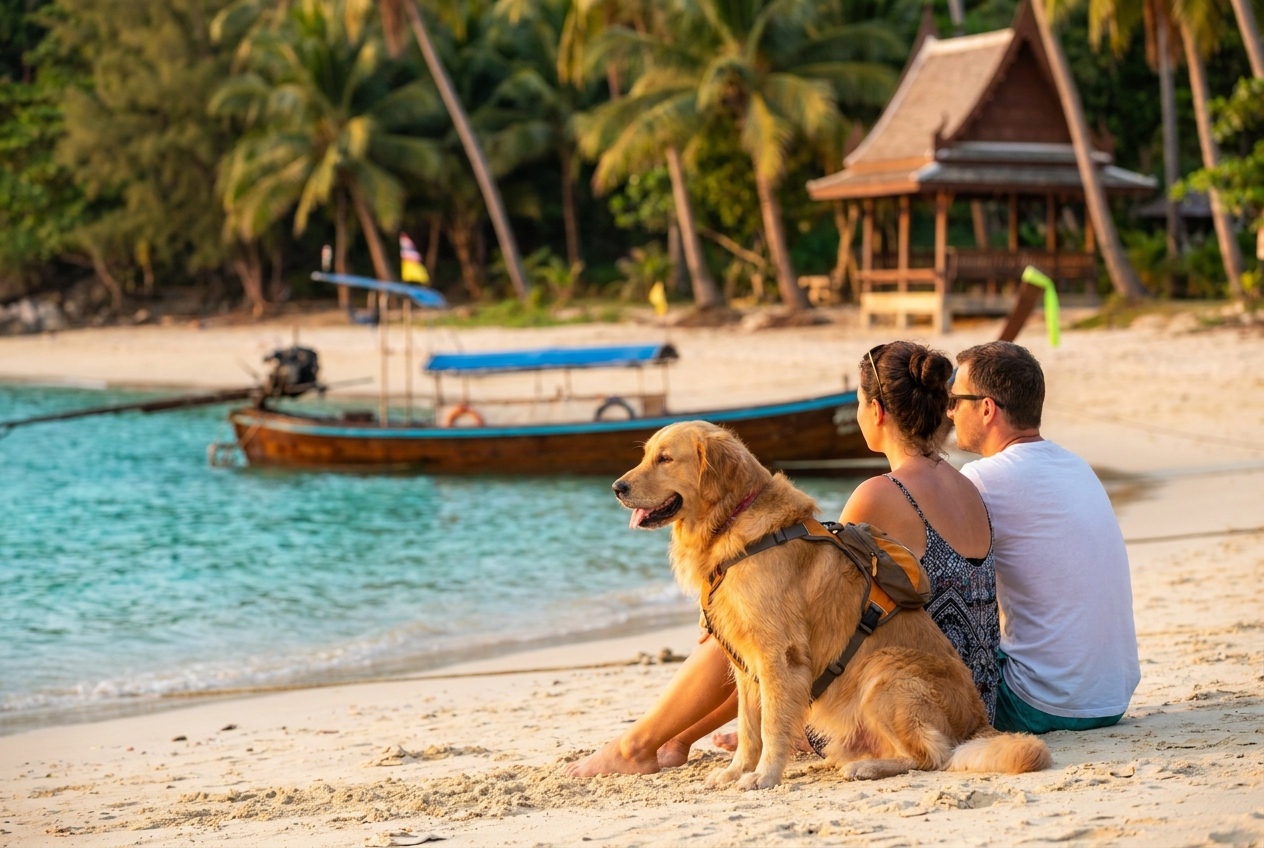
Taking a dog to a tropical paradise sounds like an incredible adventure, whether you are planning a long-term relocation or an extended holiday. If you are wondering can i take my dog to thailand, the short answer is yes. However, the regulatory pathway managed by the Kingdom of Thailand's Department of Livestock Development (DLD) involves a rigid administrative process that catches many pet owners completely off guard.
Thailand is not a destination where you can simply book an airline ticket, grab a generic vet note, and show up at the border. Successfully navigating the thailand dog import requirements requires a strict understanding of import permits, government-endorsed paperwork, and airport inspection protocols. By organizing your preparation timeline well in advance, you can ensure your dog safely clears the animal quarantine station without unexpected delays.
Import Authority: The Department of Livestock Development (DLD) of Thailand strictly regulates all live animal entries.
Primary Entry Point: Bangkok Suvarnabhumi Airport (BKK) serves as the primary designated port of entry equipped with official DLD animal quarantine facilities.
Mandatory Advance Document: You must secure an official Thailand Import Permit from the DLD at least 2 to 4 weeks before your dog's physical arrival.
Core Documentation Needs: Your dog must possess a 15-digit ISO-compliant microchip, an active rabies vaccination, and an official government-endorsed health certificate issued within 7 to 10 days of departure.
Thailand Dog Import Requirements: An Overview
The entry framework for a thailand dog is designed to protect the country's domestic animal population from foreign diseases. While Thailand does have endemic rabies, the government tightly monitors international arrivals to prevent the introduction of specific strains or concurrent conditions like Leptospirosis, Canine Distemper, Hepatitis, and Parvovirus.
The complexity of the process depends heavily on your country of origin. For example, traveling from a country with strict biosecurity protocols requires specific routing and paperwork paths. United States residents must coordinate their timelines with the usda aphis pet travel division to secure federal endorsements. Meanwhile, British travelers must utilize official export health certificates (EHC) rather than a standard Animal Health Certificate (AHC) used for European holiday travel.
The Required Documents Checklist
To legally bring dog to thailand, you must compile a comprehensive dossier of medical and federal paperwork. Missing a single signature on these forms can lead to immediate entry complications at Bangkok customs.
+-------------------------------------------------------------------------+
|                  CRITICAL CHRONOLOGICAL PAPERCUT RULE                   |
|                                                                         |
| Your veterinarian must implant and scan your dog's 15-digit ISO-compliant|
| microchip BEFORE administering any of the mandatory vaccines. Any       |
| immunizations given prior to the official recording of that microchip   |
| number will be viewed as legally non-existent by Thai DLD authorities.  |
+-------------------------------------------------------------------------+
ISO 11784/11785 Microchip: Your dog must be identifiable by a 15-digit microchip. This number will track your pet through every medical record and permit.
Rabies Vaccination Certificate: Your dog must have a current rabies vaccine administered at least 21 days prior to departure. The vaccination record must explicitly list the vaccine manufacturer, batch number, and expiration date.
Five-in-One Combination Vaccine: Thailand requires proof of immunization against five core canine diseases: Canine Distemper, Hepatitis, Parvovirus, Laryngotracheitis, and Leptospirosis. This combination injection must be administered between 21 days and 12 months prior to your arrival date.
Official Government-Endorsed Health Certificate: This is the primary document issued by an accredited vet and stamped by your origin country's federal agricultural department.
Securing the Thailand Import Permit
You cannot board a flight to Thailand with a pet unless you already hold a valid Thailand Import Permit issued directly by the DLD Animal Quarantine Station at Suvarnabhumi Airport. This document must be requested well before your travel date.
To apply for the permit, you must email the Suvarnabhumi Airport Animal Quarantine Station or submit an application through the Thai government's electronic DLD portal. You will need to submit scanned copies of your passport, your dog's complete vaccination history, their microchip record, and a clear photograph of your pet.
The DLD typically takes 2 to 4 weeks to process applications and issue the digital permit. The permit is valid for exactly 60 days from the date of issuance. The processing fee is relatively inexpensive—usually around 500 Thai Baht (approximately $15 USD)—but attempting to land without this approved file will result in your pet being immediately rejected or sent back to their origin country at your expense.
The International Health Certificate for Thailand
The health certificate for dog export is a time-sensitive document. For travelers from the United States, your local USDA-accredited veterinarian must perform a clinical health examination and issue the certificate within 10 days of your departure flight.
Once signed locally, the document must be submitted to the usda pet travel requirements clearing network via the digital VEHCS system. A federal USDA veterinary officer will review the file, confirm that your vet holds valid credentials, and apply the official endorsement stamp.
If you are originating in the United Kingdom or Australia, a parallel process is required through DEFRA or DAFF, where a dedicated official export certificate must be issued within a strict 7-to-10-day window before your flight clears the runway.
Rabies Vaccination Requirements for Thailand
Thailand enforces strict rules regarding rabies records. While some island nations require a complex rabies titer blood test (FAVN), Thailand does not currently mandate a titer test for dogs arriving from low-risk or standard global regions like the US, Canada, or the UK.
However, your dog's primary rabies vaccination must be completely active and within its official validity window. If your pet received a 3-year rabies vaccine, the paperwork must clearly state that validity window.
If your dog's rabies booster is due to expire close to your travel window, it is highly recommended to administer a fresh booster shot at least 30 days before travel to ensure your paperwork easily clears any manual review by Thai border officials.
The Reality of Thailand Quarantine Procedures
A common question among pet owners is whether taking your dog to thailand involves a mandatory quarantine period. Officially, the Thai Department of Livestock Development retains the legal right to place any arriving animal into a state quarantine facility for up to 30 days upon arrival.
However, in day-to-day practice, if you arrive at Bangkok Suvarnabhumi Airport with a valid Import Permit, a properly endorsed USDA/DEFRA health certificate, and an ISO microchip that matches your paperwork perfectly, your dog will typically bypass extended stay quarantine.
Instead, they will undergo a routine physical inspection at the airport's Animal Quarantine Station. If the border veterinarian finds your dog is healthy and your documents are complete, they will issue an official Thai import license, collect an inspection fee, and release your pet to you within an hour.
+-------------------------------------------------------------------------+
|                  WHEN MANDATORY QUARANTINE IS ENFORCED                  |
|                                                                         |
| If your pet arrives with incomplete paperwork, missing vaccine batch    |
| numbers, or a microchip that cannot be scanned, they will be placed     |
| into a mandatory DLD quarantine facility at Suvarnabhumi Airport for a   |
| minimum of 14 to 30 days. You will be responsible for all daily care,    |
| feeding, and veterinary inspection fees during this period.              |
+-------------------------------------------------------------------------+
The Step-by-Step Travel Process
Fulfilling all the requirements for taking a dog to thailand requires managing a clear, step-by-step timeline. Follow this chronological process to ensure a smooth journey:
1.Microchip and Vaccination Check:2 Months Before.
Verify your dog has a 15-digit ISO microchip. Administer or update their rabies and 5-in-1 combination vaccines, ensuring all batch numbers are carefully recorded.
2. Secure Your Airline Space:45 Days Before.
Book your flights with an airline that permits pet travel to Bangkok. Confirm whether your pet will travel in the cabin or via the manifest cargo hold.
3.Apply for the Thai Import Permit:30 Days Before.
Submit your passport, pet photos, and complete vaccination history to the Bangkok Suvarnabhumi Airport Animal Quarantine Station to secure your import permit.
4.Clinical Exam and Federal Endorsement:10 Days Before.
Visit your accredited veterinarian for a final health check. Have them submit the health certificate to the USDA or your local federal agency for official endorsement.
5.Clear the Animal Quarantine Station:On Arrival.
Upon landing at BKK, collect your pet and head straight to the Animal Quarantine Station inside the arrivals hall. Present your import permit and health certificate to secure your import license.
Airline Options for Flying to Thailand
When planning international travel with pets to Southeast Asia, choosing the right carrier is crucial. Many premium airlines operating routes into Bangkok Suvarnabhumi Airport offer excellent live-animal transport programs, though their specific in-cabin and cargo options vary.
Excellent carriers for international travel for dogs heading to Thailand include:
Qatar Airways: Renowned for their temperature-controlled cargo systems transiting through Doha.
Emirates: Offering highly reliable manifest cargo services via their SkyCargo facilities in Dubai.
Lufthansa: A preferred carrier for European connections, featuring a dedicated animal lounge during layovers in Frankfurt.
EVA Air & China Airlines: Excellent options for transpacific routes originating in North America, with transit points in Taipei.
Brachycephalic Considerations
If your dog is a short-snouted breed (such as a Pug, Bulldog, or Boxer), finding an airline can be difficult. Most major carriers serving Thailand enforce a strict, year-round ban on brachycephalic breeds in the cargo hold due to safety risks. These breeds must travel inside the passenger cabin, which limits your options to smaller dogs that fit within the strict 8 kg to 10 kg weight limits.
Common Mistakes to Avoid
Rushing the Import Permit Timeline: Assuming you can apply for a Thai import permit a few days before your flight is a common mistake. If the DLD does not issue your permit before your departure date, airlines will refuse to check your pet in at the gate.
Incomplete 5-in-1 Vaccine Records: Thai customs officials carefully review combination vaccine records. If your vet forgot to write down the manufacturer or the specific batch number for the Leptospirosis or Parvovirus components, your paperwork may be flagged as invalid.
Flying Into the Wrong Airport: While Thailand has several international airports (like Phuket or Chiang Mai), booking an international pet flight directly into these locations can be tricky. Bangkok Suvarnabhumi (BKK) is the primary hub with a fully equipped, 24/7 animal quarantine team prepared to process international entries smoothly.
Tips for Traveling With Your Dog in Thailand
Once you clear the airport, adjusting to life in Thailand requires some care. The tropical climate can be intense for dogs accustomed to cooler weather. Always plan your walks for early morning or late evening to avoid heatstroke, and protect your dog's paws from hot asphalt or concrete surfaces.
Additionally, Thailand has a large population of stray dogs, commonly known as "Soi Dogs." While many are friendly, they can carry fleas, ticks, or transmissible conditions. Ensure your dog is on high-quality tick and heartworm preventative medication before arriving, and keep them on a secure leash during walks to avoid unwanted interactions.
Frequently Asked Questions
Q: Can I take my dog to Thailand in 2026?
Yes, you can bring your dog to Thailand. You must secure an official DLD import permit 2 to 4 weeks before arrival, have an ISO-compliant microchip, update their rabies and 5-in-1 vaccines, and obtain a government-endorsed international health certificate.
Q: Does Thailand require a rabies titer test (FAVN) for dogs?
No, Thailand does not currently require a rabies antibody titer test for dogs entering from standard global origins like the United States, Canada, or the United Kingdom, provided your primary rabies vaccination records are complete and current.
Q: How much does a Thailand pet import permit cost?
The base application and processing fee charged by the Thai Department of Livestock Development is 500 Thai Baht (approximately $15 USD) per animal, which is paid during your initial application processing window.
Q: Does Thailand enforce a mandatory quarantine for incoming dogs?
Thailand holds the legal right to enforce a 30-day quarantine. However, if your dog arrives with a valid import permit, an ISO microchip, and perfectly endorsed USDA/DEFRA health certificates, they will typically be released immediately after a brief airport health check.
Q: Can my dog fly with me inside the cabin to Thailand?
Whether your dog can fly in the cabin depends entirely on your chosen airline's rules and your pet's size. Some airlines allow small dogs under 8–10 kg in the cabin, while larger dogs must fly via the checked baggage or manifest cargo holds.
Q: Which airport in Thailand should my pet fly into?
You should route your pet's flight directly into Bangkok Suvarnabhumi Airport (BKK). This is the country's primary international gateway and features a dedicated, 24/7 animal quarantine station equipped to process international pet arrivals smoothly.
Because international pet travel regulations change frequently and vary based on your exact origin country, trying to manage this process on your own can lead to costly mistakes or travel delays. Rather than risking an unexpected quarantine stay or border complications, you can streamline your logistics using the automated platform at Pet Holiday Club.
By utilizing the Pet Holiday Club checklist tool at petholidayclub.com, you can instantly generate a customized preparation timeline tailored to your exact departure city and your destination in Thailand. Our system updates real-time regulatory changes, tracks your vaccine timing windows, and provides step-by-step guidance for securing your DLD import permit automatically. Ensure a safe and smooth journey for your companion by reviewing our comprehensive airline guides, health certificate walkthroughs, and international destination resources today.