British Airways Pet Policy 2026: Why Your Pet Cannot Fly in the Cabin and What to Do Instead
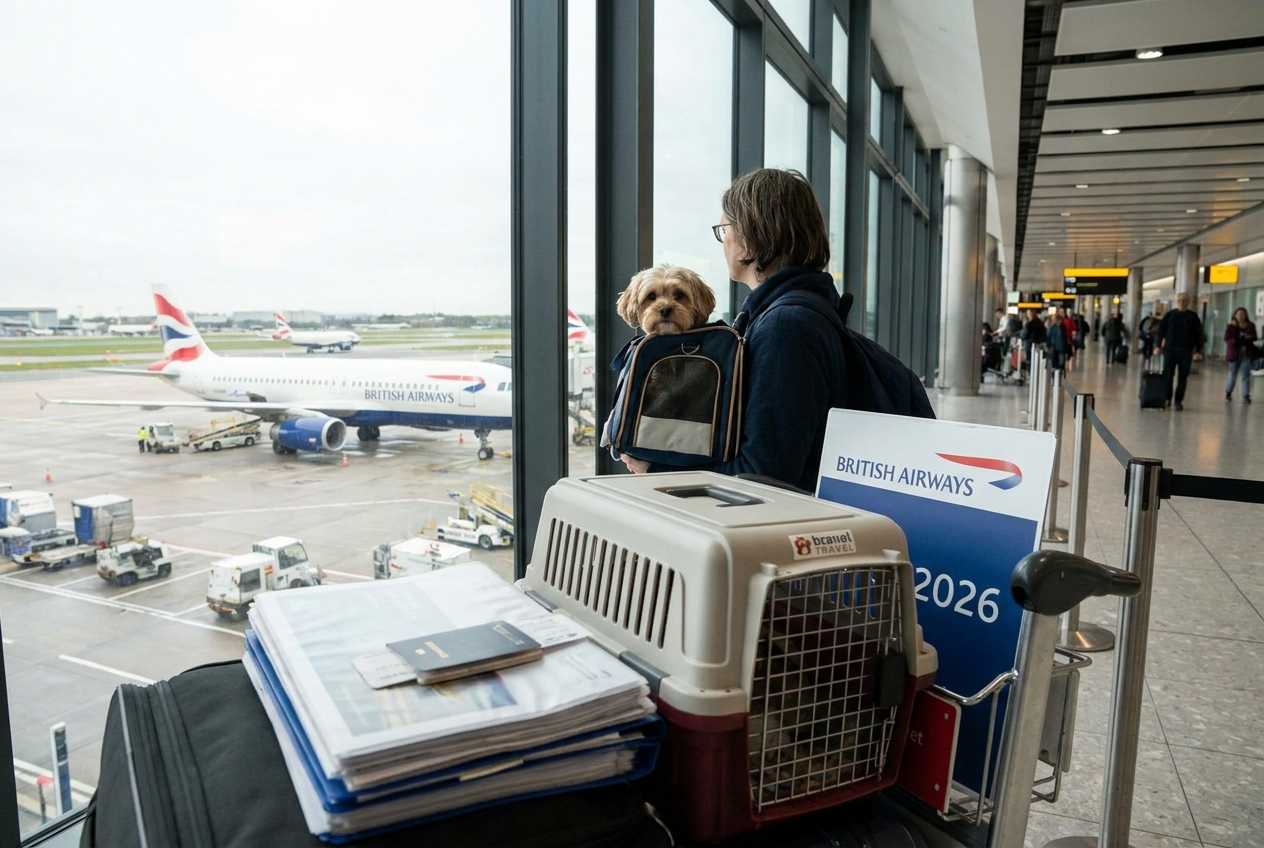
Most travelers booking a flight on the UK’s flagship carrier expect their small dog or cat to snuggle under the seat in front of them, only to face a harsh reality check at the checkout screen: British Airways maintains a strict, zero-tolerance ban on non-service pets in the passenger cabin.
Unlike many European and American carriers that allow cats and small dogs to fly as carry-on baggage, British Airways routes almost all companion animals directly through the aircraft cargo hold as manifest cargo. This structural policy is heavily driven by the United Kingdom’s historically stringent biosecurity laws, specifically designed to keep the island nation rabies-free. While the rule often surprises pet owners, British Airways runs a highly sophisticated, secure cargo system in partnership with IAG Cargo and PetAir UK, ensuring that your pet travels in a pressurized, temperature-controlled environment.
Understanding the logistics, pricing, and structural differences of cargo travel is the only way to avoid costly surprises at the terminal.
British Airways Pet Policy: Quick Summary
In-Cabin Policy: Strictly prohibited. The only exceptions are certified, fully trained assistance dogs.
Cargo Hold Transport: Mandatory for all other household pets. Managed by IAG Cargo (for flights into/outside the UK) and PetAir UK (for departures from the UK).
Fees: Typically £800 to £3,500+ ($1,000 to $4,500+) depending on destination, distance, route, and the volumetric size of your pet’s crate.
Banned Breeds: All types of Bulldogs, Pugs, Pekingese, and specific dangerous dog breeds are completely restricted from cargo transport.
Special Crate Requirements: Brachycephalic (flat-faced) breeds that are permitted (such as Boxers, Shih Tzus, and Persian cats) require a crate that is 10% larger than standard size to maximize airflow.
Booking Requirements: Cargo bookings are processed separately from passenger tickets and must be arranged through an approved pet travel agent.
In-Cabin Pet Rules: The Strict Service Dog Exception
The passenger cabin of a British Airways aircraft is reserved exclusively for humans and certified, fully trained assistance dogs. Emotional support animals (ESAs), comfort animals, and therapy pets are classified as standard pets and are not permitted in the cabin under any circumstances.
To qualify for cabin travel on British Airways, your service dog must meet the following criteria:
Certification: Your dog must be trained by an organization that is an accredited member of Assistance Dogs International (ADI) or the International Guide Dog Federation (IGDF). Self-trained or non-accredited service dogs will be rejected at check-in.
Behavior and Control: The dog must remain harnessed, leashed, or tethered at all times and sit quietly at your feet or under your seat. They are not allowed to occupy a passenger seat or eat from tray tables.
Destination Pre-Approval: If you are flying into London Heathrow (LHR) or London Gatwick (LGW), you must obtain pre-approval from the Heathrow Animal Reception Centre (HARC) or the Gatwick Animal Reception Centre at least seven days before travel. The reception centers verify that your service dog’s microchip, rabies vaccinations, and blood titers fully comply with UK entry laws.
If your assistance dog is too large to fit safely at your feet, or if you are flying on a route longer than eight hours where the dog cannot realistically control its bladder, British Airways may require you to purchase an adjacent seat or move the dog to the cargo hold for safety and hygiene reasons.
Into the Hold: How IAG Cargo and PetAir UK Manage Pet Flights
For 99% of pet owners traveling with British Airways, the cargo hold is the only option. Although sending a beloved companion into the belly of an airplane can feel incredibly stressful, the process is highly regulated and run by specialized animal logistics experts.
The Cargo Partners
British Airways does not manage pet cargo check-ins at their standard ticket counters. Instead, they delegate all live animal logistics to dedicated freight handlers:
Departures from the UK: All pet journeys originating in the United Kingdom must be booked and managed via PetAir UK, British Airways' preferred outbound pet travel partner.
Arrivals to the UK & International-to-International: Bookings are handled by IAG Cargo, the cargo arm of International Airlines Group (which includes British Airways, Iberia, and Aer Lingus).
Cargo Hold Conditions
The cargo compartments of British Airways' modern fleet (including Boeing 777s, 787s, and Airbus A350s) are fully pressurized and climate-controlled. The temperature in the live animal hold is maintained at a comfortable range similar to the cabin.
During flight, the lights in the cargo hold are turned off. Decades of live animal transport experience show that pets settle down much faster and travel with significantly lower stress levels in the dark, usually sleeping through the majority of the flight. Furthermore, British Airways operates a "last-on, first-off" loading protocol. Your pet is kept in a climate-controlled holding facility at the airport until the final minutes before departure, loaded last to minimize their time on the noisy tarmac, and offloaded first upon landing.
The True Cost of Cargo
Because pets travel as manifest cargo under their own air waybill (rather than checked baggage), the cost is calculated by "volumetric weight"—meaning the physical space your pet's crate occupies in the cargo hold.
Cats: Generally cost between £2,600 and £2,800 ($3,300 to $3,600) due to their standardized small crate sizes.
Small to Medium Dogs: Typically cost between £2,600 and £4,500 ($3,300 to $5,700).
Large Dogs: Can cost upwards of £5,000 to £8,000 ($6,300 to $10,000+) if they require giant, custom-built wooden crates.
Crucial Breed Restrictions & Snub-Nosed Crate Rules
To protect animal welfare, British Airways enforces strict breed restrictions and structural safety limitations. Brachycephalic (flat-faced) animals are highly susceptible to respiratory distress, hyperthermia, and oxygen deprivation during the stress of flight.
Banned Breeds (No Exceptions)
British Airways will not accept the following snub-nosed breeds for travel in the cargo hold under any circumstances:
Banned Dog Breeds: Bulldogs (all types, including French Bulldogs, English Bulldogs, and American Bulldogs), Pugs, and Pekingese.
Dangerous Dog Breeds: Any breeds banned under the UK Dangerous Dogs Act (such as the Pit Bull Terrier, Japanese Tosa, Dogo Argentino, Fila Brasileiro, and XL Bully) are strictly prohibited.
Restricted Breeds (The 10% Rule)
Other moderately flat-faced breeds are allowed to fly, but they are subject to strict "increased ventilation" rules. These breeds must travel in a crate that is at least 10% larger than the standard minimum required for a long-nosed dog of equivalent physical size:
Affected Dog Breeds: Bullmastiffs, Boxers, Boston Terriers, Shih Tzus, Lhasa Apsos, and Spaniels.
Affected Cat Breeds: Persians, Himalayans, and Exotic Shorthairs.
The 10% Rule Explained: Standard crate regulations dictate that a dog must be able to stand, turn around, and lie down naturally without touching the top or sides of the container. For restricted flat-faced breeds, IAG Cargo requires an extra 10% headspace and width to ensure a larger volume of pocketed air, significantly reducing the risk of heat pockets forming around the pet’s face.
Navigating International Travel Documentation
The logistics of flying your pet on British Airways are only half the battle; the other half is navigating the complex legal paperwork required to clear customs.
Because British Airways predominantly operates routes touching the United Kingdom, you must strictly adhere to either the UK Pet Travel Scheme (PETS) or the corresponding entry rules of your destination country.
Before booking any flight, review the Pet Travel Country Guides | Import & Export Rules by Country | Pet Holiday Club to understand your destination's specific import protocols. For general international routes, your pet must typically have:
ISO-Compliant Microchip: Must be implanted before or on the same day as their rabies vaccination.
Rabies Vaccination: Administered at least 21 days prior to travel, with the pet being at least 12 to 15 weeks old at the time of injection.
Animal Health Certificate (AHC) or Export Health Certificate (EHC):
From the UK to the EU: A standard UK pet passport is no longer valid. You must obtain an Animal Health Certificate (AHC) issued by an Official Veterinarian (OV) within 10 days of your flight.
From Non-EU Countries into the UK: You will need a Great Britain Pet Health Certificate issued by an authorized veterinarian in your country of origin within 10 days of arrival.
Tapeworm Treatment (Dogs Only): For dogs entering the UK, Ireland, Finland, Norway, or Malta, a clinical treatment against Echinococcus multilocularis must be administered by a vet between 24 and 120 hours (1 to 5 days) before the scheduled arrival time.
How to Book a Pet on British Airways
Booking a pet on British Airways is not as simple as adding a carry-on bag to your online passenger booking. It is a completely separate freight reservation process that should be initiated at least 4 to 6 weeks before your departure date.
1.Measure your pet:4-6 weeks before departure.
Accurately measure your dog’s length (nose to base of tail), height (floor to top of ears/head), and width (across shoulders). For cats, standard sizing templates are generally used.
3.Contact PetAir UK or IAG Cargo:4 weeks before departure.
If departing from the UK, submit your measurements and route details to PetAir UK. If flying into the UK or on an international-to-international connection, contact the IAG Cargo Pet Desk. They will provide a customized volumetric shipping quote.
3.Purchase an IATA-approved crate:3-4 weeks before departure.
Acquire a rigid plastic or wooden travel crate that strictly complies with IATA Live Animal Regulations. It must have secure metal bolt fasteners (not plastic clips), a metal door, and food/water bowls attachable to the inside of the door.
4.Begin crate training:Daily until departure.
Place comfortable bedding, worn t-shirts with your scent, and treats inside the crate to help your pet associate the space with safety. This dramatically lowers their cortisol levels during the flight.
5.Secure veterinary health documents:10 days before departure.
Schedule an appointment with an authorized USDA or Official Veterinarian (OV) to issue the required Animal Health Certificate or Export Health Certificate.
6.Deliver your pet to the cargo terminal:4 hours before departure.
Do not go to the main passenger terminal check-in desk. Take your pet directly to the designated IAG Cargo or PetAir UK reception facility at the airport. Arrive at least 4 hours before the flight to allow for veterinary paperwork clearance.
Insider Tips for Flying with Your Pet on British Airways
Book Your Pet's Flight First: It is far easier and cheaper to reschedule your passenger ticket than it is to alter a live animal cargo booking. Always confirm space is available in the cargo hold for your specific flight before finalizing your own seat.
Skip the Sedatives: British Airways and the International International Air Transport Association (IATA) strictly prohibit the boarding of sedated pets. Sedatives lower blood pressure and suppress breathing, which can be highly dangerous at high altitudes. Instead, use natural pheromone sprays (such as Feliway or Adaptil) inside the crate.
Watch the Temperature Embargoes: IAG Cargo closely monitors temperatures across their entire network. If ground temperatures at your origin, transit hub, or destination exceed 75°F (24°C) or drop below 45°F (7°C), flights for flat-nosed or vulnerable breeds may be grounded or delayed for their own safety.
Fast Your Pet Before Travel: Offer a very light meal no later than six hours before checking them into the cargo terminal. This prevents nausea, vomiting, and defecation inside the crate during transit.
Leverage the Heathrow Animal Reception Centre (HARC): If landing at London Heathrow, your pet will go directly to HARC for processing. This world-class facility has dedicated outdoor exercise pens, quiet rooms, and round-the-clock veterinary staff to care for your pet while customs paperwork is verified.
Comparison Box: British Airways vs. Global Competitors
Airline | Small Pets in Cabin? | Hold Cargo Services? | Snub-Nose Breed Acceptance | Average Cost Range |
British Airways | No (Assistance dogs only) | Yes (via IAG Cargo) | Highly Restricted (Bulldogs/Pugs banned) | £800 – £3,500+ |
Air France | Yes (Under 8 kg) | Yes (Checked bag or cargo) | Moderately restricted in the hold | €70 (Cabin) / €150+ (Hold) |
KLM | Yes (Under 8 kg) | Yes (Cargo/Excess baggage) | Strictly banned in the hold | €75 – €400 |
Lufthansa | Yes (Under 8 kg) | Yes (Cargo/Excess baggage) | restricted in the hold | €50 (Cabin) / €150+ (Hold) |
Virgin Atlantic | No (Assistance dogs only) | No (Currently suspended) | N/A | N/A |
Frequently Asked Questions
Q: Why doesn't British Airways allow small pets in the passenger cabin?
British Airways restricts pets from the cabin due to UK biosecurity regulations, strict customs laws, and aircraft cabin air quality standards. By routing non-service pets through specialized cargo holding areas, the airline ensures streamlined processing, minimal health risks, and structured veterinary clearances at dedicated animal reception facilities upon arrival.
Q: Can my French Bulldog fly in cargo on British Airways?
No, French Bulldogs cannot fly on British Airways. British Airways and IAG Cargo enforce a strict ban on all flat-faced bulldog breeds, including French and English Bulldogs, due to their high risk of respiratory distress and heat stroke during flight.
Q: How much does it cost to ship a dog on British Airways?
The cost ranges between £800 and £8,000+ ($1,000 to $10,000+). Because cargo transport fees are calculated based on the volumetric dimensions of your pet's travel crate, small dogs are significantly cheaper to transport than large dogs requiring custom-built wooden kennels.
Q: Is the cargo hold safe and temperature-controlled for my pet?
Yes, the cargo hold is highly secure, fully pressurized, and climate-controlled to the same ambient temperature as the main passenger cabin. The hold remains dark during flight, which helps naturally soothe animals so they can quickly settle down and sleep.
Q: What happens if my pet’s flight is delayed due to weather?
IAG Cargo closely monitors temperatures to protect animal safety. If temperatures along your travel route exceed 75°F (24°C) or fall below 45°F (7°C), your pet's shipment may be rescheduled to ensure they are never exposed to extreme heat or cold on the tarmac.
Q: Can I use my own pet carrier for British Airways cargo?
Yes, but the carrier must strictly comply with IATA Live Animal Regulations. It must be constructed of rigid plastic or wood, secured with metal bolts, highly ventilated on all four sides, and large enough for your pet to stand, turn, and lie down naturally.
Managing international transport, finding an IATA-compliant crate, and coordinating veterinary timelines can feel overwhelming. To make your next trip seamless, check out the resources and country-by-country checklists at petholidayclub.com, where you'll find everything you need to navigate international rules with confidence.
Before flying with your pet on British Airways, make sure you have the right documentation for your destination. Pet Holiday Club covers 190+ countries with government-sourced, vet-verified pet travel checklists at petholidayclub.com — so you arrive prepared, not refused.