Bringing a Dog From the USA to the UK in 2026: The Complete Step-by-Step Guide
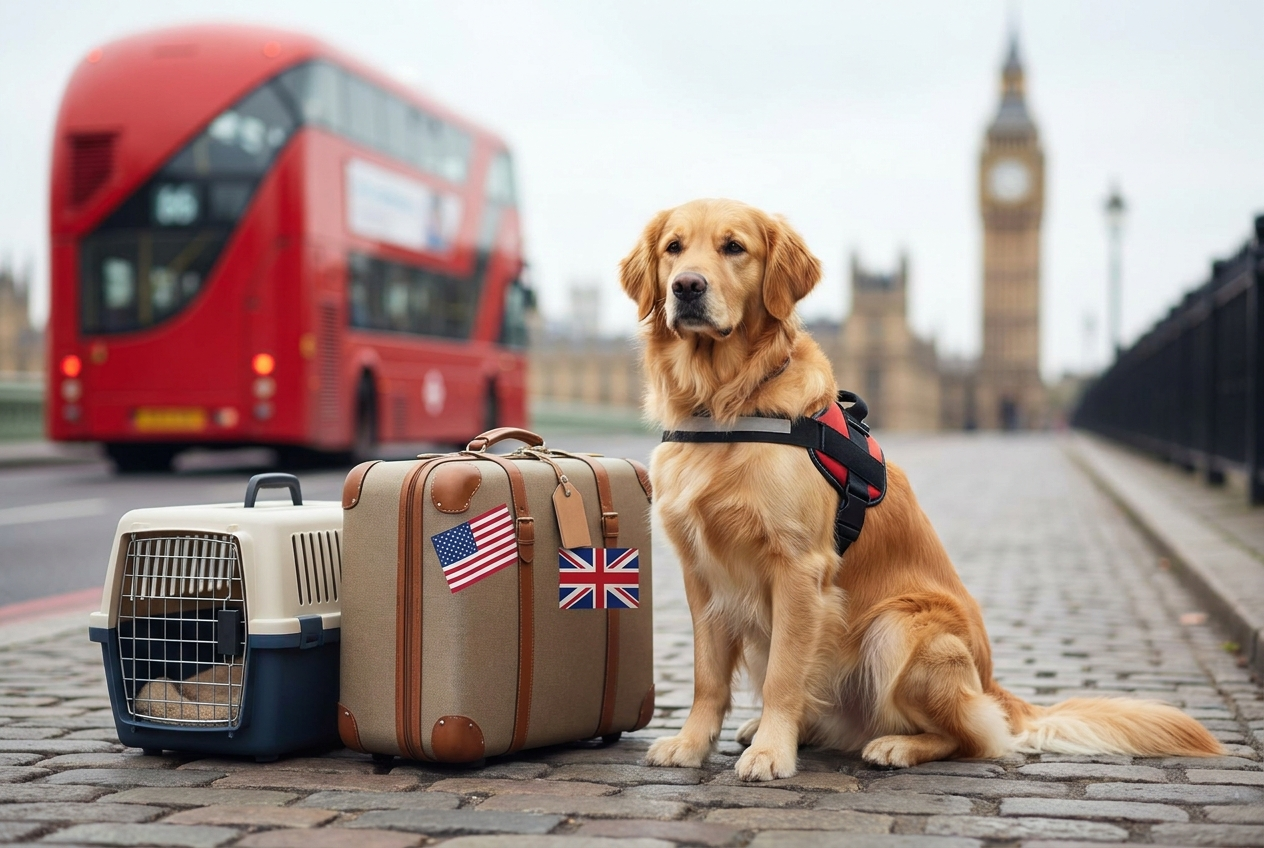
Relocating across the Atlantic is a massive milestone, but for pet owners, the process is frequently overshadowed by the logistical anxiety of moving a beloved four-legged family member. The flight corridor between the United States and the United Kingdom stands as one of the most strictly regulated and heavily audited pet travel pathways on earth. With the UK remaining fiercely protective of its island biosecurity status, a single missing signature, a misread microchip, or an incorrectly timed veterinary treatment can result in your dog being barred from boarding or placed into an expensive state quarantine facility upon landing.
While the mountain of federal paperwork and strict timing windows can feel incredibly overwhelming, navigating this system successfully comes down to executing a specific, linear timeline. By breaking down the complex Department for Environment, Food & Rural Affairs (DEFRA) and United States Department of Agriculture (USDA) regulations into clear, operational phases, you can transform a high-stakes bureaucratic puzzle into a structured, completely manageable journey.
Timeline Overview: You must begin the preparation process at least 30 to 45 days prior to your target departure date to account for vaccination buffers and federal document endorsement transit.
Key Required Documents: Your dog will require a dedicated 15-digit ISO-compliant microchip record, a valid rabies vaccination certificate, an official USDA Health Certificate, and a verified electronic USDA APHIS digital endorsement stamp.
Core Border Rules: The UK does not permit pets to arrive via the standard passenger cabin or as checked baggage on traditional commercial flights. All incoming dogs must enter via approved entry airports as manifest air cargo under an official Air Waybill or via designated maritime ferry routes.
Why the USA to UK Route Is Different
Many American pet owners assume that flying a dog to London is fundamentally identical to flying a pet to continental European hubs like Paris or Frankfurt. It is not. While bringing pets into france or neighboring dogs europe channels permits small animals to slide comfortably under the passenger seat in a soft carrier, the UK maintains independent island biosecurity laws.
Historically rabies-free, Great Britain uses its strict entry frameworks to filter out specific parasites and infectious diseases before they can breach its perimeter. Fortunately, because the United States is officially classified as a "low-risk" country by DEFRA, your dog is exempt from the multi-month rabies titer blood test (FAVN) required for high-risk regions. However, this lower risk status does not reduce the strict oversight applied to your physical paperwork. Every document is audited line-by-line by border veterinarians upon arrival, leaving absolute zero margin for clerical errors.
The UK Manifest Cargo Rule
The most significant shock for relocating families is the UK's strict ban on inbound pets traveling within the main passenger cabin or as accompanied checked baggage on commercial flights. No matter how small your dog is—even a two-kilogram Chihuahua—they are legally required to enter the UK flying in the aircraft's pressurized, temperature-controlled rear cargo hold.
This specific protocol requires booking your companion as manifest cargo under an official Air Waybill (AWB). Your dog travels in a heavy-duty, IATA-compliant rigid container, managed entirely by specialized live-animal airline handlers rather than general baggage staff.
Why Is This Rule In Place?
The manifest cargo structure ensures that from the moment your dog is checked in at an American cargo terminal to the second they land on British soil, they remain within a continuous, legally sealed customs chain. This prevents animals from being switched mid-flight or bypassing mandatory biosecurity checkpoints at the arrival gate.
If you absolutely cannot bear the thought of your dog flying in the cargo hold, your only alternative paths are booking a private charter flight, sailing via the Queen Mary 2 ocean liner, or flying into a nearby continental hub like Paris and driving into the UK via the Eurotunnel Le Shuttle or a pet-friendly cross-channel maritime ferry.
Approved UK Entry Airports and Routes
You cannot land a pet-carrying cargo flight at just any regional British airfield. Your airline routing must align with a designated UK airport equipped with an authorized, state-vetted Animal Reception Centre (ARC).
The primary approved commercial entry airports for live-animal manifest cargo include:
London Heathrow Airport (LHR): Handled by the world-class Heathrow Animal Reception Centre (HARC), which operates 24/7 and processes the vast majority of international pet arrivals.
London Gatwick Airport (LGW): Processed via the dedicated Animal Aircare reception facility.
Manchester Airport (MAN): Servicing northern England via the specialized Manchester Pet Cargo terminal.
The Complete Documentation Checklist
To successfully clear a DEFRA border inspection, your paperwork must trace a perfect chronological path. The order of these procedures is vital: if a vaccination occurs before a microchip is officially implanted and scanned, the entire documentation chain is legally void.
1. ISO-Compliant Microchip Implementation
Your dog must be identified using a 15-digit microchip that complies fully with ISO 11784/11785 standards. If your dog has an older, 10-digit American chip (like an Avid EuroChip), your veterinarian must implant a fresh ISO chip alongside it or you must carry your own universal microchip scanner throughout the journey. The microchip must be scanned and documented at every single veterinary visit.
2. The Rabies Immunization Record
Once the ISO microchip is securely in place, your dog must receive a valid rabies vaccination. The vaccine must be an inactivated virus type or a recombinant vaccine, and it must be administered on the exact same day as or after the microchip implantation date. If your dog was already vaccinated before receiving their ISO chip, they must be microchipped and then re-vaccinated to create a legally compliant record. You must wait a minimum of 21 clear days from the date of the rabies shot before your dog can legally enter the UK.
3. The International Health Certificate
Within 10 days of your flight's scheduled arrival in the UK, a USDA-accredited veterinarian must perform a physical health check and issue the official non-commercial EU/UK Health Certificate. This complex multi-page document tracks your pet's microchip placement, vaccination dates, and clinical fitness for flight.
4. USDA APHIS Endorsement
Once your accredited vet signs off on the health certificate, the document must be submitted to the usda aphis pet travel division for official federal endorsement. The federal veterinary officer verifies your local vet's credentials and applies the mandatory digital or physical embossed stamp.
The Tapeworm Treatment Rule (Echinococcus Multilocularis)
One of the most rigid uk pet import rules is the mandatory treatment for tapeworms. This rule is designed to prevent a specific parasite, Echinococcus multilocularis, from establishing a biological foothold in the British ecosystem.
+-------------------------------------------------------------------------+
|                    THE 24 TO 120 HOUR TIME WINDOW                       |
|                                                                         |
| The tapeworm treatment MUST be administered by a licensed veterinarian   |
| no less than 24 hours and no more than 120 hours prior to your dog's    |
| scheduled landing time at the UK arrival airport. If your flight is     |
| delayed and drops outside this 120-hour window, your dog will be        |
| held in quarantine or forced to undergo re-treatment at your expense.   |
+-------------------------------------------------------------------------+
The medication used must be an approved veterinary product containing the active ingredient praziquantel (or an equivalent licensed compound specifically targeted at adult and immature intestinal tapeworms).
Your treating veterinarian must manually log the following details into Section VII of your dog's health certificate:
The exact trade name and manufacturer of the product used.
The precise date of administration.
The exact time of administration (utilizing a 24-hour clock format).
The veterinarian's physical signature, license stamp, and clinic details.
The USDA APHIS Endorsement Process
Securing a valid health certificate for dog transit requires coordinating your timeline with the federal usda pet travel review infrastructure. In 2026, the vast majority of these documents are managed electronically via the Veterinary Export Health Certification System (VEHCS).
Your accredited veterinarian completes the health examination and uploads the certificate into the digital VEHCS portal. From there, it routes automatically to your regional USDA APHIS area office for secondary review.
The standard federal endorsement fee is exactly $101 per certificate (for non-commercial movements of up to 5 animals traveling on the same itinerary).
You can choose to have the USDA office return the digitally signed and stamped certificate electronically via VEHCS for you to print at home, or request a physical hard copy returned via an overnight express courier service using a pre-purchased shipping label.
The DEFRA Import Process on Arrival
When your cargo flight lands at Heathrow or Manchester, your dog is not sent to the passenger baggage carousel. Instead, specialized airport ground handlers transfer your dog's travel crate directly from the aircraft hold to a climate-controlled transport vehicle, driving them straight to the airport's designated Animal Reception Centre.
Inside the reception centre, your dog is transferred to an individual indoor kennel run containing fresh water and a clean bedding area. While your dog rests after the long flight, specialized DEFRA veterinary officers perform a thorough paperwork audit.
They will verify your identity, cross-reference your flight's Air Waybill, scan your dog's microchip to ensure it perfectly matches the digits on the certificate, and verify the exact timestamps of your tapeworm administration. This clearance process typically takes between 3 and 6 hours. Once cleared, you can pick up your dog from the facility's reception desk.
The Strategic Countdown Checklist
Successfully importing a dog from usa to uk requires treating your calendar like a strict launch sequence. Use this countdown model to organize your tasks:
Timeline Marker | Operational Execution Requirements & Milestone Deliverables |
Day -45 to -30 | Verify your pet has a 15-digit ISO microchip. Administer a fresh rabies booster if needed. Book your dog's cargo flight with the airline's specialized cargo desk or hire an IPATA agent. |
Day -15 | Confirm your local clinic's veterinarian holds an active USDA Accreditation. Pre-populate your personal details within the health certificate draft form. |
Day -10 to -7 | Attend the health check appointment. Have your vet upload the health certificate and vaccination history into the digital USDA VEHCS system. Pay the $101 endorsement fee. |
Day -5 to -2 | Ensure the veterinarian administers the mandatory praziquantel tapeworm treatment, keeping a close eye on your scheduled arrival time window. Print the endorsed USDA certificate. |
Day 0 (Flight Day) | Arrive at the US airport cargo terminal at least 4 hours before departure. Secure your dog within their IATA container, attach water bowls, and hand over your original paperwork folder. |
Common Pitfalls to Avoid
Incorrect Rabies Order: Administering a rabies vaccine and later realizing your dog needs an ISO microchip is the most common mistake on this route. If the microchip was not scanned or implanted before the current vaccine was given, the UK will reject the document.
Typographic Errors on the Chip Number: A single inverted digit written by a vet on a rabies certificate can invalidate the entire file. Always double-check that the 15-digit string on your lab documents perfectly matches the output of a physical microchip scan.
Miscalculating Time Zones: When planning your 24-to-120-hour tapeworm window, remember to account for time zone differences between your US departure city and your UK destination. A treatment given too early can expire mid-flight over the Atlantic.
Commercial vs. Non-Commercial Traps: To travel under non-commercial rules, your dog must move within 5 days of your own travel date. If your dog travels weeks before or after you due to scheduling conflicts, they fall under commercial import rules, which require different documentation and higher clearing fees.
Frequently Asked Questions
Q: Can my dog fly with me in the cabin if I have a letter for an Emotional Support Animal (ESA)?
No. The United Kingdom does not recognize Emotional Support Animal designations for air travel. Only officially certified, Western-Europe-vetted Service Dogs assisting travelers with physical disabilities are permitted in the main cabin, and only on select pre-approved airlines.
Q: How much does it cost total to bring a dog from the US to the UK?
The total expense typically ranges from $1,500 to $4,500 USD. This estimate combines the airline's manifest cargo fees (often $800 to $2,500 depending on your dog's size), the $101 USDA endorsement fee, local veterinary health check and tapeworm costs, and UK Animal Reception Centre processing fees (approximately £350 to £500).
Q: Does my dog face mandatory quarantine when arriving from the USA?
No. If your dog's microchip, rabies records, USDA health certificate, and tapeworm treatment are completely compliant with DEFRA regulations, they will be released to you within hours of landing without undergoing any quarantine period.
Q: What happens if my flight is delayed and the tapeworm treatment expires?
If an unavoidable airline delay pushes your arrival past the 120-hour limit, the Animal Reception Centre will hold your dog until a facility veterinarian can safely re-administer the praziquantel treatment. This will add several hundred pounds in handling fees to your trip.
Q: Can I use an EU Pet Passport issued in Europe to enter the UK from the US?
Yes, an EU Pet Passport is accepted by the UK, but it must be completely up-to-date and signed off by an EU-based veterinarian. A US-based veterinarian cannot legally enter rabies updates or signatures into an official EU Pet Passport.
Q: Is there a limit to how many dogs I can bring into the UK?
Under standard non-commercial import guidelines, an individual traveler is limited to a maximum of 5 pets per vehicle or itinerary. Bringing more than 5 dogs shifts your shipment into the commercial trade category, which requires an entirely different set of import licenses.
Because global biosecurity laws are subject to sudden updates and involve strict time-sensitive windows, attempting to track these requirements on your own can lead to costly travel mistakes. Rather than risking an expensive border refusal or unexpected quarantine fees, you can centralize your logistics using the automated platform at Pet Holiday Club.
By utilizing the Pet Holiday Club checklist tool at petholidayclub.com, you can instantly generate a customized preparation timeline tailored perfectly to your specific US departure city and UK destination. Our system synchronizes your flight timing with the mandatory USDA endorsement sequence and tapeworm administration windows, helping you avoid common mistakes automatically. Protect your companion's journey and streamline your move by reviewing our dedicated UK pet travel articles, airline manifest cargo guides, and USDA compliance directories today.